Table of Contents
ToggleA big bedroom is a canvas, not a burden. With the right approach, you can turn all that square footage into a retreat that works as hard as it looks good. Whether you’re working with a master suite or a bonus room, the challenge isn’t filling space, it’s using it intentionally. This guide covers nine practical strategies to maximize function and aesthetics, from smart storage to zoning, helping homeowners create a bedroom that balances comfort, style, and everyday usability without feeling empty or overwhelming.
Key Takeaways
- Big bedroom ideas succeed when you prioritize intentional layout and built-in storage solutions like floating shelves, window seats, and custom wardrobes to prevent clutter and maximize functionality.
- Anchor furniture to walls and use painter’s tape to map placement before shopping, ensuring appropriately scaled pieces like a 60-inch dresser with a queen bed create visual balance.
- Create a statement wall through shiplap, bold paint colors, wallpaper, or gallery art to add personality and prevent your large bedroom from feeling generic or institutional.
- Establish distinct zones using area rugs, furniture placement, and lighting to transform your big bedroom into a multi-functional retreat that supports sleeping, working, dressing, and relaxation.
- Layer lighting with dimmable overhead fixtures, warm bedside lamps (2700K), and task lighting to set different moods and ensure the space feels cozy rather than overwhelming.
- Add comfortable seating like an upholstered chair with a side table and reading lamp to create a sanctuary that goes beyond just a sleeping space.
Maximize Storage With Smart Built-In Solutions
A spacious bedroom can become a catch-all without proper storage. Built-in solutions keep clutter contained and free up floor space, making the room feel curated rather than cramped.
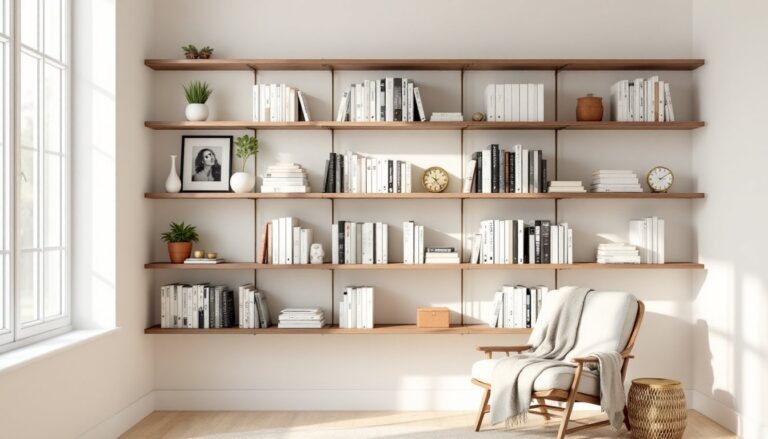
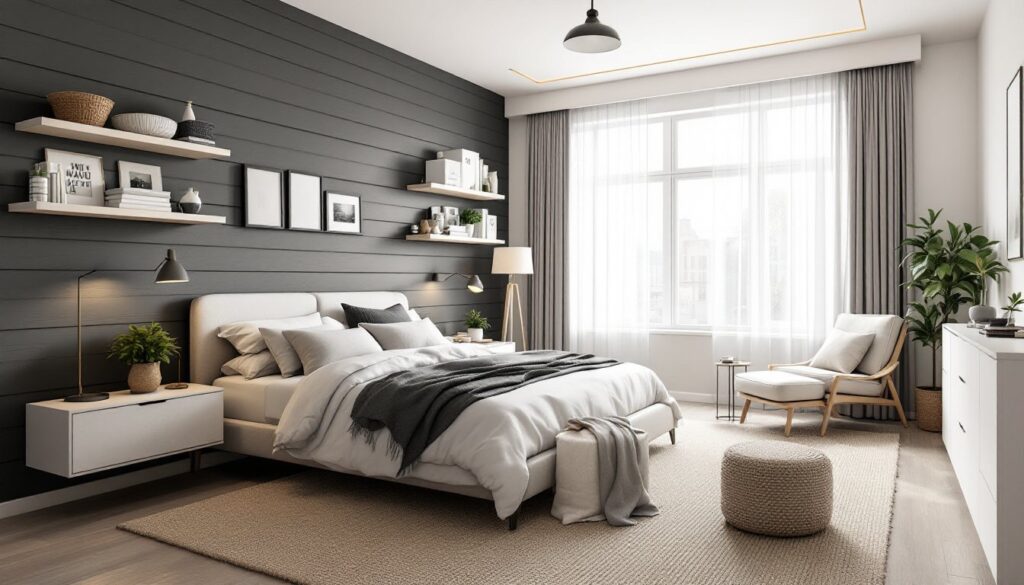
Install floating shelves or wall-mounted cabinets above the dresser, desk, or along a blank wall. These provide display and storage without eating floor space. If you’re comfortable with basic carpentry, floating shelves are straightforward: locate studs, install a French cleat (two angled boards, one anchored to the wall, one attached to the shelf back), and you’ve got an adjustable system that holds 25–50 pounds per shelf depending on bracket quality.
A built-in window seat with storage underneath is another high-impact option. If your bedroom has a bay window or alcove, frame a 16-inch-deep base with 2×12 joists, add a hinged or removable plywood top with padding, and fill the cavity with storage bins or drawers. This transforms unused space into both seating and storage. Alternatively, custom wardrobes or closet systems with adjustable shelving, double hanging rods, and pull-out drawers organize clothes far better than a standard rod and shelf combo. Measure your closet depth (typically 24 inches nominal), and many systems come in modular pieces you can install yourself with a level, drill, and stud finder.
Consider vertical space often forgotten: tall narrow bookcases flanking the bed or lining a wall don’t crowd a large room: they anchor it. Stack items by category (books, baskets of linens, décor boxes), and you’ve got an organized focal point that actually makes the space feel more intentional.
Create A Functional Layout That Balances Space
Scale matters when you’re furnishing a big bedroom. A small bed and nightstands marooned in the middle of the room make the space feel awkward, not serene. Anchor furniture to a wall, typically the wall opposite the entry or the wall behind the bed, to create psychological weight and definition.
Measure and map before shopping. Use painter’s tape to outline furniture placement on the floor: this costs nothing and prevents expensive mistakes. A queen bed needs about 60 inches of width and 80 inches of length: allow 18–24 inches of walkway on at least two sides for safe passage and making the bed. If your bedroom is 14 feet wide and 16 feet long, you have breathing room for a seating area and a workspace without cramping.
Pair the bed with appropriately scaled nightstands, not tiny bedside tables that look lost. Similarly, a dresser should match the bed’s visual weight: a 60-inch dresser pairs well with a queen bed. Add a small accent chair or loveseat perpendicular to the foot of the bed, or position a desk or vanity in the opposite corner. This distributes furniture and activity zones throughout the space instead of clustering everything.
Floating the bed away from the wall works in big rooms with good ceiling height. A platform bed or bed frame without a headboard touching the wall can define a sleeping zone and make a large space feel more intimate. Pair it with a room divider or fabric screen if you need visual separation.
Design A Statement Wall or Feature Area
One carefully designed wall gives a large bedroom personality and prevents the space from feeling generic. This isn’t about a trendy accent color alone: think texture, pattern, or structure.
Shiplap or board-and-batten installation behind the bed is a classic approach. Shiplap boards (typically 1×6 or 1×8 pine, nominal dimensions) are installed horizontally with a small gap between boards, creating shadow lines. This requires basic carpentry: find studs (usually 16 inches on center), use a stud finder to confirm, nail or screw boards with galvanized fasteners to prevent rust staining, and finish with primer and paint. It’s labor-intensive but transforms a plain headwall into an architectural feature.
**Wallpaper, especially patterned or textured varieties, ** is less labor-intensive and equally impactful. Modern peel-and-stick options require minimal surface prep, though traditional paste-applied wallpaper adheres better on properly primed, smooth drywall. Choose a pattern that complements, not competes with, your furniture and textiles. Many interior designers recommend wallpaper on a single wall or alcove rather than full-room coverage in bedrooms, it’s less overwhelming and easier to update.
A gallery wall or large-scale artwork above a console or dresser draws the eye and adds visual interest. Frame a collection of prints, photographs, or a single oversized canvas (48 inches or larger works well in a spacious room). Use a level and painter’s tape to lay out spacing before hanging: aim for 2–3 inches between frames for a gallery feel, or space frames 6–12 inches apart for a more formal arrangement.
Paint color matters, too. Deep, saturated tones, forest green, slate blue, warm charcoal, make a large bedroom feel cozy rather than institutional. Test samples on your wall under different lighting (morning, afternoon, evening) before committing. Interior design trends often showcase bold color choices that work beautifully in spacious rooms.
Establish Distinct Zones For Multiple Activities
A bedroom with 250+ square feet isn’t just for sleeping. Divide the space into intentional zones so it functions as a retreat, not a multitasking mess.
Define zones with area rugs. A 5×8-foot rug under and extending 18 inches beyond the bed anchors the sleeping area. A second, smaller rug (3×5 feet) under a seating area or workspace grounds that zone visually and acoustically. Layering rugs creates separation without walls: natural fibers like jute or wool absorb sound and add warmth.
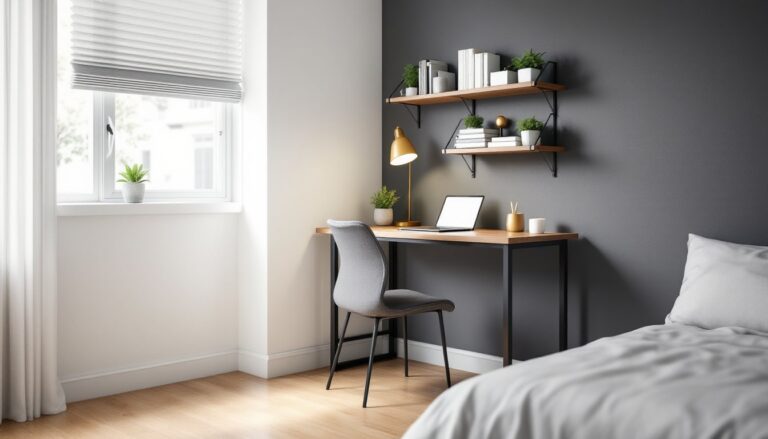
Create a work or dressing zone with a desk, vanity, or combination unit positioned away from the bed. If space allows, place a chair and side table in a corner for reading or quiet reflection. Lighting is critical here: a task lamp at the desk, ambient overhead lighting (flush-mount or semi-flush fixture) for general illumination, and perhaps a wall sconce for accent light. Each zone should feel distinct but connected to the overall room aesthetic.
Furniture placement reinforces zoning. A low bookcase or console can sit perpendicular to the bed as a subtle room divider. A tall wardrobe or shelving unit anchors a dressing area. These elements don’t block the room but create clear boundaries that make the large space feel organized and purposeful.
Storage and activity zones go hand-in-hand. If you work in the bedroom, dedicate closed storage (a cabinet under the desk, a closet section) to office supplies and papers so the sleeping area stays clutter-free. Similarly, place a hamper or small closet organizer in the dressing zone to contain laundry and daily changes.
Choose A Cohesive Color Palette And Lighting Scheme
Color and light are the foundation of any room’s mood. In a big bedroom, inconsistent color choices or poor lighting can make the space feel disjointed.
Start with a three-color base: a dominant neutral (walls, ceiling, larger furniture), a secondary color (bedding, curtains, accent pieces), and a tertiary accent (throw pillows, artwork, small décor). For example: soft gray walls, white bedding with gray striping, and pops of sage green or muted blue in accessories. This framework ensures the space feels cohesive rather than chaotic. Resources like home decorating inspiration showcase color schemes tested in real rooms.
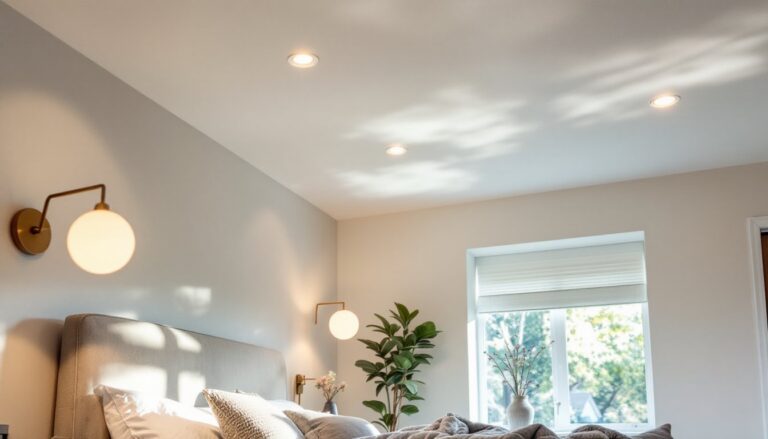
Lighting layers matter enormously. Install a dimmable overhead fixture (with a dimmer switch) for flexible brightness. Add bedside lamps with warm 2700K color temperature bulbs (not harsh cool white) for comfortable evening light. Include a reading light or sconce on the wall if you spend time in an accent chair. Task lighting at a desk or vanity should be brighter, 3000K or 4000K, without casting shadows. The combination of ambient, task, and accent lighting lets you adjust the room’s mood from bright and alert to soft and restful.
Window treatments balance light and privacy. Sheer curtains diffuse daylight softly: layering them with blackout panels allows you to control light without sacrificing style. For a big room with multiple windows, this flexibility is invaluable. Measure windows precisely (width and height in three places, top, middle, bottom, to account for uneven walls) before ordering curtains or blinds. Panels should extend 8–12 inches beyond the window frame on each side and mount close to the ceiling to visually enlarge the room.
Add Comfortable Seating And Relaxation Spaces
The best bedrooms function as retreats, not just sleeping spots. Comfortable seating transforms a big room into a sanctuary.
A quality upholstered chair or loveseat completes a relaxation zone. Position it by a window with a small side table and a lamp for an instant reading nook. Choose a durable upholstery, performance fabrics resist staining and wear better than delicate materials, and ensure the chair’s scale matches the room. A too-small chair looks lost: aim for a piece that anchors its corner without overwhelming the space.
Add soft furnishings strategically. Throw pillows, a weighted blanket draped over the chair, and a soft rug underfoot create texture and comfort. These elements also make the large room feel collected and intentional. Vary textures: linen, velvet, wool, cotton, and faux fur layered together feel richer than uniform surfaces.
Accent tables and side tables serve both function and beauty. A small round table next to a chair holds a lamp, book, and coffee cup. A console behind a sofa or love seat displays décor and houses small storage baskets. Luxury home design frequently showcases how thoughtful table placement and styling elevate a space from functional to elevated.
Don’t overlook seating layout. If your bed and chair face each other across the room, conversation is easy and the space feels balanced. If the chair is tucked in a corner, it becomes a personal retreat. Consider sightlines and natural traffic patterns when positioning furniture, you want to see and move through the room easily.
Conclusion
A spacious bedroom succeeds when it balances aesthetics and function. Start with storage and layout, add personality through statement elements and color, then layer in comfort with seating and lighting. The goal isn’t to fill every inch, it’s to use the square footage intentionally so the room works for you and feels like a retreat you actually want to spend time in. Measure twice, test paint colors under real light, and invest in pieces that anchor the space visually. A thoughtfully designed big bedroom becomes your best project yet.