Table of Contents
ToggleYour bedroom ceiling is often overlooked, it’s just white drywall and a light fixture, right? Wrong. The ceiling occupies a huge visual footprint in a bedroom, yet most homeowners never think to update it. Smart ceiling design can add depth, warmth, sophistication, or a sense of openness to your bedroom without a major renovation. Whether you’re after subtle texture, bold color, architectural interest, or cutting-edge lighting, bedroom ceiling ideas abound. From painted finishes to architectural beams to modern minimalist approaches, the right overhead treatment transforms how a room feels and functions. This guide walks you through practical, achievable ceiling upgrades that deliver real visual impact and match your style, no contractor license required for most of them.
Key Takeaways
- Bedroom ceiling ideas ranging from textured finishes to bold paint colors can dramatically transform how your space feels without requiring major renovations or a contractor.
- Textured finishes like knockdown texture add warmth and hide imperfections better than flat drywall, and DIYers can apply them with basic tools and patience.
- Paint is the most affordable ceiling upgrade—soft neutrals add sophistication while deeper colors make larger, bright bedrooms feel cozier and more intimate.
- Strategic lighting, including recessed LEDs, statement chandeliers, and cove lighting, transforms a ceiling from functional to focal and supports better sleep with warm color temperatures in evenings.
- Architectural elements like faux beams and coffered ceilings add visual interest and craftsmanship, though faux beams are a more forgiving option for first-time projects.
- Modern minimalist ceiling designs keep spaces serene and uncluttered while maintaining visual interest through subtle details like linear trim or clean recessed lighting.
Textured Ceiling Finishes for Added Depth
A flat drywall ceiling can feel bland and cold, especially in a bedroom where comfort matters. Texture adds warmth and hides imperfections that paint alone won’t cover. The most common textured finishes are popcorn texture (acoustic spray-applied finish) and knockdown texture (drywall compound troweled and lightly flattened). Popcorn is quick and affordable but harder to remove later and can collect dust, less ideal in a bedroom. Knockdown is more elegant, easier to touch up, and gives a handcrafted look.
Applying knockdown texture yourself is realistic for a DIYer. You’ll need a drywall joint compound (setting-type works well), a hopper and spray gun or a trowel, and patience. After application, let it dry fully before painting, typically 24 hours. The texture absorbs more paint, so budget extra gallons. If you have textured popcorn ceiling already and want to remove it, test for asbestos first (homes built before 1980 are at risk). If asbestos is present, hire a licensed abatement contractor. For a more durable alternative, consider plaster or stucco finishes, which are longer-lasting but require professional installation if you’re not experienced.
Textured finishes work especially well in bedrooms with exposed beams or rustic décor. They also help dampen sound, a nice bonus in a master bedroom above an active household.
Paint and Color Solutions for Visual Impact
Paint is the simplest, most affordable ceiling upgrade. Most bedrooms default to flat white ceiling paint, which makes sense for light reflection, but don’t assume it’s your only option. A soft neutral (warm white, soft gray, pale cream) adds sophistication without drama. Ceiling paint is usually flat or matte finish to hide imperfections and reduce glare. Use a ceiling-specific paint: it has different formulation than wall paint and applies more easily.
Before painting, prep is everything. Clean the ceiling with a damp cloth to remove dust and cobwebs. Fill cracks and holes with spackling compound, let dry, then sand smooth. Protect light fixtures and cover the room with drop cloths, ceiling paint drips. A roller on an extension pole beats a ladder and hurts your neck less. Apply two coats for even coverage, allowing dry time between coats per the paint label (typically 2–4 hours).
Bold Colors and Feature Walls
Don’t be afraid of darker or bolder overhead colors if the room size allows it. Deep charcoal, soft navy, or even a warm terracotta can make a bedroom feel cozier and more intimate, the opposite of the “white = spacious” myth. The key is room size and light. In a smaller bedroom with limited windows, go with warm midtones. In a large, bright room, deeper tones add drama without feeling oppressive.
For even more impact, consider a feature ceiling, paint it differently from walls, or use wallpaper or a painted pattern. Design inspiration platforms like Homedit and Home Bunch showcase how bold ceiling colors anchor master bedrooms and guest rooms. Pair a dark ceiling with lighter walls and layered lighting to avoid a cave-like effect. If committing to dark paint feels risky, test large swatches first. Live with them for a few days in changing light.
Lighting Features That Transform Overhead Space
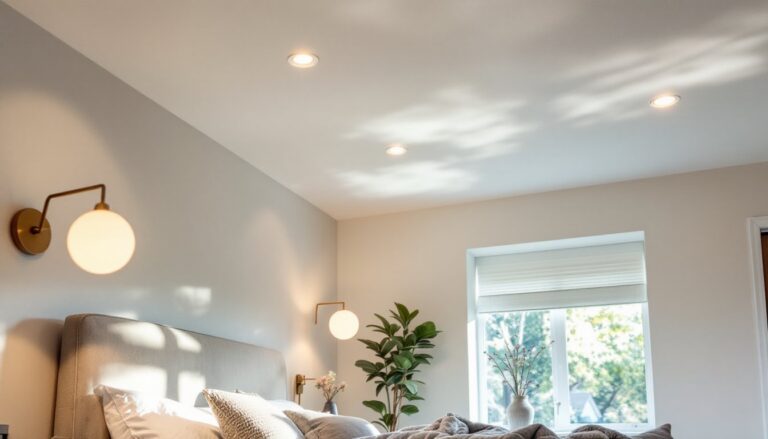
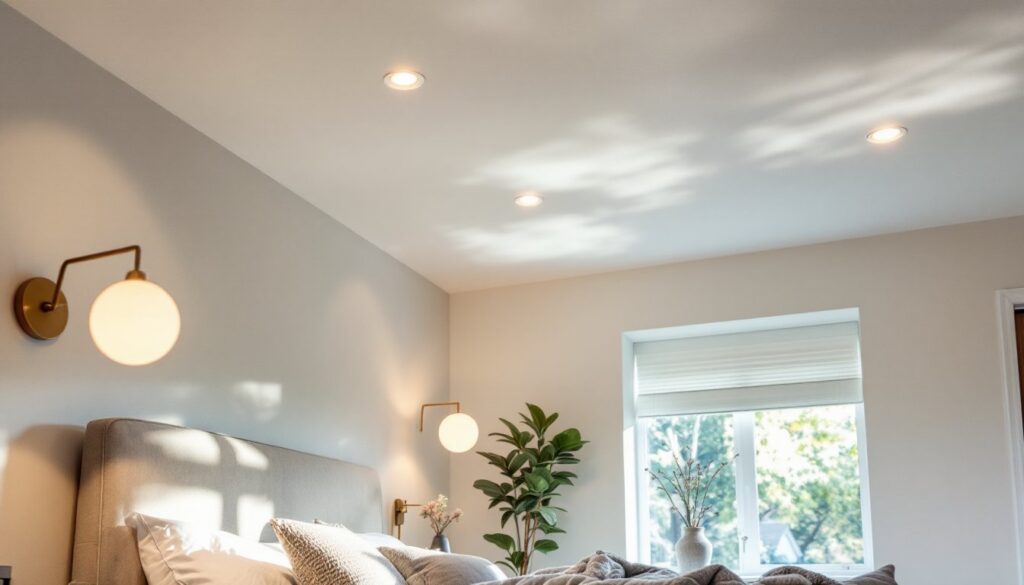
The right lighting fixture or system elevates a ceiling from functional to focal. A recessed lighting layout (also called can lights or downlights) offers clean, modern aesthetics and even light distribution. A typical master bedroom uses 4–6 recessed fixtures spaced roughly 4–6 feet apart. Dimmable LEDs are essential, they let you adjust mood from bright morning light to soft evening ambiance without replacing hardware. Install recessed lights during a ceiling remodel when framing is exposed, or use surface-mounted retrofit kits if you want to avoid cutting into finished drywall.
A statement chandelier or pendant fixture above the bed or room center adds visual interest and warmth that recessed alone can’t match. Pair it with recessed lights for layered lighting, bright task light plus ambient mood. Cove lighting, LED strips hidden behind a soffit or ledge at the ceiling perimeter, creates soft indirect light that makes the ceiling “float.” This technique is popular in modern bedrooms and costs far less than it looks.
For smart home integration, use dimmable, color-changing LEDs (smart bulbs or systems) to adjust color temperature throughout the day. Warm white (2700K) in evenings supports sleep: cooler tones (4000K) in mornings feel more alert. Ensure all new wiring meets NEC (National Electrical Code) standards, if you’re adding circuits or hardwired fixtures, a licensed electrician is the safer call.
Architectural Elements and Beams
Exposed beams or added architectural details add craftsmanship and visual weight to a bedroom ceiling. Faux beams, hollow, lightweight polyurethane or wood-look composites, mimic real timber without structural complexity or cost. They install with construction adhesive and fasteners into the framing or drywall. Real ceiling beams are stunning but structural: they require proper sizing and support, so unless your home already has them, consult a structural engineer.
Beams work best in vaulted or cathedral ceilings or rooms with taller walls (9+ feet). In a standard 8-foot room, beams can feel cramped. Pair beams with neutral paint or a light stain to avoid a heavy look. A natural wood finish contrasts beautifully against soft gray or warm white ceilings. Install recessed lights between beams or add pendant fixtures hanging from them for warmth and function.
Another option is coffered ceilings, a grid of sunken panels created with drywall or trim. This adds depth and a custom, high-end feel. Coffers are labor-intensive to frame and install, often requiring professional carpentry, but the payoff is dramatic. Resources like Freshome showcase coffered designs in luxury bedrooms that prove the investment’s visual impact. Start small with faux beams if you’re new to ceiling details: they’re forgiving and removable.
Modern Minimalist Ceiling Designs
Not every bedroom needs ornament. Modern minimalist ceilings lean into simplicity: smooth drywall, clean lines, and functional lighting. This approach works especially well in small bedrooms or contemporary spaces. A flat white or soft gray ceiling paired with recessed lighting and one statement pendant creates a serene, uncluttered look. Hidden ceiling details (electrical, ductwork, beams) integrated into a soffit above the wall perimeter keep sightlines clean.
Minimalist doesn’t mean bare. Consider a matte white ceiling with a subtle linear detail, a thin shadow line or recessed edge trim, for architectural interest without visual noise. Acoustic drop ceilings (common in older homes) feel dated in bedrooms: if you have one, drywall over it for a solid, permanent ceiling that feels more finished and supports modern lighting integration.
Smart minimalist design pairs a calm ceiling with a focal point elsewhere, a dramatic headboard, accent wall, or artwork. This balances visual interest without overwhelming the overhead plane. The trend toward open, breathing spaces means fewer ornate ceilings and more emphasis on light, proportion, and functionality. A clean ceiling foundation lets other room elements, furniture, textiles, color, tell the story.
Conclusion
Your bedroom ceiling shouldn’t be an afterthought. Whether you choose textured finishes, bold paint, smart lighting, architectural details, or minimalist simplicity, the right overhead treatment transforms the entire space. Start with your style preference and room size, assess your DIY comfort level, and invest in quality prep work, poor surface prep ruins any finish. Most ceiling projects are achievable without permits or professionals, but electrical work and structural elements (real beams, major framing) warrant expert input. Plan your project for off-season (spring or fall) when contractors are less booked, if you need help. The payoff, a bedroom that feels intentional, warm, and uniquely yours, makes the effort worthwhile.