Table of Contents
ToggleA well-designed bedroom bookshelf does more than store books, it anchors your reading space and sets the room’s aesthetic. Whether you’re working with a cozy alcove or a sprawling wall, the right bedroom bookshelf setup makes your collection feel intentional instead of crammed. This guide walks you through floating shelves, corner installations, vertical solutions, and styling techniques that work for any budget. You’ll find practical advice on measuring, mounting, and decorating your shelves to create a retreat that’s both functional and visually appealing.
Key Takeaways
- Floating shelves create a modern, space-saving bedroom bookshelf aesthetic by mounting directly to wall studs with hidden hardware, requiring careful measurement and quality installation hardware rated for 40–60 pounds per shelf.
- Bedroom bookshelf designs should balance books with decorative objects at roughly a 50/50 ratio, using layering depth and color coordination to create visual interest and prevent a cluttered appearance.
- Corner installations and vertical shelving solutions maximize unused space in small bedrooms, with floor-to-ceiling units or tall narrow bookshelves pulling the eye upward to make rooms feel larger.
- Budget-friendly bedroom bookshelf projects using cinder blocks, pine boards, or repurposed materials can deliver professional results for under $120, relying on clean styling and restraint rather than expensive finishes.
- Proper installation fundamentals—locating wall studs, using a 2-foot spirit level, allowing adhesive to cure, and securing tall units to prevent tipping—are essential for both safety and shelf longevity.
Floating Shelves for a Modern, Space-Saving Look
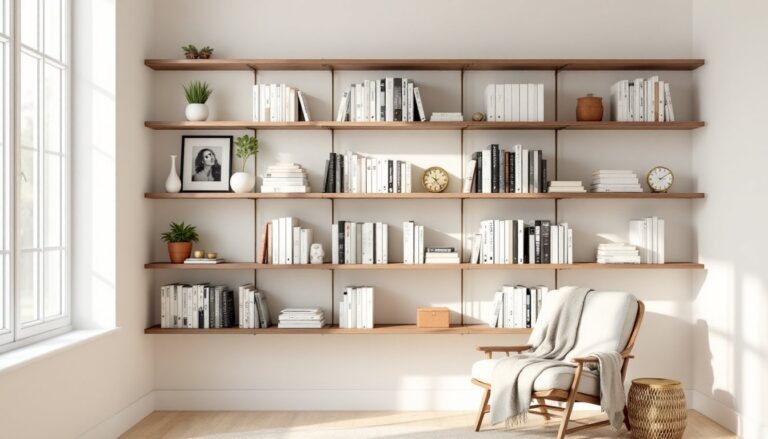
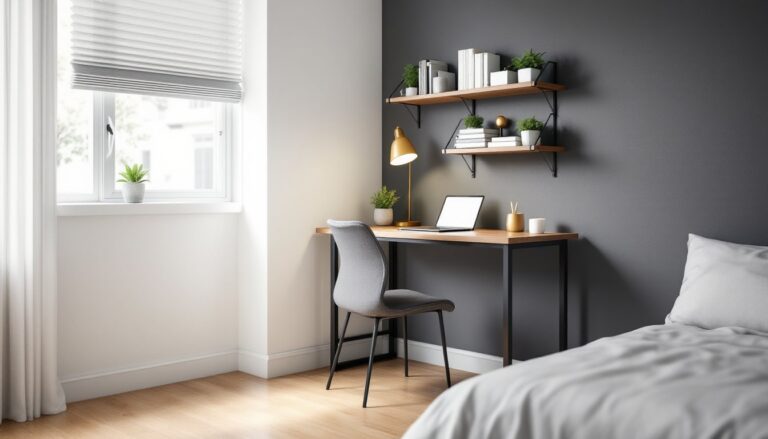
Floating shelves are the go-to choice for a clean, minimalist aesthetic, and they’re easier to install than they look. Unlike traditional bracket-and-rail systems, floating shelves mount directly to wall studs using hidden hardware, creating an illusion that books are hovering in midair. This approach works especially well in bedrooms where you want visual lightness and don’t have floor space to spare.
Before you drill, find the studs with a stud finder and mark them clearly with painter’s tape. Most floating shelves need at least two mounting points into studs: shelves longer than 24 inches often require three. Use quality lag bolts or heavy-duty anchors rated for the shelf’s weight plus your books, a full shelf can easily weigh 40 to 60 pounds. Check the shelf’s installation instructions for load capacity: don’t guess.
Choose shelf material based on your style and budget. Solid wood (oak, walnut, or pine) looks premium and accepts stain or paint beautifully. Engineered wood or plywood is lighter and cheaper but requires careful finishing so edges don’t look unfinished. Wall-mounted shelf kits from home centers often come with all hardware and are ideal for beginners, they take about 30 minutes per shelf if you’ve located your studs correctly.
Level is non-negotiable. Use a 2-foot spirit level during installation, not a short torpedo level, to catch gradual slopes. After mounting, let the adhesive (if used) cure for 24 hours before loading heavy books onto the shelves. Start with lighter items, then add weight gradually to make sure everything stays put.
Corner Bookshelves to Maximize Unused Space
Corner spaces in bedrooms are often dead zones, perfect real estate for a custom bookshelf. Corner shelving maximizes unused wall area while drawing the eye to an otherwise neglected spot. You have two main approaches: install floating shelves at angles along both walls, or build a corner-specific unit that wraps around the room’s geometry.
For floating shelves, measure carefully from the corner outward. A common setup is shelves at 12-inch intervals, starting 12 inches from the floor. The corner itself becomes a natural stopping point for shelf ends, so you won’t need as many support brackets. Use shelves in the 20- to 24-inch range so they don’t extend too far into the room and create awkward traffic patterns.
Alternatively, consider a pre-made corner bookcase unit from a home center or furniture retailer. These come ready to assemble and often have back panels that prevent books from tipping. Assembly takes an hour or two with basic tools. Secure the unit to wall studs with L-brackets to prevent tipping, especially if you have kids or pets in the home, a 4-foot-tall bookcase can shift if bumped hard, and unstable furniture is a serious safety hazard.
Corner shelves shine when styled thoughtfully. Pair tall, vertical stacks of books with a few decorative objects, a small plant, a framed photo, or a ceramic piece, to break up visual weight and add personality. The corner naturally frames these items, so they stand out more than on a linear wall.
Vertical Shelving Solutions for Small Bedrooms
When square footage is tight, vertical is your best friend. Tall, narrow shelving pulls the eye upward, making rooms feel bigger and more open. A floor-to-ceiling bookshelf solution uses every inch without eating floor space like a traditional dresser would.
Measure your wall height accurately, from baseboard to ceiling, before you buy or build. Standard drywall runs 8 feet, but older homes or sloped ceilings vary. A wall-mounted ladder shelf (resembling a library ladder but stationary) stacks 4 to 6 shelves vertically and works beautifully in corners or along one wall. These come in wood or metal and typically run 5 to 7 feet tall, giving plenty of storage without being overwhelming.
Another option is a floor-standing tall narrow bookcase, roughly 24 inches wide and 72 inches tall. These fit in the gap between a window and a door, along a hallway wall, or beside a bed headboard. If you go the DIY route, build a frame from 2×4 lumber and add shelves using pocket holes or dados (a groove cut along the stud’s inner edge). Dados create a finished look and support shelves more invisibly than brackets do.
For true verticalness without bulk, install shelves at 10- or 11-inch intervals instead of the standard 12 inches. Tighter spacing looks intentional and lets you fit more titles per square foot. Stagger shelf heights, some wider, some narrower, to break up visual monotony. Tall shelves near the bottom for oversized art books, smaller shelves higher up for novels. This layering adds depth and functionality.
Decorative Styling: Mixing Books With Décor
A bookshelf full of only books can feel flat and academic. The trick is balancing text blocks with visual variety, what interior designers call “layering.” Think of your shelf as a small gallery, not a library card catalog.
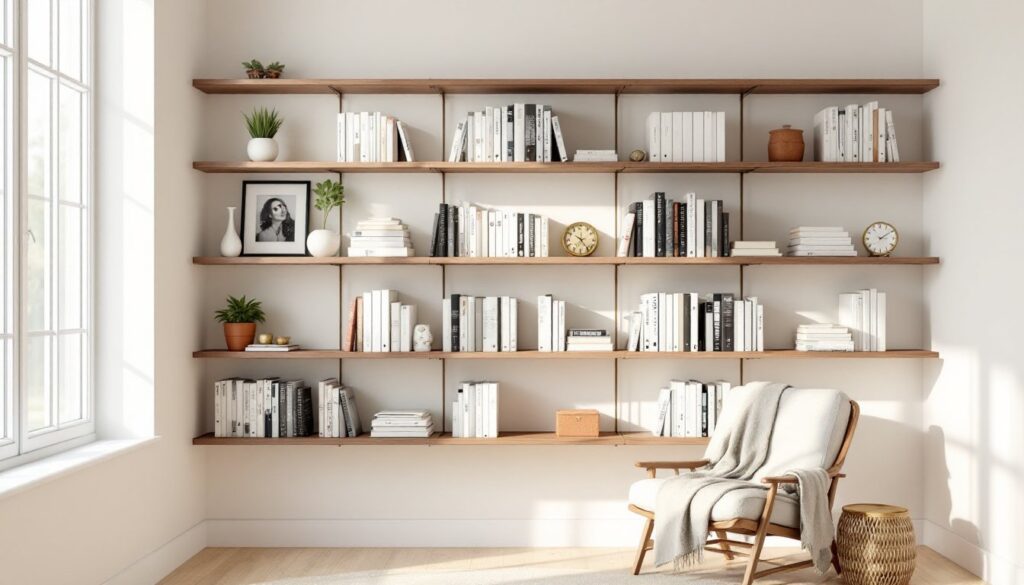
Start with the fifty-fifty rule: aim for roughly half books, half décor. Use bookends (wooden, metal, or sculptural) to corral books into upright stacks, freeing up space for objects. A small potted plant, a framed photo, a decorative box, a vintage clock, or a piece of pottery breaks up the monotony of spines. Mix horizontal and vertical book stacks for visual interest, don’t just line everything up spine-out.
Layering depth is key. Place some items toward the back of the shelf and others forward, so the eye travels in and out rather than across a flat plane. A tall book leaning against the wall behind a smaller object, with a plant in front, creates dimension. This arrangement also prevents the shelf from looking cluttered because objects occupy different visual planes.
Color Coordination and Visual Balance
If your book collection spans every color of the rainbow, consider grouping by color tone, warm spines on one shelf, cool on another, or mix them loosely and let décor objects tie things together. A navy vase echoes dark blue book covers: a terracotta pot complements warm wood and orange-toned spines. Limit decorative objects to two or three colors per shelf so the eye isn’t overwhelmed.
Balance weight visually, not by actual ounces. A single large ceramic piece balances several smaller books. Heavy, dark colors should be distributed across shelves rather than bunched on one. If all your books are stacked on the top shelf, the bottom will look empty and the whole unit feels top-heavy. Spread items out, tall book here, short décor there, and step back to see if the eye moves smoothly across and down, not getting stuck in one spot.
Insights from interior design ideas often emphasize negative space: leaving a shelf partially empty looks intentional, not neglectful. A bookshelf packed solid to every corner reads as cluttered, even if everything matches the color scheme.
Budget-Friendly DIY Bookshelf Projects
You don’t need thousands of dollars or custom carpentry to get a beautiful bookshelf. Smart shopping and simple building techniques deliver professional results on a tight budget.
The cinder block and wood plank method is the cheapest starting point. Stack concrete cinder blocks (about $2 each) and lay wooden planks (pine or reclaimed wood from a salvage yard) across them. Sand and stain the wood, and the whole unit looks intentional rather than temporary. No tools required beyond sandpaper and a brush. Two stacks of 3 blocks each, with two planks, gives you a 2-shelf unit for under $30.
For a slightly more polished look, explore IKEA furniture modifications and other budget retailers. A basic bookcase frame costs $30 to $80, and you can customize it with a fresh coat of paint, new knobs, or backing material. Hardboard backing (thin plywood-like sheets) adds stability without very costly and makes shelves look more intentional. Screw it to shelf undersides and paint it to match or contrast your wall, instant polish.
Another budget win is repurposing or upcycling. Wooden crates from fruit stands, old ladder shelves from thrift stores, or vintage metal shelving units take on new life with a coat of paint or stain. Measure carefully so you know the crate’s interior dimensions and weight limits, then mount or stack accordingly.
If you’re building from scratch, use pine boards (nominal 1×10 or 1×12, actual dimensions closer to ¾ inch thick and 9 to 11 inches wide) and simple metal brackets. Stain or paint the wood, and use quality L-brackets rated for at least 50 pounds per shelf. A four-shelf unit from decent materials costs $60 to $120 and lasts for years. apartment design resources for styling ideas that work with budget materials.
Skip the fancy finishes if money is tight. Matte white paint, simple black metal brackets, and orderly book stacking look expensive and intentional. Expensive-looking has more to do with restraint and cleanliness than material cost.
Conclusion
A bedroom bookshelf transforms a room from generic to personal. Start by measuring your space honestly, choosing a style that fits your room’s geometry, and being realistic about weight and installation. Whether you float shelves for modern minimalism, stake out a corner, reach vertically, or layer books with décor, the goal is the same: create a reading retreat that reflects who you are. Build once, build well, and enjoy your transformed reading nook.