Table of Contents
ToggleA well-designed deck isn’t just an afterthought, it’s where your home extends into the outdoors and real living happens. Whether you’re hosting a summer barbecue or stealing a quiet morning with coffee, your deck shapes how you use your yard. If your current deck feels dated, cramped, or uninviting, it’s time to explore some fresh cool deck ideas. This guide walks through design trends, materials, and features that work for real homeowners tackling real projects. From sleek modern lines to layered multi-level designs, these concepts balance aesthetic appeal with practical durability and budget-friendly execution.
Key Takeaways
- Modern minimalist deck designs with clean lines, horizontal boards, and transparent railings create open, uncluttered spaces that feel larger and easier to maintain.
- Multi-level deck designs add visual interest and define separate activity zones, but require solid structural planning with independent footings set below the frost line and stairs meeting IRC safety standards.
- Composite decking eliminates the yearly staining, sealing, and maintenance demands of traditional wood while resisting rot, splinters, and warping for 15–20 years of durability.
- Integrated outdoor living features like built-in seating, fire pit tables, pergolas, and planter boxes transform cool deck ideas into functional entertaining hubs that maximize space efficiency.
- Outdoor lighting with recessed stair lights, post cap lights, and string lights is essential for safety and ambiance, while fire features and entertainment elements extend deck use into evenings and cooler seasons.
Modern Minimalist Decks With Clean Lines
The minimalist deck aesthetic strips away ornament and focuses on proportion, material quality, and intentional detail. Think low railings with horizontal cable or glass panels, recessed steps, and a unified color palette, typically soft grays, warm taupes, or natural wood tones that age gracefully.
The appeal is practical: clean sightlines make a space feel larger, easier to maintain, and less visually cluttered. A modern minimalist deck pairs well with contemporary home architecture but also softens transitional or traditional houses when done thoughtfully. Horizontal deck boards running the length of the space reinforce that streamlined feel, while subtle texture, brushed surfaces rather than smooth finishes, prevents the look from feeling cold or sterile.
Key details matter here. Flush-mounted fasteners (countersunk screws or hidden fastening systems) eliminate nail heads and hardware clutter from the surface. Integrated planter boxes built into deck edges or framing add greenery without visual noise. Neutral stain colors let the wood grain or composite texture speak for itself. If you’re building or refacing, keeping railings transparent (glass or cable) rather than solid preserves sightlines and that open, uncluttered impression.
Multi-Level Deck Designs for Visual Interest
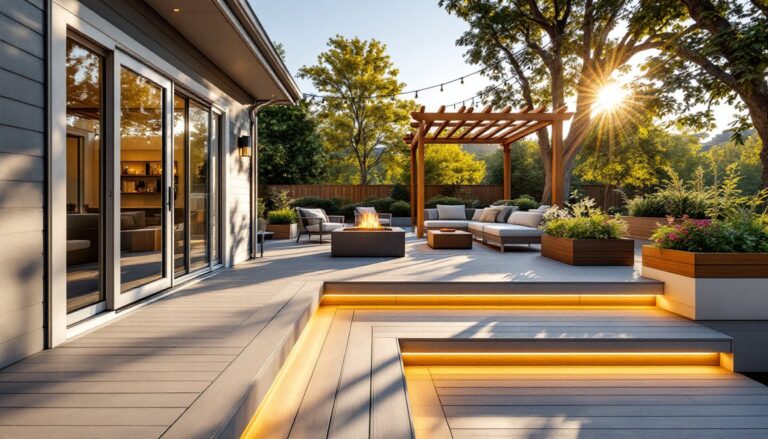
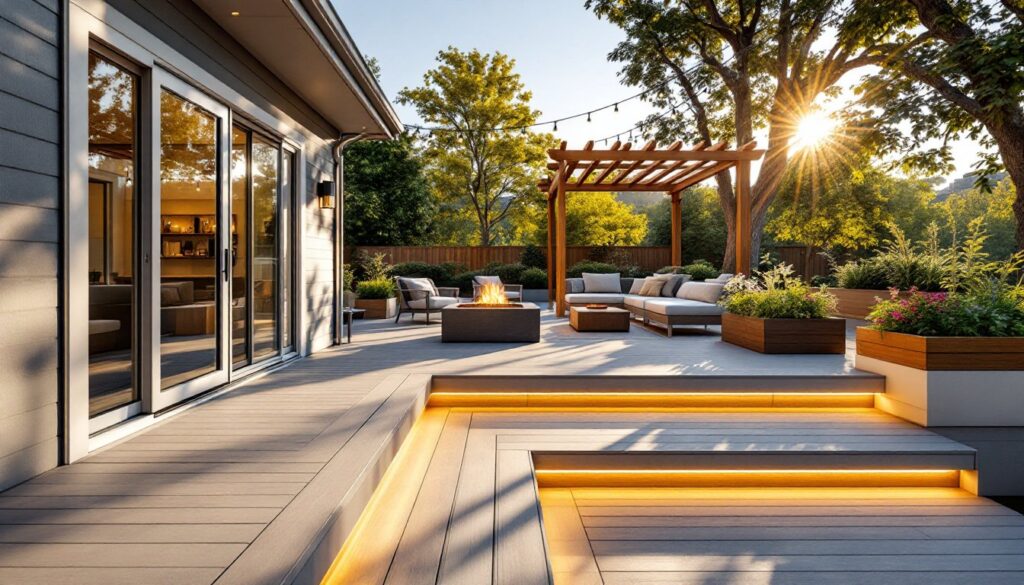
A single-level platform deck is functional, but a multi-level design creates depth, zones different activities, and makes your yard feel larger and more dynamic. Step down to a secondary platform for a dining or lounge area, then another tier for a fire pit or seating nook. The vertical layering draws the eye and breaks up what might otherwise be an expanse of monotonous decking.
Building multi-level decks requires solid structural planning. Each level needs independent support posts, footings set below the frost line (typically 36–48 inches in colder climates, but your local building code sets the requirement), and proper ledger connections if the deck attaches to your house. The stair runs between levels must meet IRC (International Residential Code) standards: a rise of 7–7.75 inches per step and a run of 10–11 inches. Misjudging this is a safety hazard and a code violation.
Adding Depth and Dimension to Your Space
Staggering multiple decking planes at different heights creates visual interest without overwhelming the space. A 12–18 inch drop between tiers feels natural and doesn’t require overly long stair runs. Vary the decking board direction on different levels, running boards lengthwise on one tier and perpendicular on the next, to emphasize the distinct zones.
Lighting becomes even more critical on multi-level designs (covered in detail later), but the structural payoff is worth it. A second-tier fire pit area, separated by steps from the main deck, defines gathering space and anchors conversation areas. Composite decking works particularly well here because consistent color and texture across multiple elevations creates cohesion without the need to stain or seal several separate surfaces.
Composite and Low-Maintenance Deck Materials
Wood decks are beautiful and classic, but they demand yearly staining or sealing, occasional board replacement, and seasonal cleaning to fight mildew. Composite decking, a blend of wood fibers and plastic, eliminates most of that burden while offering better durability.
Composite boards resist rot, splinters, and insect damage. They don’t cup, warp, or swell the way pressure-treated lumber does when exposed to seasonal moisture swings. Colors remain stable for years without resealing. The tradeoff is upfront cost: composite runs roughly 2–4 times the price of pressure-treated wood, but the reduced maintenance often pays for itself over 15–20 years. Premium brands offer capped composites, where a protective shell wraps the core material, further reducing staining and fading. Mid-range options are perfectly serviceable if you accept occasional spot-cleaning. Budget composites sometimes feel plasticky underfoot and may show wear faster.
Why Composite Outperforms Traditional Wood
Pressure-treated lumber is chemically stabilized to resist rot and insects, but it still absorbs moisture, expands and contracts seasonally, and requires maintenance. Wood also requires PPE when cutting, always wear a dust mask when sawing pressure-treated lumber, as the chemical preservatives can irritate lungs. Composite boards don’t have that health concern and eliminate prep-work variability (wood moisture content fluctuates: composite doesn’t).
For railings, composite balusters and caps endure freeze-thaw cycles without splintering or requiring paint touch-ups. Hidden fastening systems specifically engineered for composite, like clip-based attachments, allow boards to expand and contract without splitting screws loose. If you’re building in a wet climate or near saltwater, composite is nearly mandatory. Fresh outdoor living spaces design guidance shows that homeowners increasingly specify composite for its long-term cost efficiency and minimal upkeep.
Integrated Outdoor Living Features
A deck works hardest when it does double, or triple, duty. Integrated features blend functionality and aesthetics, turning a platform into a true outdoor room. Built-in seating benches flanking a fire pit table are inviting and save floor space. Planter boxes edge the deck perimeter for greenery and privacy screening. Overhead structures like pergolas or shade sails manage sun and rain while anchoring the space visually.
Fire pit tables (propane or gel-fueled) are safer than open campfires on wood decking and don’t require a chimney-like clearance in most cases, but check your local code. They create gathering focus and extend the season into cooler months. Outdoor kitchens (grill, prep area, small refrigerator) transform a deck into a true entertaining hub, though this shifts the project from DIY to contractor-grade work and building permits for electrical and gas connections are often required.
Pergolas and shade structures don’t require permits in most jurisdictions if they’re attached to the deck (check locally), but they do add wind load considerations to railing and post calculations. A cedar or composite pergola costs $2,000–$5,000 DIY depending on size: a retractable shade sail is cheaper and adjustable. Benches built into deck framing distribute weight better than standalone furniture and prevent movement during use. Storage boxes under bench seating hide yard tools and seasonal equipment while adding seating capacity.
Lighting and Entertainment Elements
Outdoor lighting transforms a deck from daylight-only to an evening destination. Recessed deck lights built into stair risers and fascia glow softly and improve safety, they cost $15–$40 per fixture installed. Post cap lights crown railing posts (another $20–$50 each). String lights or market lights strung overhead create intimacy and are renter-friendly if not hardwired. Solar options cut electrical work but require adequate sun exposure during the day and don’t shine as brightly as line-voltage fixtures.
Built-in speakers tucked under the deck soffit let you stream music without desktop clutter. Outdoor TVs mounted on pergola posts or fascia extend entertainment beyond sports season. These require weatherproof electrical boxes, GFCI-protected outlets (essential for safety in wet environments), and proper wiring per NEC code, this is typically contractor work to ensure compliance.
Fire features set tone and warmth. A chiminea (freestanding, not deck-attached) adds charm but requires clearance from combustibles. Built-in fire tables sit securely on the deck and contain flame. Outdoor heaters, propane patio heaters or tabletop models, extend comfort into shoulder seasons without major construction. Always maintain clearance from railings and keep flammable materials away from any heat source. Resources like garden design and outdoor space ideas showcase how integrated lighting and seating arrangements anchor modern outdoor entertaining zones, turning decks into genuine living extensions of the home.