Table of Contents
ToggleGood lighting can make or break a bedroom. It’s not just about brightening a room, it’s about creating an environment where you actually want to sleep, read, and relax. Most homeowners overlook bedroom lighting until they’re squinting to read or feeling the glare from an overhead fixture at night. The right approach combines three types of lighting, ambient, task, and accent, layered strategically to give you flexibility and comfort. This guide walks you through selecting fixtures, understanding lighting layers, and planning a layout that actually works for your space and lifestyle.
Key Takeaways
- Bedroom light ideas work best when you layer three types of lighting—ambient, task, and accent—to create flexibility and comfort for sleeping, reading, and relaxing.
- Ambient lighting should provide 10–20 lumens per square foot with a dimmer switch and warm white 2700K bulbs to promote better sleep and create a soft evening glow.
- Task lighting like bedside lamps (40–60 watts) and vanity mirrors with side-mounted fixtures prevent glare and improve functionality for reading and getting ready.
- LED bulbs save 75–80% on electricity costs compared to incandescent and pay for themselves within years, especially with smart dimmers that add convenient scheduling and control.
- Plan your bedroom light layout by mapping activity zones, measuring total lumens needed, and testing color temperature before installation to avoid regrettable hardwired fixtures.
- Accent lighting with LED strips or spotlights adds visual depth with just 5–10% of your room’s total lumens, while warm brass fixtures create intentional design harmony with your décor.
Understanding Bedroom Lighting Layers and Their Purpose
Ambient Lighting: Creating Your Foundation
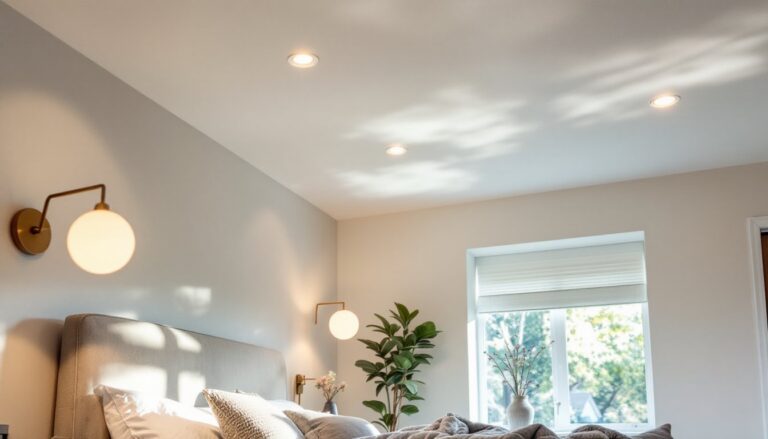
Ambient lighting is your base layer, the soft, general illumination that fills the room. It’s typically provided by a ceiling fixture, recessed lights, or a chandelier and sets the overall mood. Aim for 10–20 lumens per square foot of bedroom space (a typical 12×14 room needs 1,680–3,360 total lumens). This isn’t a hard rule, but it gives you a starting point.
The key is making ambient light dimmable. A standard ceiling fixture with a dimmer switch costs little to install and transforms the space from bright morning light to soft evening glow. If you’re rewiring or adding recessed lights, choose LED trim kits rated 2700K to 3000K (warm white), this color temperature promotes sleep. Avoid anything cooler (5000K+ reads as harsh, clinical light).
If you rent or can’t modify the ceiling, table lamps placed on nightstands or dressers can work, though you’ll have less even coverage. Budget $50–$150 for a quality dimmable ceiling fixture, depending on style and existing wiring.
Task Lighting: Function Meets Style
Task lighting handles specific jobs: reading in bed, applying makeup, getting dressed. Bedside table lamps are the obvious choice, position them at eye level when seated so light hits your page or mirror without glare. A 40–60 watt equivalent LED bulb (roughly 400–600 lumens) works well for a nightstand lamp.
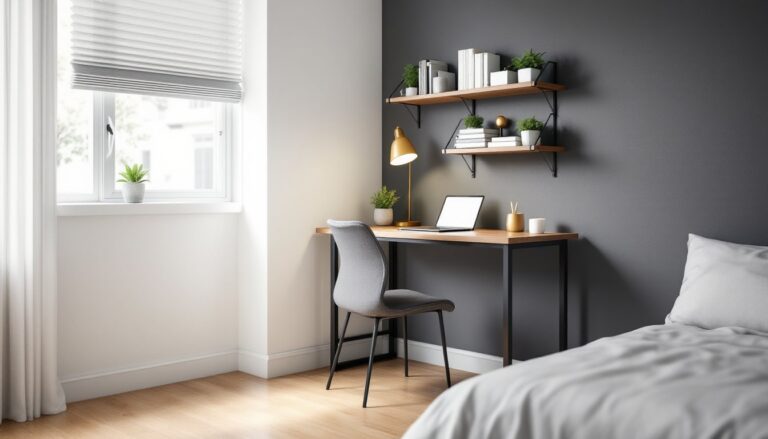
If you have a vanity, place a light fixture above or on either side of the mirror, not overhead. Hollywood-style strips with multiple bulbs prevent shadows on your face. Wall sconces flanking the mirror at roughly 60 inches from the floor are ergonomic and look intentional. For a desk or workspace in the bedroom, a swing-arm wall lamp or task floor lamp allows you to angle light exactly where you need it.
Task fixtures don’t need to be dimmable, but avoiding them helps your body wind down closer to bedtime. Warm white 2700K bulbs are your friend here too.
Accent Lighting: Adding Depth and Personality
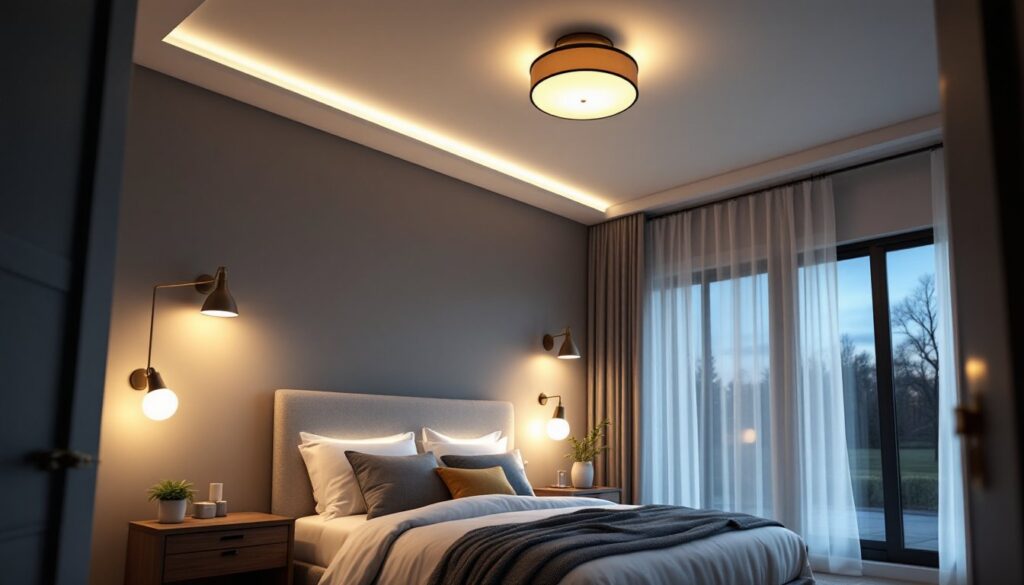
Accent lighting highlights architectural features, artwork, or decorative elements, it’s purely visual and mood-setting. This might be a warm LED strip behind a wooden headboard, small spotlights on a gallery wall, or a decorative table lamp on a dresser. Accent lighting typically uses 5–10% of your total room lumens, so it’s subtle but impactful.
LED strip lights (RGB or warm white) are inexpensive ($20–$60) and hide easily behind furniture or crown molding. Recessed spotlights work if you’re rewiring. The goal is creating visual interest and depth, a well-lit room can feel flat without accent layers.
Popular Bedroom Light Fixtures and Styles
Ceiling fixtures set the tone for the whole room. A flush-mount or semi-flush fixture works in rooms with standard 8-foot ceilings (actual clearance matters, you don’t want a pendant hitting your head). Chandeliers work in master bedrooms with higher ceilings: they’re decorative but usually require a licensed electrician if you’re replacing an existing fixture.
Recessed lighting (downlights) gives a modern, clean look and doesn’t consume headroom. Standard 4-inch recessed cans spaced 4–6 feet apart provide even ambient light when installed in a grid. Installation requires cutting into drywall and running new wiring, doable as a DIY project if you’re comfortable with electrical basics, but hiring an electrician ($500–$1,500 depending on the number of fixtures and existing wiring) removes guesswork.
Bedside table lamps balance function and style. Stick with lamps 20–24 inches tall (measured to the top of the shade, not the bulb) so light clears your sight line when you’re lying down. Swing-arm wall sconces save nightstand space and direct light where you read. Wall sconces flanking a mirror create symmetry and even lighting for getting ready.
Pendants work in larger bedrooms, hung 30–36 inches above a nightstand or seating area. Keep them away from traffic paths, nobody wants a pendant light to the head at 2 a.m. Smart bulbs and fixtures with app control are increasingly popular: homeowners exploring modern interior design often integrate these for convenience, though reliability varies. Stick with reputable brands like Philips Hue or LIFX if you go this route.
Smart and Energy-Efficient Lighting Solutions
LED bulbs have come a long way, modern warm white LEDs are indistinguishable from incandescent in color and cost 75–80% less to run. A typical bedroom using four 60-watt incandescent fixtures 6 hours daily costs roughly $120 per year in electricity: switching to LED equivalents drops that to $25. Over a bulb’s 25,000-hour lifespan, you save hundreds.
Smart lighting offers convenience: dimming and color control via app, scheduling (lights gradually brighten at wake-up time), and voice control. The entry cost is $20–$50 per bulb or fixture, plus a hub ($50–$100) if required. Benefits include energy savings and the ability to adjust lighting without getting out of bed. Downsides are setup complexity, potential app reliability issues, and ongoing software dependency.
If smart bulbs seem overkill, a simple smart dimmer switch ($30–$60) lets you control brightness and scheduling without replacing every bulb. These work with standard bulbs and integrate with major platforms like Alexa and Google Home.
Energy Star certified fixtures use 25–40% less energy than standard models. When replacing a fixture, look for the label, the upfront cost is often recouped in electricity savings within a few years. For bedrooms, prioritize warm white color temperatures (2700K) regardless of bulb type: interior design experts consistently recommend this for sleep-friendly spaces.
Practical Tips for Planning Your Bedroom Lighting Layout
Start by mapping your room’s activities: sleeping, reading, dressing, working. Mark these zones on a simple floor plan, your bed, nightstands, dresser, vanity, seating area. This visual helps you see where task and accent lighting belong.
Measure your room’s dimensions and calculate total lumens needed. A 10×10 bedroom needs 1,000–2,000 lumens for ambient light (dimmed to 500–800 for evening is comfortable). Task areas need localized 400–600 lumen fixtures. Use an online lumen calculator or ask a lighting specialist at your local home center if math isn’t your thing.
Consider your ceiling height and existing wiring. If you have one center ceiling outlet (common), a single fixture is your easiest install. If you want recessed lights or multiple fixtures, budget for an electrician unless you’re experienced with running wiring in walls, mistakes here are safety hazards.
Test color temperature and brightness before committing. Buy a few smart bulbs or ask the store if they have demo fixtures you can see. “Warm white” sounds subjective, but 2700K is objectively sleep-friendly: cooler 4000K–5000K bulbs suppress melatonin and make falling asleep harder.
Build flexibility into your design. Install dimmers on main fixtures, choose bedside lamps with 3-way switches (low, medium, high), and position task lights so they don’t wash out accent lighting. Avoid hardwired, non-dimmable fixtures in a bedroom, you’ll regret them at midnight.
Creating cohesive room designs often hinges on lighting choices that complement your décor style and color palette. If your bedroom has cool grays, warm brass fixtures and 2700K bulbs create intentional contrast. If your palette is already warm (wood tones, earth colors), stick with brass or bronze fixtures in matching temperatures for harmony.