Table of Contents
ToggleYour bedroom is more than just a place to sleep, it’s your personal retreat, and how you arrange it directly affects your rest quality and daily mood. A poorly laid-out bedroom wastes floor space, creates awkward traffic patterns, and makes the room feel cramped even if it’s generously sized. The good news is that strategic bedroom arrangement ideas can transform any space into a functional, comfortable sanctuary without expensive renovations. Whether you’re working with a tight closet-sized room or a sprawling master suite, smart furniture placement, thoughtful lighting, and intelligent storage will make an immediate difference. Let’s walk through practical approaches that work for real homes and real budgets.
Key Takeaways
- Strategic bedroom arrangement ideas start with positioning your bed in the command position where you can see the door, avoiding direct placement opposite doorways or windows to improve room flow and sightlines.
- Maximize vertical space with floating shelves, corner units, and wall-mounted storage to declutter your floor and make small rooms feel taller without expensive renovations.
- Layer your lighting with dimmable overhead fixtures, bedside sconces, and accent lamps using warm white LEDs (2700K) to create a relaxing atmosphere that supports better sleep quality.
- Define functional zones using rugs and create an intentional entry area with a console table or hooks to keep clutter off your bed and dresser.
- Under-bed storage bins and closet organization systems like dual rods and shelf dividers unlock hidden storage capacity for off-season items and accessories.
- Use mirrors opposite windows to reflect natural light and visually enlarge the room, paired with appropriately-scaled furniture to maintain open floor space in small bedrooms.
Optimize Your Room Layout For Better Flow And Function
Create An Efficient Furniture Placement Plan
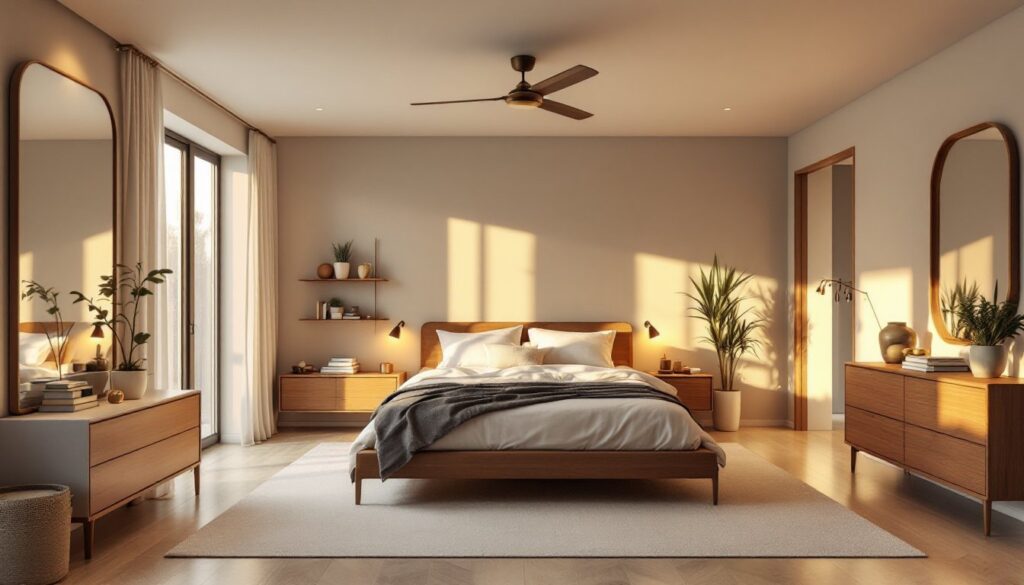
Start with the bed, it’s usually your anchor piece and the largest object in the room. Ideally, position it so you can see the door from bed (what designers call the “command position”), and avoid placing the bed directly opposite a door or window, which disrupts sightlines and creates draft zones. Once the bed is set, map a clear traffic path from the door to your closet and to other key areas. This path shouldn’t require zigzagging around furniture.
For dressers and nightstands, keep them proportional to your bed size. A low-profile dresser works better in smaller rooms than a tall lingerie chest, which can make ceilings feel lower. Pair your bed with two matching nightstands if space allows, this feels balanced and provides symmetrical surface area for lamps and personal items. If space is genuinely tight, one floating nightstand on each side of the bed does the job without eating floor real estate.
Use Vertical Space To Declutter And Define Zones
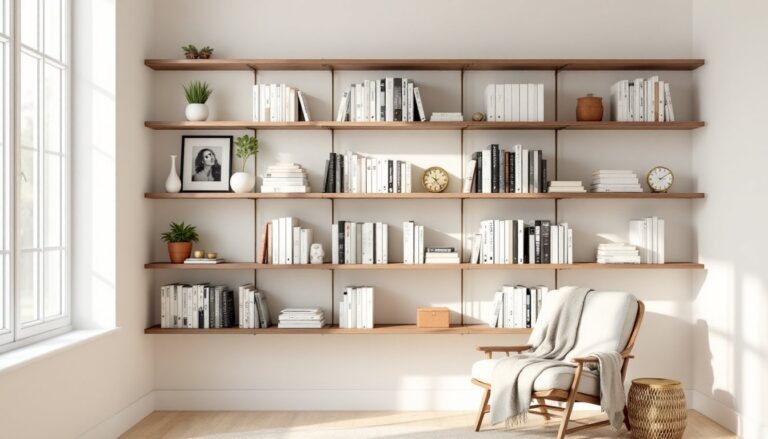
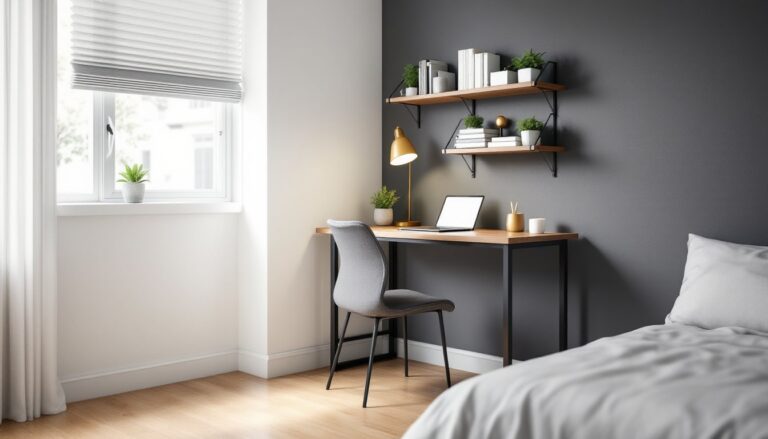
Walls are your hidden advantage. Install floating shelves above your dresser or along one wall to display books, plants, or decorative items, this keeps them off the floor and draws the eye upward, making the room feel taller. Wall-mounted shelving works particularly well in layouts where floorspace is precious.
Use corner space smartly. A tall, narrow corner shelf unit (sometimes called a “corner ladder shelf”) holds décor without blocking movement. If your room is large enough, a reading nook in the corner with a small chair and floor lamp creates a defined zone for a specific function, making the room feel intentional rather than just a bed in a box. Rugs also define zones, a rug under the bed anchors the sleeping area, while a separate accent rug near a seating area visually separates spaces even in an open floor plan.
Leverage Lighting To Set The Mood And Improve Usability
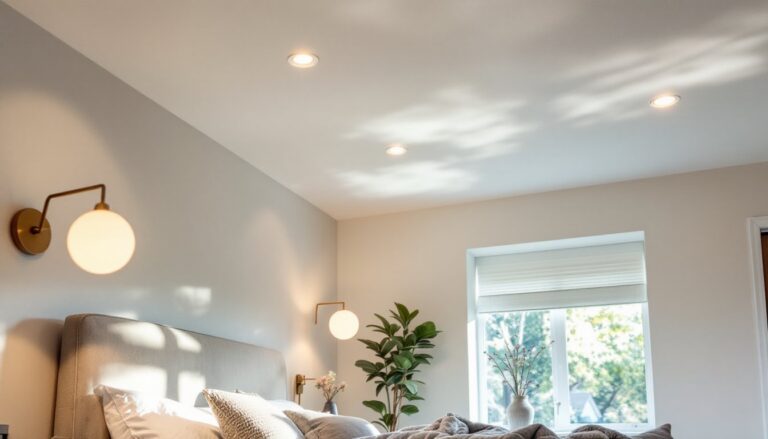
Overhead ceiling fixtures alone are harsh and unflattering. Layer your lighting with multiple sources: a dimmable overhead fixture for bright tasks, wall-mounted sconces on either side of the bed for reading, and a table lamp on your dresser for ambient light. This layering means you can adjust brightness to match your mood and time of day, bright and alert for morning routines, soft and warm for winding down.
Bedside lamps should be tall enough that their bulbs sit at eye level when you’re lying down, which eliminates glare while you read. Avoid table lamps with shades that face outward too much: directional shades prevent light from spilling into your face. For small rooms, a swing-arm sconce mounted on the wall behind the bed saves nightstand space entirely.
Consider color temperature. Warm white LEDs (2700K) create a relaxing atmosphere ideal for sleep zones, while cooler tones (4000K+) work better at a desk or dressing area. Many smart bulbs let you adjust color temperature throughout the day, which genuinely helps sleep quality. Dimmer switches are a nearly invisible upgrade that costs under $50 and makes your room feel dramatically more luxurious and functional.
Design A Functional And Welcoming Entryway
Even a small bedroom benefits from an intentional entry zone. If your door opens into the bedroom directly (rather than a hallway), create a subtle transition. A narrow console table or floating shelf just inside the door gives you a landing spot for keys, wallet, and phone, preventing these items from landing on your bed or dresser throughout the day.
In larger bedrooms, a small vestibule area with a coat hook, shoe rack, or narrow bench creates a real entryway. This signals your brain that you’re entering a specific space, not just walking through a room. If your bedroom door opens against your bed or closet, consider your furniture arrangement carefully. Moving the bed to the opposite wall might be the simplest fix to create actual entry flow.
Lighting at the entry matters too. A wall sconce near the door provides visibility for getting dressed and ready without forcing you to flip on harsh overhead lights. This is especially useful if you share a room or wake before a partner, you can see what you’re doing without waking them.
Storage Solutions That Keep Clutter At Bay
Most bedroom problems stem from stuffing too much into too little storage. Before rearranging furniture, audit what actually belongs in your bedroom. Work clothes can live in a home office or laundry room: off-season items belong in bins under the bed or in a closet shelf. This isn’t aesthetic philosophy, it’s just practical organization.
Under-bed storage is real estate you probably aren’t using. Flat plastic bins on wheels slide in and out easily, holding off-season clothes, extra bedding, or shoes. Nominal bed height (typically 18–24 inches off the floor) usually leaves room for 6–8 inches of storage underneath. Measure before buying bins.
Closet organization multiplies your effective storage. Add a second rod at half-height for folded items or shorter clothing, install shelf dividers so stacks don’t topple, and use hanging organizers on the inside of the closet door for accessories. Apartment Therapy has detailed small space living ideas that apply directly to bedroom storage. Wall-mounted hooks and pegboards near the door handle belts, bags, and accessories without consuming drawer space. These aren’t fancy, they’re functional and work in any style bedroom.
Budget-Friendly Arrangement Hacks For Small Bedrooms
Small bedrooms require aggressive efficiency. A murphy bed or wall bed flips up during the day, freeing the entire room for other uses, these run $1,000–$4,000 depending on quality, but they’re worth considering if your bedroom pulls double duty as a home office. For modest budgets, a daybed with built-in storage drawers underneath serves sleeping and storage simultaneously.
Mirrors are your secret weapon. A large mirror opposite a window reflects natural light and makes the room feel 50% larger without costing much. Position it to bounce daylight around the room. Mirrors also let you see the full picture while getting dressed without needing a distant full-length mirror taking up wall space.
Furniture scale matters enormously. Oversized pieces in tiny rooms feel oppressive, a queen bed might actually be better than a king if floor space is tight. Pairs of slim nightstands replace a chunky dresser. MyDomaine’s interior design tips include smart furniture choices that maximize visual space. Wall-mounted floating nightstands save the footprint of traditional tables. Use the money you save on smaller furniture to invest in really good bedding and lighting, which improve the space far more than an extra piece of furniture ever will.