Table of Contents
ToggleBedroom lighting sets the mood, it affects how you feel when you wake up, how you unwind at night, and whether you can actually find your socks in the morning. Yet many homeowners stick with a builder-grade fixture or outdated flush mount because it’s already there. The good news: upgrading your bedroom ceiling lights doesn’t require rewiring your entire house or calling an electrician for every change. Whether you’re renovating from scratch or refreshing a single fixture, there are practical, budget-friendly ceiling light ideas that work for any skill level. From recessed lighting that disappears into the ceiling to statement pendants that anchor the room, the options available in 2026 blend energy efficiency, smart home integration, and real style, no Pinterest fluff required.
Key Takeaways
- Bedroom ceiling light ideas range from budget-friendly LED bulb retrofits ($5–12) to statement pendants and recessed lighting, allowing upgrades at any skill level without full rewiring.
- Recessed lights provide a clean, modern aesthetic and should be spaced one fixture per 25–40 square feet in a grid or off-center layout to avoid an office-like appearance.
- Layering ambient, task, and accent lighting with dimmable fixtures and smart bulbs creates the ideal bedroom atmosphere for sleep, reading, and daily comfort.
- Pendant lights hung 24–30 inches above nightstands or reading areas inject personality and are easier to install in retrofit situations using existing E26 or E27 sockets.
- Always turn off the breaker before installation, use a voltage tester, verify fixture weight limits, and pull permits for new circuits to ensure electrical safety and code compliance.
- Pairing traditional dimmable LED bulbs with compatible dimmer switches offers reliable, affordable control without requiring smart home integration or app management.
Recessed Lighting: Clean, Modern, and Energy-Efficient
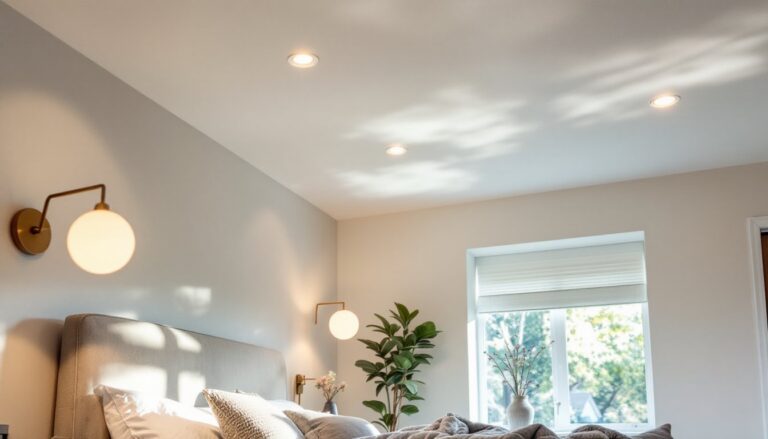
Recessed lights, sometimes called can lights or downlights, are the workhorses of modern bedroom ceilings. They sit flush in the ceiling, creating a clean, uncluttered look that works in any design style.
What You’re Installing
A standard recessed light fixture includes a trim ring, baffle or reflector, and the light housing itself, which sits above the ceiling in the joist cavity. Most bedrooms use 4-inch or 6-inch diameter housings, with 6-inch offering more light output and better spacing flexibility. LED retrofit kits make retrofitting old fixtures painless, you can swap out incandescent or halogen bulbs for dimmable LED equivalents in minutes without touching the housing.
Layout and Spacing
Rule of thumb: space recessed lights one fixture per 25–40 square feet, depending on trim style and desired brightness. A typical 12×14 bedroom might use 4–6 fixtures arranged in a grid or off-center pattern. Off-center layouts feel less “office building” and more residential. Don’t cluster them all over the center, spread them toward the perimeter and above reading areas or the bed for task and ambient light combined.
Installation Reality
Installing new recessed lights in an existing ceiling requires cutting holes, running electrical, and possibly rerouting framing around joists. This is a step-up project that benefits from a helper and basic electrical knowledge. If your bedroom has an accessible attic above it, the job is much simpler: finished ceilings with no attic access are trickier. Existing light boxes can be swapped for recessed housings if the electrical is already there. LED retrofit modules are the easiest upgrade path for renters or those uncomfortable roughing-in new wiring.
Pendant Lights and Statement Fixtures
Pendant lights hang from the ceiling and inject personality into a bedroom. Unlike a fixed flush mount, they’re sculptural, adjustable, and often easier to install in a retrofit situation.
Choosing the Right Pendant
Bedroom pendants are typically 16–20 inches in diameter and hung 24–30 inches above the nightstand or reading area. Oversized statement pendants (20–30 inches) work well over a sitting area or accent wall but can overwhelm a small room. Pair of matching pendants flanking the bed or above nightstands creates symmetry and layered light. Single pendants work too, especially if centered over a vanity or seating zone.
Installation Options
Many pendant lights screw into existing E26 or E27 sockets (standard bulb size) using a simple swag hook kit, no new wiring required. If you’re upgrading a ceiling fixture, confirm the outlet location and wattage capacity. Hardwired pendants need junction boxes and may require a licensed electrician if you’re not confident running cable. Interior design platforms like Homedit showcase pendant styles that pair well with modern, industrial, and eclectic bedroom themes.
Materials and Finishes
Look for powder-coated metal, ceramic, or fabric shades that soften the light and suit your décor. Matte finishes (black, charcoal, brass) read more upscale and hide dust better than polished chrome. Avoid pendants with exposed bulbs unless you’re using decorative Edison-style LED filaments: raw light fixtures can cause glare above the bed.
Ambient and Task Lighting Combinations
The best bedroom lighting uses layers: ambient light (overall room glow), task light (reading, dressing), and accent light (mood, focus). A single overhead fixture can’t do all three well.
Ambient Layer
Recessed lights, a central fixture, or flush-mount ceiling lights provide base illumination. They should be dimmable, crucial for a bedroom, so you can scale light from morning brightness to evening relaxation. Aim for 10–20 foot-candles of illumination at eye level (measured in lumens: a 60-watt equivalent LED produces roughly 800 lumens spread across a room).
Task Layer
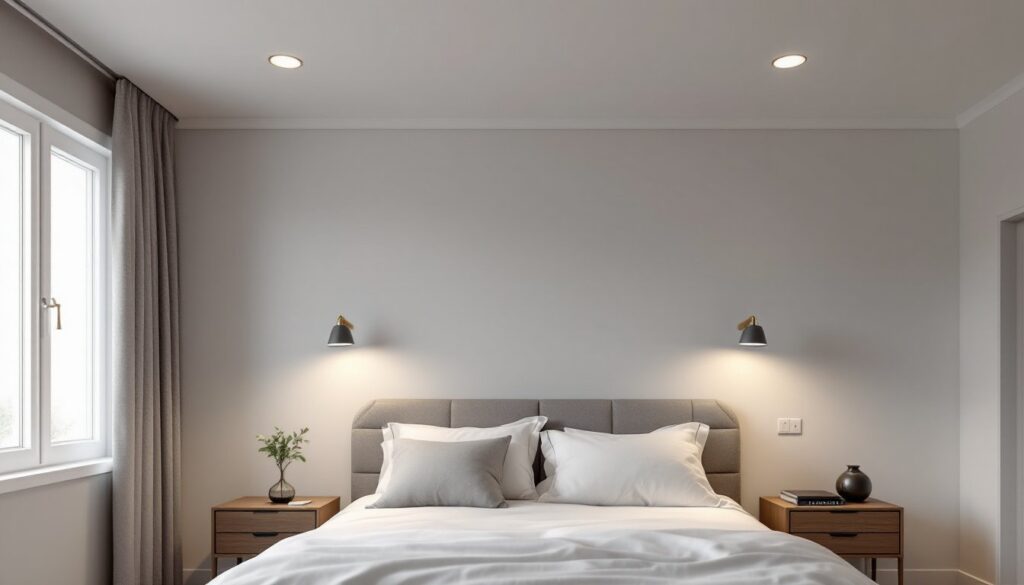
Wall sconces flanking the bed, pendant lights over a reading chair, or directional track lights above a vanity handle focused work. Sconces at 60 inches from the floor (roughly bed-height) are ideal for reading without casting shadows on a book or phone. LED strips under floating shelves or crown molding add texture while providing subtle task light.
Combining Them
Program your ceiling light on one circuit (for ambient) and bedside sconces or pendants on a second circuit or switch. This lets you read with just the sconce on, or flip on the ceiling for full-room light. Smart bulbs (discussed next) make this blending seamless. Resources like MyDomaine offer room-by-room design inspiration showing how bedroom lighting layers create atmosphere without complexity.
Smart Lighting and Dimmer Controls
Smart bulbs and switches are no longer bleeding-edge: they’re practical upgrades that improve daily comfort and energy use.
Dimmer Switches vs. Smart Bulbs
A traditional dimmable LED bulb paired with a standard trailing-edge or leading-edge dimmer switch is the most reliable option. They’re cheap (dimmer ~$15–25), compatible with almost any fixture, and require zero Wi-Fi. Smart bulbs (Philips Hue, LIFX, Wyze) add color-tuning and scheduling, useful for syncing light to circadian rhythms, but need their own hub, app management, and regular firmware updates. For a simple bedroom, dimmers alone often suffice: add smart bulbs if you want preset scenes or voice control.
Installation and Compatibility
Dimmers require a neutral wire (white) in the switch box, not all older homes have this. Confirm before buying. Many LED bulbs don’t dim smoothly on older triac dimmers: check compatibility or upgrade to a smart dimmer switch (Lutron Caseta, GE Enbrighten) that handles LED flicker and offers scheduling even without internet. Smart bulbs must match your existing E26/E27 sockets: pendant lights, bedside lamps, and some recessed retrofit kits work fine, but older fixtures with non-standard sockets won’t.
Practical Benefits
A bedroom light that dims to 10% at 10 PM and gradually brightens at 7 AM reduces sleep disruption and makes mornings easier. Color-tuning bulbs can shift from cool daylight (5000K) in the morning to warm amber (2700K) by evening, supporting better melatonin production. These aren’t essential, but they’re worth considering if you spend 8+ hours a day in the bedroom.
Budget-Friendly Ceiling Light Upgrades
Replacing a bedroom ceiling light doesn’t demand a second mortgage.
**Retrofit LED Bulbs (Cheapest Entry)
If your current fixture works, swap the bulbs first. Dimmable A19 LED bulbs cost $5–12 each and last 25,000+ hours. Check the fixture’s maximum wattage rating (usually 60W equivalent or higher now) and confirm the socket type. This alone cuts energy use by 75% and takes five minutes per bulb.
Flush-Mount or Semi-Flush Replacements
A new basic LED flush-mount or semi-flush fixture runs $40–150 and screws into the existing junction box, no rewiring. Options range from simple white domes to brushed brass or black styles. Major hardware chains stock dozens of options. Installation is straightforward: turn off power at the breaker, unscrew the old fixture, connect the new one’s wires using wire nuts (the small plastic connectors), and mount the canopy. Freshome features renovation guides that show how budget-conscious upgrades refresh entire rooms without professional help.
Wall Sconces Instead of Overhead
Skipping a ceiling fixture altogether and using bedside sconces (30–60 dollars each) avoids the overhead rewire. Plug-in sconces with USB ports work in rentals and offer flexibility. Hardwired sconces require running a circuit but eliminate cord clutter.
**Smart Bulbs (Medium Investment)
Adding one smart RGB bulb ($10–25) to an existing fixture is a low-risk way to test the feature. If you like it, expand. If not, you’ve spent less than a pair of nice linen sheets.
Installation Considerations and Safety Tips
Electrical Safety Basics
Always turn off the breaker before touching any wiring. Use a non-contact voltage tester (around $10) to confirm the power is off, don’t rely on a wall switch alone. Wear safety glasses and gloves when working above your head: falling bits and dust are no joke. If you’re unsure about the circuit, wiring gauge, or junction box capacity, hire a licensed electrician. Most bedrooms operate on 15-amp circuits: adding a fixture shouldn’t exceed the load, but verify with an electrician if the room feels underpowered.
Fixture Weight and Mounting
Recessed lights and pendants need proper support. Recessed housings require rated ceiling joists, don’t rest them on drywall alone. Heavy statement pendants (10+ pounds) need a brace bar or ceiling joist support, not a standard junction box. Check your fixture’s weight limit and install-height requirements. Drywall anchors alone won’t hold a heavy pendant: you’ll need a rated electrical box bolted to framing.
Code Compliance
Bedroom lighting must meet NEC (National Electrical Code) standards, which vary by jurisdiction. Some regions require GFCI protection in bedrooms (less common than bathrooms, but possible). Recessed lights in insulated ceilings need IC-rated housings to prevent fire risk. Always pull a permit for new circuits or major rewiring: permitted work is inspected and insured, which matters if something fails or for future home sales.
Noise and Dimming Issues
LED bulbs on old dimmers sometimes buzz or flicker. Replace the dimmer with an LED-compatible model, or pair older dimmers with flicker-free LED bulbs rated for that dimmer type. Testing one bulb first saves frustration. New LED fixtures rarely have this issue.
Conclusion
Your bedroom ceiling light doesn’t have to be an afterthought. Whether you’re retrofitting LED bulbs into an existing fixture, installing statement pendants, or layering recessed lights with smart dimmers, the goal is the same: light that supports sleep, mood, and function. Start with what you have, upgrading bulbs first costs almost nothing and proves the concept. If you’re confident with basic wiring, a flush-mount swap or pair of sconces is a weekend project. For more complex work like recessed lighting or hardwired pendants, involve an electrician and pull permits. The investment, whether $50 or $500, pays dividends in daily comfort and room value.