Table of Contents
ToggleOpen pantries have become the centerpiece of modern kitchen design, moving past closed cabinets and hidden storage. Instead of tucking canned goods and cookbooks behind opaque doors, homeowners are embracing visible shelving that doubles as both functional storage and interior décor. This shift reflects a broader trend toward transparency in home design, where everyday items become part of the aesthetic. Whether you’re starting from scratch or reimagining an existing closet, open pantry ideas range from sleek floating shelves to walk-in layouts that maximize accessibility and style. The right approach depends on your kitchen’s layout, your storage needs, and how much visual impact you want the pantry to make.
Key Takeaways
- Open pantry ideas emphasize visibility and organization, transforming kitchen storage into functional décor that makes small spaces feel larger and more accessible.
- Floating shelves with minimalist organization using matching containers and clear labeling create a curated, unified display that reduces clutter and improves meal prep efficiency.
- Walk-in pantry layouts with varied shelf heights (12–72 inches), pull-out organizers, and proper lighting maximize vertical space and make it easier to track inventory while avoiding food waste.
- Decorative storage bins, glass doors, and rotating corner organizers solve the challenge of displaying less-photogenic items while maintaining a cohesive kitchen aesthetic.
- Proper installation requires anchoring shelves to wall studs with heavy-duty hardware rated for 50–100 pounds of weight, avoiding damage and ensuring long-term safety and durability.
- Ongoing maintenance through monthly dusting and quarterly reorganization keeps your open pantry looking intentional and prevents it from devolving into cluttered, unstylish storage.
Why Open Pantries Are Gaining Popularity
Open pantries address a fundamental shift in how homeowners think about kitchen spaces. Rather than hiding mess and clutter behind closed doors, contemporary design celebrates organization as visual interest. When items are displayed thoughtfully, matching containers, labeled jars, clearly visible inventory, the pantry becomes part of the kitchen’s overall character.
Practically, open storage makes it easier to see what you have on hand. No more forgotten pasta in the back or duplicate cans gathering dust. You grab what you need faster, which streamlines cooking and meal prep. The accessibility also encourages mindful shopping: you’re less likely to overbuy when everything is visible.
From a design perspective, open pantries create visual expansion. Even small kitchens feel larger and more connected when storage isn’t boxed in. Light reflects off shelves and contents, and the eye travels further into the space. This is especially valuable in kitchens with limited square footage or where the pantry opens into the dining or living area.
Floating Shelves and Minimalist Organization
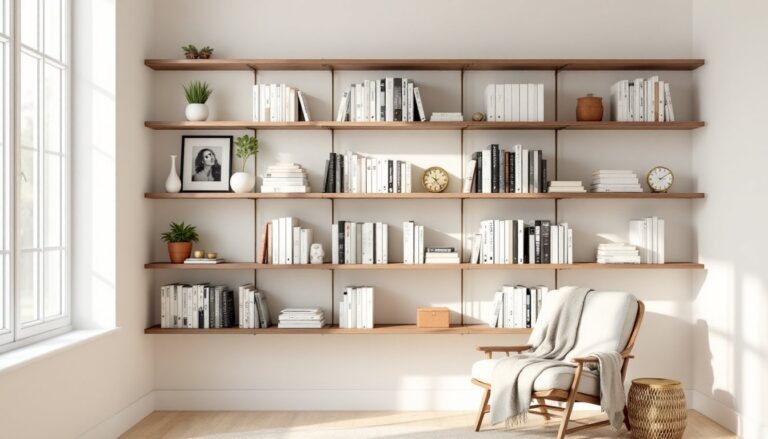
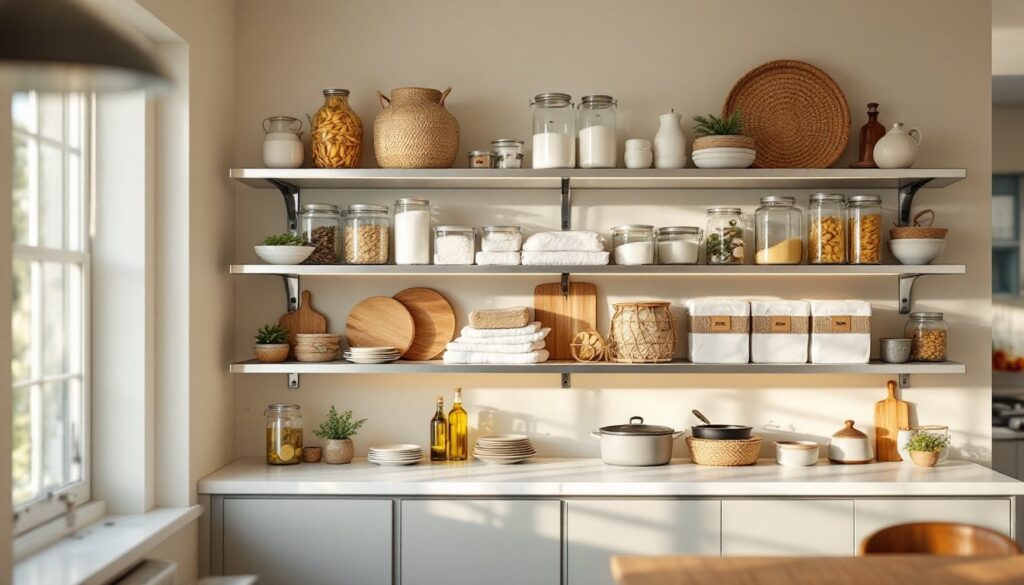
Floating shelves are the backbone of most open pantry designs. Unlike traditional bracket-supported shelves, floating shelves appear to suspend without visible supports because the hardware is mounted inside the wall structure, typically to wall studs or a steel support rail. This clean look works in everything from farmhouse to contemporary kitchens.
When installing floating shelves, anchor them firmly into studs using lag bolts or heavy-duty wall anchors. Never rely on drywall anchors alone for pantry shelves: they’ll sag under the weight of canned goods and boxes. Standard depth for pantry shelves is 10–12 inches, which accommodates most jars and packages without creating a shadow across your kitchen.
Minimalist organization within these shelves relies on consistency. Use matching storage containers in neutral colors, white, cream, or soft gray. Transfer items from original packaging into clear glass or labeled plastic containers so the shelf reads as a unified, curated display rather than a jumble of boxes. Leave some breathing room: a fully packed shelf looks cluttered, not intentional. Group similar items (baking staples together, breakfast cereals together) so the organization logic is obvious at a glance.
Glass Doors and Visibility
Some homeowners add glass doors to select shelves or sections, creating a hybrid between open and closed storage. Frameless glass bifold or sliding doors keep contents visible while protecting food from dust and cooking splatter. They’re especially useful for the top shelves where you store items less frequently accessed.
Glass doors add cost (typically $400–$1,500 for a multi-shelf section, depending on customization) and require careful interior styling since everything shows. But they solve a real problem: keeping open pantry displays clean and dust-free over time.
Open Shelving with Decorative Storage Bins
Not every item in your pantry is beautiful to look at. That’s where decorative storage bins come in. Woven baskets, galvanized metal containers, and wooden crates hide less photogenic items, bulk snacks, paper products, or seldom-used small appliances, while adding texture and warmth to the display.
Choose bins that coordinate with your kitchen’s finish. If your cabinetry is natural wood, woven seagrass or rattan baskets create harmony. For a modern kitchen with sleek cabinetry, consider powder-coated steel or painted wooden boxes with clean lines. The basket or bin becomes the visual anchor, not what’s inside it.
Label everything clearly, even items inside containers. Use a label maker or handwritten tags on kraft paper: consistent labeling turns a curated shelf into an organized system that the whole household can maintain. Resources like The Kitchn showcase kitchen organization projects where baskets and bins are styled as part of a cohesive design rather than afterthoughts.
Layer different heights and textures: tall containers on the back, shorter ones in front, baskets tucked beside glass jars. This variation prevents the shelf from looking flat or monotonous, even when colors are muted.
Walk-In Pantry Layouts for Maximum Accessibility
If you have the space, a walk-in pantry, even a small one roughly 3 feet wide by 4 feet deep, transforms how you shop, cook, and organize. Walk-ins allow you to maximize vertical real estate and use corner space that traditional shallow shelves waste.
Layout matters. Install shelves on three walls if possible, leaving the fourth as a clear path. Heights should vary: lower shelves (12–18 inches from the floor) for heavy items and items kids use frequently: mid-level shelves (eye level, around 48–60 inches) for everyday staples and frequently grabbed bottles: upper shelves (60–72 inches) for occasional-use items and bulk stock. Don’t put anything higher than 72 inches unless you’re okay climbing a step stool every time.
Incorporate at least one pull-out organizer or sliding basket on deeper shelves. These work especially well in the corners and back corners of walk-ins, where items get lost. They cost $50–$150 each but recover that investment in the time you save hunting for things and the food waste you avoid by knowing what you actually have.
Consider lighting. A single bulb in the ceiling leaves corners dark, inviting clutter. Add battery-operated strip lights under the upper shelves or motion-sensor LED pucks to backlit lower shelves. Good lighting makes the pantry feel more open and makes it easier to read labels and find items quickly.
Corner Pantries and Space-Saving Solutions
Not everyone has room for a dedicated walk-in. Corner pantries, built into a kitchen corner or the space beside a refrigerator, are the next best thing. These can be as simple as two walls of shelving or as sophisticated as rotating corner carousels.
Standard corner shelves are typically 24 inches deep and 36 inches tall, using roughly 15–20 square feet of floor space. They’re perfect for corners that would otherwise collect clutter. Mount shelves at consistent heights (typically 12 inches apart) to create a modular look that accepts both tall items and small containers.
Lazy Susan or rotating corner organizers (roughly $100–$400 depending on material and size) are ideal for storing canned goods and small jars. They swing out on their own when you open the cabinet, eliminating the annoying reach to the back. These work in corner spaces that are difficult to access otherwise.
Another space-saver is the vertical door-mounted pantry, which uses the interior face of a 36-inch-wide cabinet or closet door. Narrow shelves or wire baskets installed on the inside of the door hold jars, spices, and lightweight items without eating into the interior footprint. Real Simple frequently features door-mounted organizing solutions that maximize pantry efficiency in smaller homes.
Finishing Your Open Pantry Project
Before you drill a single hole, measure twice and account for what you actually own. Inventory your pantry items, group them by category, and count how many linear inches each category needs. This prevents over-building shelves or under-utilizing the space.
Choose shelf material based on weight and style. Solid wood (oak, maple, pine) looks warm but costs more ($150–$300 per 36-inch shelf). Pre-finished plywood or MDF boards with edge banding cost $50–$100 per shelf and look clean in modern kitchens. Stainless steel or powder-coated steel shelves are industrial and durable ($200–$400 each) but less forgiving if you want a softer aesthetic.
Installation requires finding studs and setting anchors correctly. Use a stud finder ($15–$40) to locate framing, then anchor shelves with bolts rated for the weight you’re carrying. A full pantry shelf can weigh 50–100 pounds: don’t skimp on hardware. If you’re uncomfortable drilling into walls or your home has plaster or unconventional framing, hiring a carpenter for a few hours ($200–$400) is money well spent.
Finish the walls thoughtfully. Fresh paint in soft white, cream, or pale gray makes the pantry feel larger. Wallpaper adds personality but requires careful selection so it doesn’t compete with the stored items. Some builders prefer leaving walls as-is if the pantry opens into a main living space, maintaining continuity with surrounding rooms.
Finally, build in flexibility. Use adjustable shelving systems whenever possible so you can reconfigure as your needs change. Include at least one deep drawer or basket for the inevitable odds and ends. And commit to maintenance: dust shelves monthly and reorganize quarterly so the pantry stays that designed-on-purpose feeling that makes open storage worthwhile. Resources like Remodelista’s curated open pantry examples show how beautiful, functional pantries maintain their appeal over time when they’re intentional from the start.