Table of Contents
ToggleSetting up a home gym is one of the smartest investments a homeowner can make, but most people overlook one critical detail: the flooring beneath their feet. The right home gym flooring absorbs impact, protects your foundation, quiets noise, and makes your space feel legitimate instead of makeshift. Whether you’re deadlifting in the garage, doing yoga in a spare bedroom, or running on a treadmill in the basement, your flooring choice affects everything from joint health to durability to cleanup time. This guide walks through seven proven flooring options so you can pick the right surface for your specific workout style, budget, and space constraints.
Key Takeaways
- Rubber flooring is the gold standard for heavy lifting due to superior shock absorption and durability, costing $3 to $8 per square foot and lasting years with minimal maintenance.
- Home gym flooring choice directly impacts joint health, noise levels, and equipment longevity, making it essential to match your flooring material to your specific workout type and space.
- Foam tiles offer budget-friendly entry at $0.50 to $2 per square foot but are better suited for yoga, cardio, and light exercises rather than heavy weightlifting.
- Vinyl provides versatile aesthetics and easy cleaning for multipurpose spaces, while concrete works for serious lifters prioritizing durability but requires protection from oil stains and management of noise concerns.
- Cork delivers eco-friendly cushioning ideal for yoga and Pilates, but requires regular sealing and isn’t suitable for dropped weights due to susceptibility to denting.
- Always measure your space, test flooring with small sections before full installation, and ensure proper ventilation during setup to minimize off-gassing and optimize your home gym performance.
Rubber Flooring: Durability Meets Shock Absorption
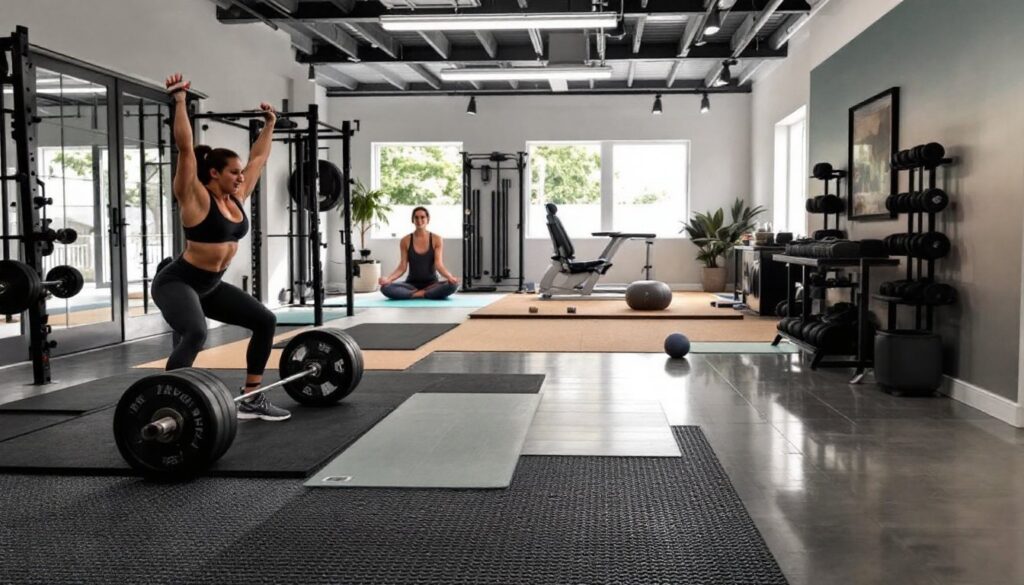
Rubber flooring is the gold standard for serious home gyms. It handles heavy drops, resists wear, and provides excellent shock absorption, exactly what you need if you’re using kettlebells, dumbbells, or barbells. Recycled rubber and virgin rubber mats come in rolls or interlocking tiles, with typical thicknesses ranging from ½ inch to 1 inch.
The main draw is durability. Rubber won’t crack or dent under dropped weights, and it dampens sound far better than hard surfaces. A 6 mm to 8 mm thick interlocking rubber tile system is ideal for high-impact training. Costs run $3 to $8 per square foot depending on quality and recycled content.
The downside? Rubber can off-gas a distinct smell when new, especially with virgin rubber, ventilate the space for a few days. It’s also heavier than foam, so installation and removal require planning. Recycled rubber mats are more eco-conscious and tend to smell less, though they’re sometimes grittier. Clean rubber flooring with a damp mop and mild soap: avoid harsh chemicals that degrade rubber over time. Installation is straightforward: most interlocking tiles snap together without adhesive, though some installers use contact cement for a permanent bond.
Foam Tiles: Budget-Friendly Comfort for Any Budget
If you’re on a tight budget or just starting out, foam tiles (usually EVA foam) are the fastest way to create a gym floor. These interlocking ½ inch to 1 inch thick tiles cost $0.50 to $2 per square foot and require zero tools to install, just lay them down and lock the edges together. A 100-square-foot space might run $50 to $200 for materials alone.
Foam tiles work well for yoga, stretching, light cardio, and bodyweight exercises. They’re soft underfoot and provide a little cushion. The trade-off is that they’re not built for heavy lifting. Drop a loaded barbell or a kettlebell, and foam will compress or dent, that’s cosmetic if you don’t mind it, but it signals the surface isn’t designed for that abuse.
Foam is easy to clean (wipe with a damp cloth) and portable, you can roll up tiles and move them if needed. Some gyms use foam as a foundation layer under rubber or other mats for extra cushioning. Keep in mind that cheap foam can compress permanently under point loads (like a dumbbell rack), so buy quality closed-cell EVA tiles from reputable suppliers. Avoid foam if humidity is high: moisture can seep between tiles and create mold issues underneath.
Vinyl Flooring: Easy Maintenance and Style
Vinyl flooring, especially luxury vinyl plank (LVP) or vinyl sheet, offers a middle ground between aesthetics and function. It comes in dozens of finishes (wood-look, stone-look, solid colors), is waterproof, and cleans easily. A gym with vinyl flooring can double as a multipurpose room without looking purely utilitarian.
Rigid core vinyl (also called SPC or WPC) is thicker and more stable underfoot than regular LVP, making it better suited for gym use. Expect to pay $2 to $6 per square foot installed. Vinyl is quieter than concrete but noisier than rubber, so it’s a compromise if sound dampening matters in your space.
The catch: vinyl doesn’t bounce back from heavy point loads the way rubber does. A stationary kettlebell or dumbbell rack can create permanent impressions. It’s best for lower-impact workouts, treadmills, stationary bikes, strength training with lighter weights, and cardio routines. If you do use heavier weights, place protective mats or plywood under stationary equipment. Vinyl is straightforward to install as floating or glue-down flooring, but if you’re renting or want future flexibility, check with your landlord or opt for interlocking vinyl tiles. Sweep regularly and mop with a vinyl-specific cleaner: avoid steam mops and excessive water.
Cork Flooring: Eco-Friendly and Naturally Cushioned
Cork is a sustainable, natural option that appeals to eco-conscious DIYers. It’s harvested from cork oak bark (which regenerates), biodegradable, and naturally antimicrobial. Cork tiles or planks provide moderate cushioning, similar to foam, and feel warm underfoot, a nice quality in basements or unheated spaces.
Cork prices range from $3 to $9 per square foot, putting it mid-range cost-wise. It absorbs some sound and impact, though not as effectively as rubber. Cork works well for yoga, Pilates, and low-impact aerobics but isn’t suitable for heavy lifting or dropped weights.
The downside is that cork is porous and can stain or absorb moisture if not sealed properly. A polyurethane or water-based sealant must be applied on first install and reapplied every few years to protect against spills and humidity. Cork also dents more easily than rubber, so point loads can leave marks. If you’re lifting heavy or dropping equipment, this isn’t your material. But, if your gym doubles as a meditation or yoga studio, cork’s natural warmth and sustainable story make it appealing. Install cork as floating tiles or glue-down depending on moisture levels in your space. Sweep frequently and use a slightly damp (not wet) mop with a cork-specific cleaner.
Concrete Floors: Industrial Strength for Serious Lifters
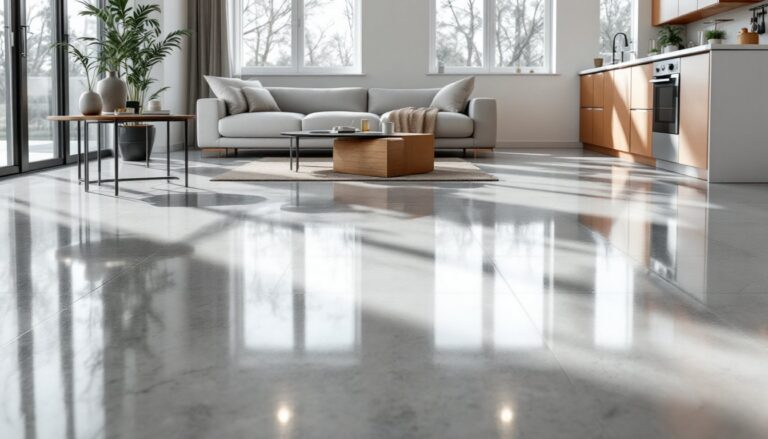
Many garage and basement gyms are already built on concrete, and leaving it exposed is a legitimate choice for serious lifters who don’t mind a bit of cold and noise. Bare concrete is incredibly durable, virtually indestructible under dropped weights, and costs nothing if the slab already exists.
The tradeoff is comfort and noise. Concrete is hard, cold, and unforgiving on joints during high-impact work. It also broadcasts every clang of a barbell or plate, which neighbors won’t appreciate. To mitigate this, you can apply a sealer or epoxy coating ($2 to $5 per square foot) to protect against oil stains and make cleaning easier. Some lifters add rubber mats in high-use zones (under racks, where they land on deadlifts) while leaving the rest bare for a hybrid approach.
If you go bare concrete, sweep regularly to prevent grit from scratching equipment. A concrete sealer (often polyurethane or epoxy) is cheap insurance against permanent stains from spilled oil, coolant, or sweat. Check your slab for cracks before use: deep cracks can be filled with concrete patching compound. Concrete is also naturally level (or mostly so), but always use a level to verify before placing heavy racks or machines. If settlement or significant cracks are visible, have a structural engineer inspect for foundation issues, this is a call for a pro, not a DIY fix.
Choosing the Right Flooring for Your Workout Needs
The best gym flooring for you depends on three factors: workout type, space constraints, and budget.
If you’re doing heavy lifting (barbells, strongman training), rubber is non-negotiable. The shock absorption and durability are worth the cost and upfront smell. This Old House’s guide to home gym setup includes flooring recommendations that align with serious training.
If your workouts are mostly cardio, yoga, or bodyweight exercises, foam tiles or vinyl are sufficient and far cheaper. Foam gives more cushion: vinyl looks nicer and is easier to clean. Cork fits if you want eco-credentials and don’t mind the extra maintenance.
For hybrid spaces (gym plus living area), vinyl or cork maintain visual appeal. Concrete works if noise won’t annoy neighbors and you’re comfortable with a utilitarian look.
Also consider your subfloor. A basement slab can handle concrete sealing or epoxy. A wooden floor (like a basement with joist framing) needs something softer, rubber or foam prevent stress on the joists and reduce noise to the floor below. Wet basements? Avoid cork and unsealed wood: stick to rubber, foam, or sealed concrete.
Measure your space and factor in edge transitions. Interlocking tiles don’t need trim, but sheet flooring (vinyl, cork) may need T-molding or reducers at doorways. Account for that in cost and installation planning. Family Handyman covers installation techniques for most flooring types if you prefer a guide-along approach.
Finally, consider ventilation and off-gassing. Rubber mats smell strongest in the first week: if you’re sensitive, choose recycled rubber or virgin foam, or accept the smell and air it out. Glues and adhesives also release VOCs (volatile organic compounds), so open windows during and after install.
Start with a small test section if you’re unsure. Buy a few tiles, lay them down, work out on them for a week, and see how they perform and feel. DIY gym flooring is flexible, you can add or swap materials later as your needs evolve.
Conclusion
Your home gym flooring is invisible until you need it, but it shapes every workout. Rubber handles serious lifting: foam and vinyl suit lighter training: cork appeals to sustainability-minded builders: concrete works for the no-nonsense crowd. Choose based on what you actually do, not what you think you’ll do. Install it right, clean the subfloor, follow manufacturer specs, let sealers cure, and your flooring will last years and feel professional. Start moving weight or moving mindfully on a surface built for it.