Table of Contents
ToggleGray vanities have become the workhorse of modern bathroom design, and for good reason, they’re versatile, timeless, and far easier to keep looking fresh than lighter wood tones or stark white. Whether you’re planning a full bathroom overhaul or swapping out a single vanity, a gray option gives you plenty of styling flexibility without trending toward beige boredom. This guide walks you through choosing the right gray vanity for your space, pairing it with complementary finishes and decor, and tackling installation if you’re going the DIY route. By the end, you’ll have the knowledge to transform your bathroom into a space that looks intentional and pulled together.
Key Takeaways
- Gray vanities offer versatility and durability for modern bathrooms, hiding water spots and wear while complementing any tile, countertop, or accent color.
- Choose the right size by measuring twice: single-sink vanities range from 24–36 inches wide, while double-sink models start at 48 inches, with standard height at 32–34 inches and depth at 21–22 inches.
- A gray vanity bathroom design works across multiple styles—from minimalist and contemporary to transitional and farmhouse—making it a flexible choice that doesn’t lock you into one aesthetic.
- Pair your gray vanity with complementary hardware (matte black, brushed brass, or stainless steel), mirrors, and lighting to create a cohesive, intentional look that reflects your personal style.
- DIY installation requires careful prep work including turning off water, checking floor level with shims, securing the vanity to wall studs, and connecting supply and drain lines with proper hand-tightening techniques.
- Maintain your gray vanity with weekly soft cloth cleaning, avoid abrasive scrubbers, and monitor under-sink plumbing monthly to prevent water damage and extend the lifespan of this long-term investment.
Why Gray Vanities Are the Perfect Choice for Modern Bathrooms
Gray sits in a sweet spot between warm and cool, letting it pair naturally with almost any tile, countertop, or accent color you choose. It reads as mature and composed without feeling sterile like chrome or cold like pure white. A gray vanity bathroom ideas often center on balancing the coolness of the gray with warmer metals (brushed brass, warm bronze) or natural wood accents.
From a practical standpoint, gray hides water spots, dust, and the everyday wear that shows up fast on darker or lighter finishes. It’s forgiving, which means your bathroom stays photo-ready without obsessive cleaning. Gray also performs well across lighting conditions, it won’t look yellow under warm bulbs or washed out under cool LED lighting.
Gray vanities also signal flexibility. Whether you lean toward industrial edge, farmhouse charm, or clean minimalism, gray works. Homeowners appreciate that a gray vanity doesn’t lock you into one design direction: you can shift your tile, lighting, or mirror choices without worrying the vanity will clash.
Popular Gray Vanity Styles and Finishes
Contemporary and Minimalist Designs
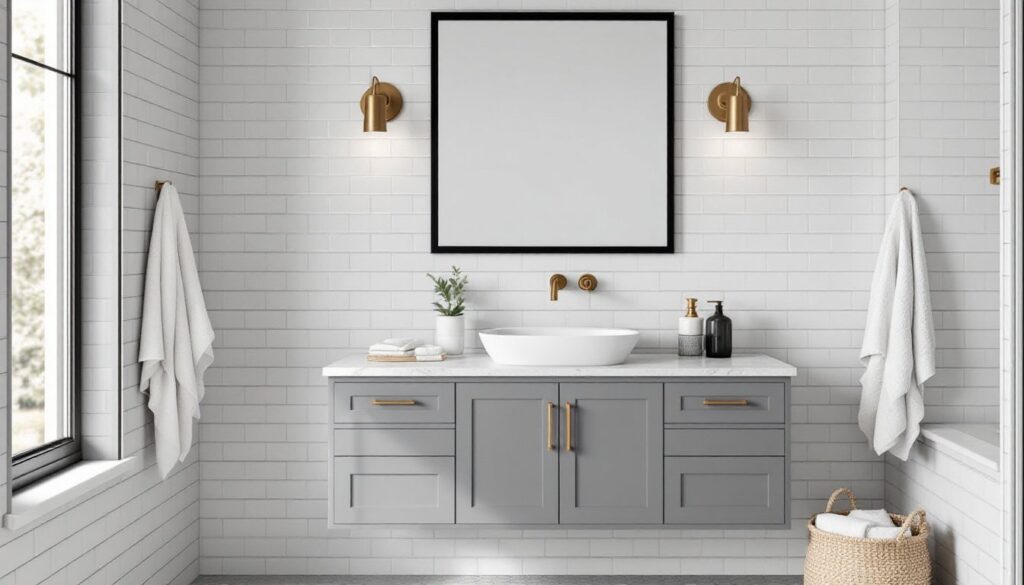
Contemporary gray vanities typically feature flat-panel cabinet doors, minimal hardware, and a focus on clean lines. You’ll often see soft-close drawer slides and streamlined under-sink knee space (designers call this “floating” when the vanity is mounted off the wall). The gray shade in modern designs leans cooler, charcoal, slate, or dove gray, pairing well with matte black fixtures and geometric mirrors.
Minimalist bathrooms benefit from a single-sink gray vanity in a narrow footprint, sometimes paired with a simple concrete or marble countertop. Floating vanities work especially well here, creating the illusion of more floor space and making cleaning underneath easier. Consider a 30-inch or 36-inch wide option for smaller bathrooms: that’s plenty for a single basin without wasting square footage.
Transitional and Farmhouse Styles
Transitional gray vanities blend traditional furniture silhouettes with modern efficiency. Think shaker-style cabinet doors, turned legs, and hardware with a bit more character, brushed brass knobs or cup pulls in bronze. The gray here often carries subtle warm undertones, almost a greige, that softens the look while keeping it sophisticated.
Farmhouse bathrooms gravitate toward painted gray finishes, think barn gray or weathered gray, combined with reclaimed wood, open shelving, and vintage-inspired fixtures. A 48-inch to 60-inch vanity with double sinks fits the generous, lived-in feel farmhouse aims for. Pair it with a Houzz search to scout vanities with cottage-style detailing: beadboard cabinet sides, furniture-like legs, or a apron-front silhouette. The finish might be matte or lightly distressed to suggest age and character.
Selecting the Right Size and Layout for Your Space
Measure twice before ordering, especially if you’re replacing an existing vanity. Check the rough-in distance from the wall behind the vanity to the nearest wall or obstacle (shower, toilet, tub edge). Most single-sink vanities run 24, 30, or 36 inches wide: double-sink models start at 48 inches. Depth is typically 21 to 22 inches, though some floating vanities are shallower at 18 inches.
Height matters too. Standard vanities are 32 to 34 inches tall: ADA-compliant models sit at 32 inches with knee space underneath. Taller countertops (36 inches) are becoming popular because they reduce bending, worth considering if you have back concerns or anyone tall in your household using the sink.
Open the cabinet doors and drawers during measurement to confirm they won’t strike the toilet, wall, or a person standing nearby. Drawer swing is often overlooked in tight bathrooms and causes real frustration after installation. If space is very tight, a vessel sink mounted on top of a smaller cabinet footprint can look upscale and save width. Also factor in faucet reach and splash-back clearance: most faucets mount 6 to 8 inches above the countertop center, so ensure adequate wall space behind the vanity for backsplash tile or paint.
Pairing Gray Vanities With Complementary Decor
A gray vanity is a blank canvas, so your tile, mirror, lighting, and hardware tell the story. White subway tile with gray grout reads fresh and contemporary: hexagon or geometric tile adds playful detail. Marble or quartz countertops in whites, soft blacks, or warm beiges elevate the look without clashing.
Hardware choices anchor the style. Matte black pulls work with any gray shade and feel modern. Brushed brass or champagne bronze hardware warm up cooler grays and pair beautifully with wood accents like shelving or a wooden mirror frame. Stainless steel stays neutral and works in industrial or minimalist settings.
Mirror style can make or break the room. A simple metal-framed mirror in black or brass looks intentional: a frameless mirror maximizes light and space visually. Sconces on either side of the mirror (not just overhead ceiling light) improve task lighting for grooming and add sophistication.
A thoughtful color palette, say soft grays, whites, and one accent color like navy or sage green, keeps the room from feeling cold. Textiles matter too: a neutral rug, towels in coordinating tones, and maybe a woven basket for storage add warmth. Homeowners often find inspiration by browsing Remodelista bathroom projects to see how professional designers balance gray vanities with tile, lighting, and decor.
DIY Installation and Maintenance Guide
Before you start: Turn off water supply to the old vanity by closing the shut-off valve under the sink (turn clockwise). If there’s no shut-off, you’ll need to close the main water valve. Drain any standing water, then disconnect the supply lines and drain trap using an adjustable wrench or basin wrench.
Remove the old vanity by unbolting it from the wall (most are lag-bolted into studs) and unscrewing or unbolting it to the countertop. If the vanity was caulked to the wall, slice through with a utility knife to avoid damage.
Inspect the wall and floor behind the old vanity. If the wall is damaged, patch it with drywall compound. Check that the floor is level using a 2-foot level, shims (thin wooden wedges) placed under the new vanity correct minor sloping. Unlevel installation leads to drawers sticking or doors not closing properly.
Position the new gray vanity and check level in both directions. Shim as needed under the cabinet, not under the countertop. Screw through the cabinet back into wall studs (usually 16 inches apart) using 2.5-inch coarse-thread screws. Connect supply lines and drain line last. Use Teflon tape on threaded connections and hand-tighten, then a quarter-turn with a wrench, over-tightening cracks fittings.
For maintenance, wipe down the gray finish weekly with a soft, damp microfiber cloth. Avoid abrasive scrubbers. If the wood finish scratches, touch it up with a matching furniture marker or consult the manufacturer about finish repair. Check under-sink plumbing monthly for drips: small leaks turn into water damage and mold quickly. House Beautiful’s design guides include excellent product recommendations for bathroom finishes and protective coatings if you want extra durability.
Final Thoughts
A gray vanity bathroom brings clarity and calm to one of the most-used rooms in your home. It’s a smart investment, flexible enough to adapt to future decor changes and durable enough to serve you for a decade or more. Whether you install it yourself or hire a professional, the key is taking time to measure carefully, choose a shade and style that aligns with your overall design vision, and pair it with finishes and decor that reflect your taste. Your bathroom deserves that attention to detail.