Table of Contents
ToggleA coffee table tray doesn’t just corral remote controls and coasters, it’s the anchor that pulls your entire living room together. Whether you’re styling a small apartment or a sprawling family room, the right coffee table tray decor can elevate a basic tabletop into a curated, intentional space that reflects your personality and design sensibility. The challenge isn’t finding items to throw on there: it’s arranging them so they look effortless, balanced, and genuinely lived-in rather than sterile. This guide walks you through seven proven strategies for styling a coffee table tray that works year-round and makes your space feel polished without requiring a design degree.
Key Takeaways
- Coffee table tray decor relies on balancing height and scale—mix tall statement pieces with mid-sized supporting items and low-profile accents—while leaving 30–40% negative space to avoid a cluttered look.
- Layer natural elements like wood, stone, greenery, and textured textiles to add warmth and prevent your tray from feeling sterile or artificial.
- Every decorative item should serve a functional purpose, whether it’s holding remotes and coasters, displaying meaningful books, or adding scent with a candle, so your tray reads as intentional rather than arbitrary.
- Create visual interest through color and texture contrasts—pair smooth ceramics with rough linen, shiny brass with weathered leather, and choose a 3–4 tone color palette that echoes your room’s larger design elements.
- Swap books, candles, flowers, and accent pieces seasonally to keep your coffee table tray fresh without expensive overhauls, rotating lighter tones in spring/summer and warmer, richer tones in fall/winter.
Create Balance With Height and Scale
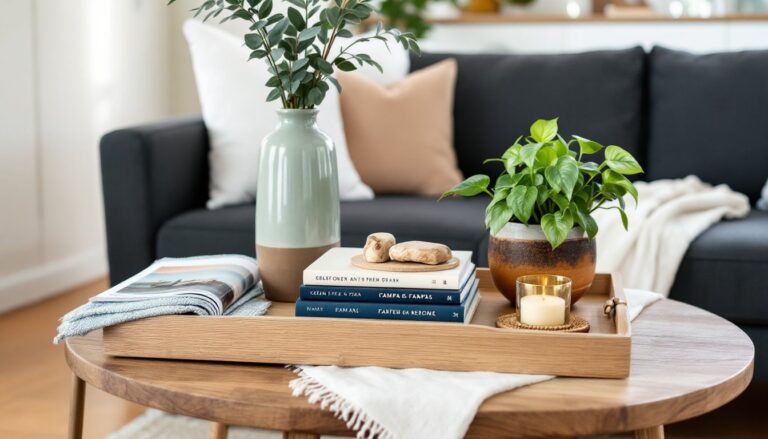
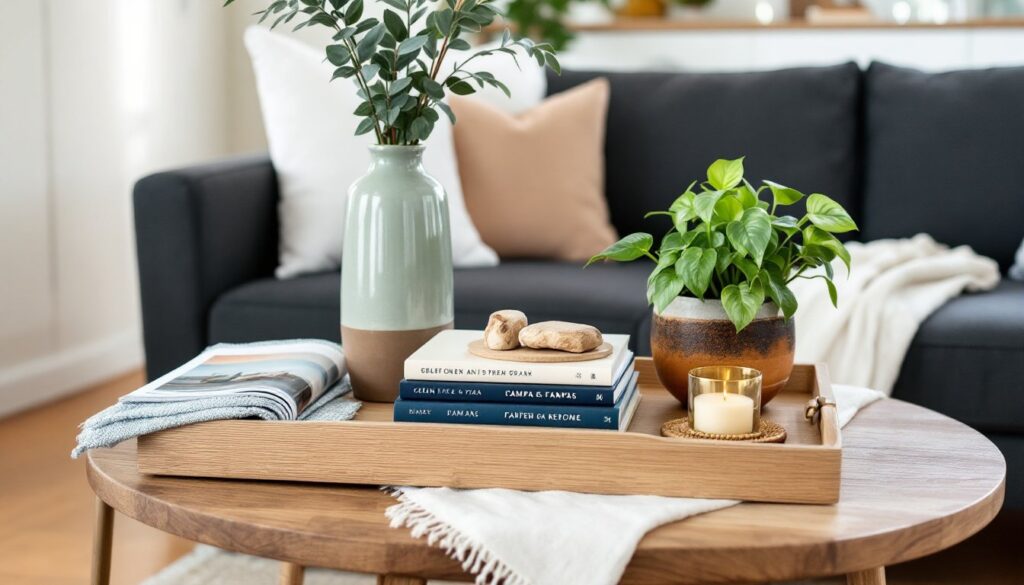
The first rule of styling a coffee table tray: avoid the flat, one-note look. Think about vertical variation the same way you’d approach a bookshelf or mantelpiece. Pair short, squat objects, like a wooden bowl or a stack of magazines, with taller pieces such as a decorative vase, candlesticks, or a sculptural book. This creates visual rhythm and prevents your tray from looking like everything got shoved into a junk drawer.
Scale matters just as much as height. A oversized ceramic object on a small tray will overwhelm the space: three tiny things on a large tray looks scattered and unfinished. Aim for a mix: one statement piece (the vase, the candle, the art book), two to three mid-sized supporting items, and one or two smaller accent pieces. The rough ratio is about 30% tall, 50% mid-level, 20% low-profile. This isn’t a rigid formula, trust your eye, but it’s a solid starting point.
Remember that negative space is your friend. Resist the urge to fill every inch. A tray that’s 60–70% full will feel curated and intentional, while one packed solid reads as cluttered. Your eye needs room to breathe on the tray, just like it does in the rest of your room.
Layer Natural Elements for Warmth
Natural materials, wood, stone, greenery, textiles, add organic warmth that prevents a styled tray from feeling too sterile or artificial. Start with a textured base: a linen runner or a woven placemat under your tray catches light, introduces texture, and defines the tray as a distinct zone on the table.
Then layer in elements from nature. A low ceramic planter with trailing greenery (pothos or string of pearls work beautifully) softens sharp corners and adds life. Dried branches, pampas grass, or eucalyptus tucked into a simple glass bottle cost almost nothing and introduce movement. A flat stack of unfinished wood coasters, a smooth river stone, or a piece of driftwood brings earth tones and tactile appeal.
Wood grain is particularly forgiving. A live-edge wooden tray itself sets a natural foundation, and wood objects, boxes, bookends, small cutting boards, pair seamlessly with plants and stone. Pair these with neutral textiles like cream, oatmeal, or soft gray. The beauty of layering natural elements is that they’re inherently cohesive: nature doesn’t clash with itself. This approach works according to styling guides that emphasize foundational tray principles which often stress the importance of grounding your arrangement in tactile, organic materials.
Add Functional Decor That Serves a Purpose
The most elegant styled trays blur the line between decoration and utility. Every piece should either look beautiful or do something useful, ideally both. This means you’re not just placing objects for aesthetics: you’re creating an arrangement that actually works in your living room.
Include a coaster set (ceramic, wood, or stone) because people will use it. Add a small dish or trinket bowl for holding remotes, jewelry, or keys, exactly what that tray is supposed to corral. A decorative box adds visual interest while concealing the mess underneath. Stack three to five books you’re actually reading or plan to read: they signal intelligence and culture, and their spines introduce color and typography.
A candle (unlit unless you’re home and awake) provides warmth and a gentle scent. A lidded glass jar for pens or a small vase with fresh or dried flowers rounds it out. When every object earns its space, your tray reads as intentional rather than arbitrary. Functional styling also means you’ll actually maintain it, because the items already serve a purpose, you’re not fighting the urge to clear it off and store it when guests arrive.
Use Color and Texture to Reflect Your Style
Your coffee table tray should whisper your design taste, not shout it. Start by choosing a color palette, three to four tones maximum. If your sofa is charcoal gray and your walls are soft white, your tray might feature warm wood, cream ceramic, and touches of sage green or dusty blue. If you lean modern, try monochromatic: all whites, blacks, and natural wood. If bohemian feels right, layer terracotta, rust, cream, and forest green.
Texture is where the magic happens. Pair smooth ceramic with rough linen, polished stone with matte wood, shiny brass accents with weathered leather. Mix matte and reflective surfaces. A glass vase next to a concrete planter, woven natural fiber beside a sleek marble coaster, these contrasts keep the eye engaged without creating chaos.
Avoid the “matchy-matchy” trap. Five items in the exact same beige is boring. Introduce one accent color that ties back to larger furniture or art in your room, that navy candle, those terracotta pots, those blush-toned magazines. This visual echo tells a cohesive story. Work with home décor inspiration from trusted design sources to stay current with color trends while keeping your personal taste front and center.
Incorporate Books and Magazines Strategically
Books and magazines are styling gold because they’re decorative, accessible, and communicate narrative. Lay some flat (stacked two to three high) and stand one or two upright, leaning casually. Vary the spine colors, this creates visual interest and allows the arrangement to absorb different tones from your room.
Choose publications or coffee table books that genuinely reflect your interests: photography, travel, design, art, cookbooks. A book titled “Scandinavian Living” stacked with a design magazine and a travel guide tells a story about you, whereas random magazines create visual noise. If you’re rotating seasonal décor, swap out books seasonally, lighter, airier photography in spring/summer, richer tones and design books in fall/winter.
Don’t overdo it: two to three book spines and one open book (propped or lying flat) is plenty. An open book showing a beautiful illustration or photograph adds a layered, lived-in feel. Magazines work similarly, keep one or two current issues fanned out or stacked, then rotate them monthly. This approach keeps your tray fresh without constant overhauls.
Style Seasonally to Keep Things Fresh
Seasonal styling keeps your coffee table tray feeling fresh without requiring a complete redecoration. This is where functional meets festive. In spring and summer, lean into lighter tones: white candles, fresh-cut flowers in a clear glass vase, pastel or sun-bleached books, and minimal visual weight overall.
Fall is your moment for warmth. Swap in amber glass, burnt orange or deep red accents, a small seasonal book or art print, and perhaps a small pumpkin or gourd (real or ceramic). Add a vanilla or cinnamon candle and you’ve shifted the entire vibe without replacing the foundational pieces. Winter calls for metallics, brass or gold candlesticks, white or cream textiles, deep jewel tones, and perhaps a small seasonal garland or branches arranged in a tall vase.
Seasonality doesn’t mean expensive overhauls. Swap one or two items per season, rotate candles, change the book stack, swap the vase centerpiece. A few branches from your yard in winter, fresh garden flowers in summer, dried foliage in fall. This strategy keeps your styling practice alive and engaged while respecting your budget. Budget-friendly makeovers and DIY project inspiration often showcase seasonal styling on a dime through clever swaps and natural materials.
Conclusion
Styling a coffee table tray is less about following rules and more about understanding proportion, function, and story. Balance height with scale, ground your arrangement in natural materials, ensure every object earns its space, and let color and texture reflect your taste. Swap seasonally to keep momentum, and you’ll have a tray that looks polished, lives well, and evolves with your home.