Table of Contents
ToggleA bedroom with a desk doesn’t have to feel cramped or chaotic. Whether you’re working from home, studying, or just need a dedicated creative zone, fitting a functional workspace into your bedroom comes down to smart layout choices and thoughtful furniture placement. The right bedroom layout with desk setup maximizes square footage, maintains comfortable sleep space, and creates a genuine separation between work and rest, no small feat in today’s smaller homes and apartments. This guide walks through practical bedroom layout ideas that work for various room sizes and design preferences, from compact corner solutions to floating designs that preserve floor space.
Key Takeaways
- A corner desk anchored in an unused corner maximizes small bedroom layout ideas by freeing wall space and creating natural visual boundaries without consuming floor area.
- Floating wall-mounted desks are ideal for bedrooms under 100 square feet, making the room feel open and spacious while requiring solid stud anchoring for weight capacity of 75–150 pounds.
- Strategic furniture placement and visual barriers like shelving units, semi-sheer curtains, or perpendicular positioning separate bed and desk zones, preventing your bedroom from feeling like a combined work-sleep space.
- Industrial and modern desk styles with clean lines and integrated storage complement bedroom aesthetics while remaining flexible enough to adapt to various décors and space constraints.
- Layered lighting with a dedicated adjustable desk lamp positioned 15–18 inches from your work surface prevents eye strain and maintains focus, while warm light near the bed aids relaxation.
- Proper ergonomic setup—desk at elbow height, monitor at eye level, and a supportive task chair with lumbar support—prevents long-term pain and discomfort during extended bedroom work sessions.
The Compact Corner Desk Setup
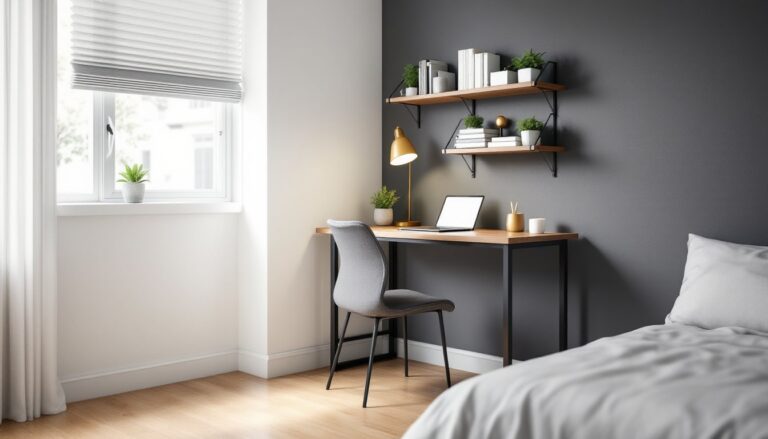
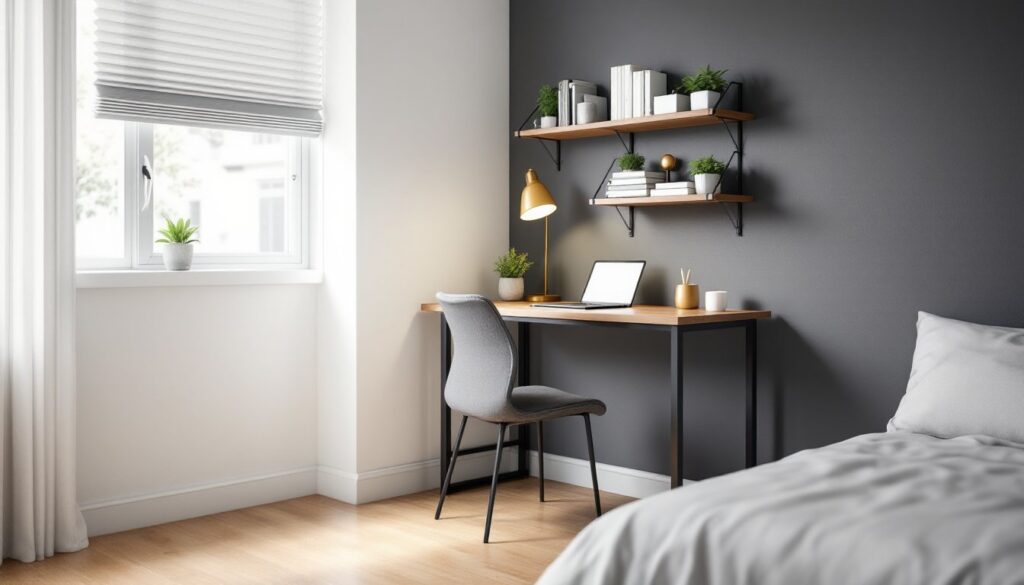
A corner desk is the workhorse of small bedroom layouts. By anchoring your workspace in an unused corner, you free up wall space and create a natural visual boundary without eating into floor area where you actually walk and move.
Start by measuring your corner: a standard corner desk runs 48 to 60 inches wide (the longer the better for workspace without bulk), and 24 inches deep works for laptops or light paperwork. If your corner has a window, that’s ideal, natural light reduces eye strain during work sessions. Angle the desk into the corner so the longer edge faces into the room: this maximizes usable surface and makes the desk feel less like it’s consuming the corner.
The real advantage here is what happens above the desk. Wall-mounted shelves above a corner desk give you storage without a separate dresser or cabinet. Use adjustable shelving (like IKEA Digga or similar track systems) to hold books, supplies, and decor. Mount shelves at least 10 inches above the desk surface to avoid clutter creeping down onto your work area.
For seating, a compact ergonomic task chair (21 to 23 inches wide) tucks neatly when pushed in, and you can rotate it to use for other room activities. Look for one with back support and height adjustment, cheap office chairs lead to neck and back pain during long work sessions. If space is extremely tight, a cushioned stool works temporarily, but your posture (and comfort) will suffer over time.
Corner desks work best in rooms 10×12 feet or larger, where the setup doesn’t dominate the whole space. Paint the wall behind the desk a slightly darker or contrasting shade to define the work zone visually, it signals to your brain that this corner is different from the sleep space.
Floating Desk Designs for Tight Spaces
A floating (wall-mounted) desk is the space-saving answer for bedrooms under 100 square feet or awkward floor plans. Because it’s anchored directly to wall studs, the desk feels open and minimal, your eyes can see the floor underneath, which makes even a small room feel less boxed in.
To install a floating desk, you need solid wall anchoring into wall studs (typically spaced 16 inches on center). Use a stud finder to locate them, then use ½-inch lag bolts into the stud for desks that will hold a typical adult, laptop, and monitor. If the studs don’t line up with your ideal desk location, toggle bolts or heavy-duty drywall anchors work on non-stud walls, but they support less weight, check the manufacturer’s weight rating carefully. A typical floating desk holds 75 to 150 pounds, which covers laptop, monitor, and supplies, but not a full filing cabinet.
Floating desks come in depths of 18 to 24 inches: 20 inches is the sweet spot for a monitor and keyboard without feeling cramped. Length varies from 36 inches (cozy, laptop-only) up to 60 inches (serious workspace). Walnut, white, and natural wood finishes blend well in bedrooms. Some homeowners build their own using a butcher block slab and ready-made floating shelf brackets, a budget-friendly option if you’re handy with a drill and stud finder.
The floating design frees floor space for movement, a small chair, or storage cubbies underneath. Pairing a floating desk with a low profile task chair or pouf seating keeps the room open and airy. Cable management is crucial with floating desks: route power cords and USB cables along the wall with adhesive clips or cable channels to avoid the tangled-cord look. Design-conscious examples on Homedit show how floating desks can disappear into the room’s overall aesthetic while staying highly functional.
The Bed-Desk Combo Layout
Some bedrooms are narrow enough that the bed and desk must coexist along the same wall. This arrangement requires careful planning to avoid feeling like you’re working in your bed or sleeping at your desk.
Creating Separation With Strategic Furniture Placement
The key is visual and functional separation. Place the bed on one half of the wall and the desk on the other, separated by at least 2 to 3 feet (or a nightstand and small shelving unit). This buffer, even a narrow bookshelf or console table, signals that these are two distinct zones. If the wall is 12 feet wide, a bed (5 feet wide) plus 2 feet of space plus a desk (4 feet wide) leaves manageable room.
Alternatively, position the bed and desk perpendicular to each other: bed along one wall, desk along the adjacent wall. This naturally separates the two functions and creates an L-shaped room flow. Hanging a semi-sheer curtain rod between them (like a fabric divider or tension-rod curtain) adds a psychological boundary without blocking sightlines, your brain registers “bedroom” and “workspace” as separate even in a single room.
Color and lighting help too. Warm, dimmable lighting near the bed signals rest. Bright, task-focused lighting over the desk (ideally a desk lamp with adjustable arm) signals work. Keeping the bed area neutral and the desk area organized with visible storage makes the separation feel intentional, not accidental. Young House Love frequently features bed-and-desk combos in their before-and-after projects, showing how paint colors and furniture placement define separate zones in open-concept bedroom layouts.
Industrial and Modern Desk Styles for Bedrooms
Your desk’s design language should complement the room’s overall aesthetic. Industrial and modern styles are particularly popular in 2026 bedrooms because they’re flexible, visually clean, and pair well with mixed materials.
Industrial desks typically feature metal frames (steel or powder-coated iron) with wood or concrete-look surfaces. These work especially well in lofts, smaller urban bedrooms, and spaces with exposed brick or painted concrete walls. The metal frame is lightweight but sturdy, and the open design doesn’t feel heavy. Pair an industrial desk with a simple task chair (metal base, minimal upholstery) and you’ve got a cohesive look that feels intentional, not makeshift.
Modern desks lean toward clean lines, minimal ornamentation, and often feature integrated storage (drawers, open shelves, or cubbies built into the frame). Walnut, white laminate, or matte finishes keep the look contemporary. These desks work in almost any bedroom, they’re neutral enough to adapt to existing décor. A modern desk with a floating appearance (legs hidden or minimal) makes even a small space feel spacious.
If you’re uncertain about commitment, a simple desk frame with swappable tops (available from many online retailers in the $200–400 range) lets you change finishes without replacing the whole unit. Avoid overly decorative desks with ornate legs or fussy details unless your room’s style explicitly calls for it: they date faster and collect dust in all the wrong corners. Whatever style you choose, ensure the desk height matches standard ergonomic guidelines: 28 to 30 inches from floor to desktop surface allows forearms to rest at roughly 90 degrees when seated in your task chair.
Multi-Functional Storage and Desk Solutions
Storage tied to your desk setup prevents clutter from spilling into the bedroom and undermining the separation you’ve worked to create. The best bedroom desk solutions integrate storage into or around the desk itself.
Wall-mounted shelves above the desk (as mentioned in the corner setup) are standard, but consider adding a narrow rolling cart beside the desk for supplies, a desk hutch (a shelving unit mounted on top of the desk surface) for vertically stacking papers and folders, or a slim filing cabinet that doubles as a nightstand. A 4-drawer filing cabinet (usually 18 inches wide, 28 inches tall) tucked beside a desk adds serious storage without taking much floor space.
Built-in solutions, shelving units flanking a desk, or a shelving system with a desk integrated into the base, maximize every inch. These require some planning (or a handy carpenter), but they’re worth it in tiny bedrooms. Floating desk systems with underslung storage cabinets or open cubbies keep supplies accessible while maintaining the clean, minimal look.
Don’t overlook under-desk storage. Shallow rolling carts or wire shelving units fit beneath floating desks and can hold reference books, craft supplies, or seasonal items. They’re invisible when sitting at the desk but available when standing or leaving the room.
Clear acrylic or metal desk organizers keep pens, scissors, and small supplies corralled. Open shelving above works best for items you use daily (reference books, speakers, a water glass). Reserve cabinets or drawers for rarely-used items, excess supplies, and things that look cluttered when visible. Apartment Therapy has excellent small-space storage tutorials, including vertical solutions and corner utilization that apply perfectly to bedroom desks.
Lighting and Ergonomics for Bedroom Workspace Comfort
A bedroom desk fails if you can’t actually work comfortably. Lighting and ergonomics often get overlooked in layout planning but make the difference between a functional workspace and a migraine-inducing afterthought.
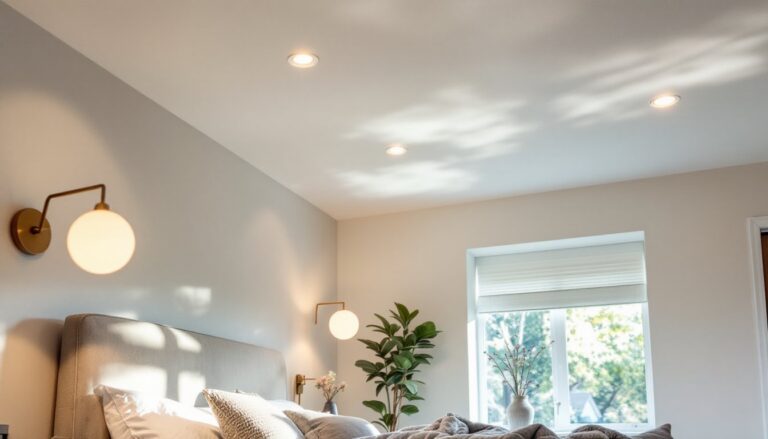
For lighting, layer it. Overhead bedroom light is rarely sufficient for focused desk work: it casts shadows on your work surface and causes eye strain. Add a dedicated desk lamp with adjustable arm and brightness control. Position it 15 to 18 inches from your work surface, at roughly arm’s level, angled to illuminate papers or keyboard without glare. LED desk lamps (around $40–80 for decent ones) are affordable, energy-efficient, and cooler than older halogen or incandescent types. If your desk faces a window, position it perpendicular to the window to avoid glare on screens. Warm light (around 3000K color temperature) near the bed aids relaxation: cooler light (4000K+) at the desk aids focus.
Ergonomic setup prevents long-term pain. Your desk should sit at elbow height when seated: forearms parallel to the floor, elbows at roughly 90 degrees. Monitor (if using one) should be at arm’s distance, with the top of the screen at or slightly below eye level, this keeps your neck neutral instead of craned down. Invest in a supportive task chair with adjustable height, lumbar support, and armrests. Cheap office chairs lead to slouching and back pain after 2-3 hours of work.
Add a footrest or low stool if your feet don’t flat-plant on the floor when seated (common in smaller rooms with proportionally lower desks). Wrist rest pads for keyboards and mouse pads with wrist support reduce repetitive strain. Take breaks: every hour, stand, stretch, and look away from the screen for 20 seconds. Bedroom workspaces are compact, so a 10-second walk to get water or stretch counts. Your posture and long-term comfort depend on getting these details right from day one, not retrofitting them later.