Table of Contents
ToggleA gate transforms a deck from an open platform into a defined outdoor room, and for good reason. Whether you’re keeping pets contained, securing a second-story elevated deck, or simply defining your outdoor space, a deck gate serves both practical and aesthetic purposes. The right gate design can enhance curb appeal, improve security, and give your yard a polished, intentional look. In 2026, homeowners are choosing gates that blend function with style, from sleek modern designs to timeless classics. This guide walks you through ten proven deck gate ideas, material choices, and DIY-friendly approaches to help you select and build the perfect gate for your space.
Key Takeaways
- Deck gates serve dual purposes—enhancing safety for children and pets while adding visual appeal and defining your outdoor space intentionally.
- Popular deck gate ideas in 2026 range from modern minimalist designs with horizontal slats and glass panels to classic picket and lattice styles, with DIY projects costing $150–$400 in materials.
- Pressure-treated lumber offers budget-friendly framing, while cedar, composite, and vinyl provide better durability and lower maintenance options depending on your climate and aesthetic preferences.
- Proper hardware selection is critical—use stainless steel or brass hinges rated for twice your gate’s weight to ensure longevity and prevent rust in coastal or humid climates.
- Simple DIY approaches like pre-made lattice panel frames or ready-made vinyl gates can be installed in 2–3 hours, making deck gate projects achievable for most homeowners.
Why Add a Gate to Your Deck
A deck gate serves multiple purposes beyond aesthetics. First, it addresses safety, preventing small children or pets from wandering off an elevated deck without supervision. Second, it creates visual separation between your deck and the rest of the yard, establishing a defined threshold that makes the space feel more intentional and contained. Third, it enhances security by controlling who enters and exits your deck area, especially useful for second-story decks or pools.
Building codes in many jurisdictions require gates or guardrails for elevated decks, depending on height and local IRC (International Residential Code) standards. A gate can satisfy that requirement while adding design appeal. Cost-wise, a simple DIY gate runs $150–$400 in materials, while professional installation adds $500–$1,500. The payoff is a safer, more polished outdoor space that increases home value and usability.
Beyond function, a well-designed gate becomes a focal point. It frames your entrance, signals intentionality, and sets the tone for the deck experience. Whether minimal or ornate, a gate tells visitors: this is a thoughtfully designed space.
Modern Minimalist Deck Gates
Minimalist gates emphasize clean lines, open sight lines, and geometric simplicity. These designs appeal to contemporary homes and work especially well on decks with simple railing systems.
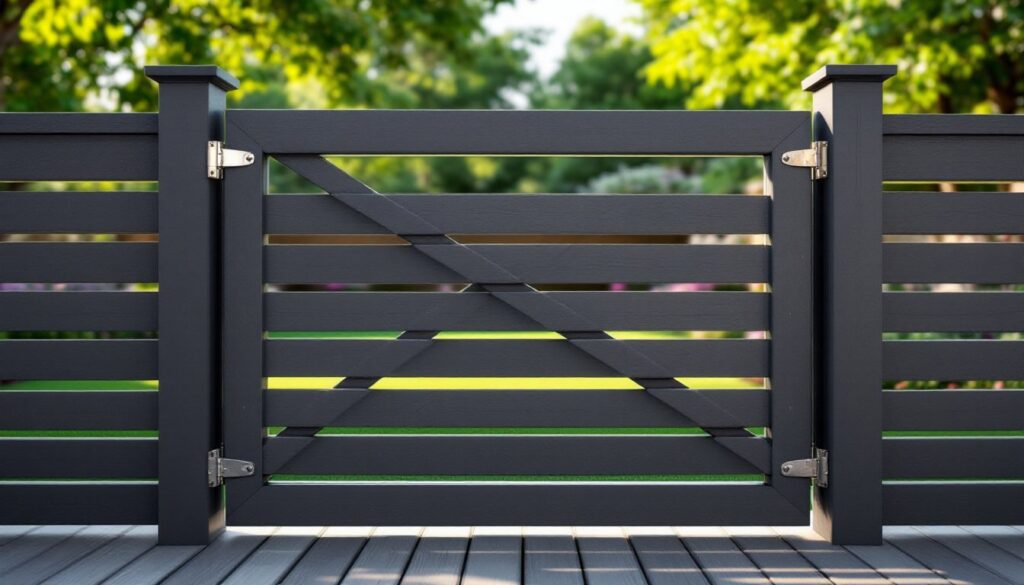
Horizontal slat gates feature evenly spaced horizontal boards mounted on sturdy vertical posts. Using 2×4 or 2×6 pressure-treated lumber with 3–4 inch spacing between slats, this style feels modern while remaining structurally sound. The open slats allow sight lines through the gate, making the space feel less enclosed. Paint or stain the wood in charcoal, black, or natural gray for that polished minimalist vibe.
Metal frame gates pair aluminum or steel frames with minimal infill, often just a few horizontal bars or a glass panel. These require welding or bolt-together kits (available from specialty suppliers). They’re durable, require less maintenance than wood, and suit contemporary decks. Expect to spend $300–$600 for a quality metal gate kit.
Glass panel gates provide transparency while defining the threshold. Tempered glass or polycarbonate inserts in a wood or metal frame create a sophisticated, airy look. These work best on decks where sightlines matter, like overlooking a view. Install with stainless steel hinges and hardware to avoid rust.
For DIYers, a horizontal slat gate is the most accessible minimalist option. You’ll need a drill, circular saw, miter saw, and basic carpentry skills. Plan on 6–8 hours of work.
Classic and Traditional Gate Designs
Traditional gates draw from picket fence aesthetics and farmhouse styling, blending timeless charm with practicality.
Picket-style gates feature evenly spaced vertical pickets (typically 1×4 boards) mounted on horizontal rails, often with a decorative top, think peaked or curved tops. This classic look works on any deck, especially colonial, farmhouse, or cottage-style homes. Paint pickets white, cream, or soft colors for authentic appeal. Use galvanized or stainless steel hinges to prevent rust, and apply a quality exterior paint or stain rated for weather exposure.
Lattice-infill gates combine a solid wood frame with diagonal or crossed lattice panels. These offer privacy while allowing airflow and partial visibility. Lattice gates suit Victorian, cottage, or transitional homes. They’re easy to build: create a frame from 2×4s, then screw or nail pre-made lattice panels (available at home centers) into the frame. Budget 4–6 hours for a DIY lattice gate.
Arched-top gates feature a curved or peaked header, adding architectural interest. Cutting curves requires a jigsaw or band saw, so this project demands intermediate skills. Pre-made arched tops are available from specialty suppliers, making assembly simpler.
Classic gates benefit from visible hardware. Heavy cast-iron or wrought-iron hinges and latches become decorative elements. This is one area where ornate hardware actually enhances the design rather than just functioning invisibly. Resources like Ana White provide proven plans for traditional designs you can adapt to your deck.
Privacy-Focused Gate Options
Privacy gates maximize sight obstruction, ideal for decks adjacent to neighbors or roadways.
Solid board gates use tight vertical boards (1×6 or 1×8 boards with minimal spacing) mounted on sturdy frames. This approach blocks views completely while creating a dramatic visual presence. Use pressure-treated lumber rated for ground contact to prevent rot. Install with concrete footings even if the gate is elevated, gates experience significant stress from wind and weight. Solid gates are heavy: consider installing latch hardware mid-frame so the gate swings smoothly without sagging.
Staggered-board gates alternate board heights, creating visual interest while maintaining privacy. Offset the boards so that high and low boards meet at different points, preventing direct sight lines. This style suits modern homes and costs the same as solid board gates.
Combination privacy gates blend solid sections with open lattice or slat patterns. The lower half might be solid (for privacy and security), while the upper half features open slats (for sight lines and airflow). This hybrid approach is practical and visually balanced.
Privacy gates require substantial framing. Use pressure-treated 2×6 or 2×8 boards for the outer frame, with interior cross-bracing every 2–3 feet. Solid gates catch wind heavily, so ensure posts are anchored securely with concrete if gate frames sit on the deck. You’ll likely need a helper and 8–10 hours for a DIY privacy gate. Platforms like Instructables offer step-by-step privacy gate builds you can reference.
Budget-Friendly DIY Gate Solutions
Not every gate needs to be custom-built. Several affordable approaches deliver results without very costly.
Ready-made vinyl gate panels cost $100–$250 and mount directly onto your deck frame. Vinyl doesn’t require staining, resists weathering, and needs only occasional cleaning. Most vinyl gates bolt together in 2–3 hours. Downside: vinyl feels less custom and doesn’t suit all aesthetic preferences.
Salvaged and reclaimed materials can reduce costs by 30–50%. Old fence sections, barn wood, ornate doors, or architectural salvage become unique gates. Check local Habitat ReStores, salvage yards, or online marketplaces. Plan extra time for adaptation and reinforcement.
Simple frame-and-lattice builds cost under $150 in materials. Buy pre-made lattice panels (2×8 feet, $20–$40 each), build a 2×4 frame around it, add brass or galvanized hinges ($15–$30), and finish. This approach produces a functional, attractive gate in a weekend.
Gate hardware kits including hinges, latches, and screws run $30–$80. Pairing budget hardware with reclaimed lumber or simple wood creates cost-effective gates. Just ensure hinges are rated for your gate’s weight, heavier gates need industrial-grade hinges.
Where DIYers often save money is by using materials already on hand: scrap lumber, old hinges, or existing deck boards. Before buying new, survey what you’ve got. A gate built from existing materials might save $200+ and feel personal rather than store-bought.
Materials and Durability Considerations
Material choice determines how long your gate lasts and how much upkeep it requires.
Pressure-treated lumber is affordable ($0.80–$1.50 per board foot) and rot-resistant, rated for ground contact. It splinters and requires finish work, and the chemical treatment isn’t ideal near vegetable gardens. Use for frames and hidden structural elements.
Cedar and redwood cost more ($2–$4 per board foot) but resist rot naturally, feel premium, and take stain beautifully. Cedar splinters less than pressure-treated lumber. Both weather to a silver-gray if left unfinished, or accept vibrant colors under paint or stain. Maintenance: refinish every 2–3 years.
Composite materials (wood-plastic blends like Trex) eliminate rot and splinter concerns but cost $3–$5 per board foot. They’re heavier, making hinges more critical, but require almost no finish maintenance. Composites don’t stain as naturally as wood.
Vinyl is the lowest-maintenance option, no paint, stain, or sanding. It’s rot-proof and durable but pricey ($4–$7 per linear foot for panels) and can look plasticky. Thermal expansion and contraction can cause movement in extreme climates.
Metals (aluminum, steel, wrought iron) work for contemporary designs. Aluminum is lightweight and corrosion-resistant: steel is stronger but requires rust protection (powder coat or paint). Welding is needed for custom designs unless using bolt-together kits. Expect $400–$1,000 for quality metal gates.
Hardware matters. Hinges, latches, and bolts corrode in coastal or humid climates. Use stainless steel, brass, or hot-dipped galvanized hardware, never bare steel. Hinges should be rated for at least twice your gate’s weight. Heavy gates (over 100 pounds) need three hinges: lighter gates, two. Resources like Fix This Build That include hardware guidance for various wood types.
Conclusion
A deck gate isn’t just functional, it’s a statement about how you use and protect your outdoor space. Whether you’re drawn to sleek minimalism, timeless tradition, privacy, or budget-conscious building, there’s a design and approach that fits. Start with your home’s style, your gate’s primary purpose (safety, privacy, security), and your skills. Most DIY gates are achievable in a weekend with basic tools. Pay attention to hinges, anchoring, and finish work, these details determine longevity. With the right design and materials, your gate will serve your deck beautifully for years to come.