Table of Contents
TogglePatio lighting isn’t just about seeing where you’re going after sunset, it’s about transforming your outdoor space into an extension of your home. Whether you’re hosting a dinner party, reading on a quiet evening, or simply enjoying the stars, the right lighting sets the mood and expands your living space. From classic bistro setups to cutting-edge smart systems, today’s patio lighting options let homeowners create the exact atmosphere they want. This guide walks you through five proven approaches to illuminate your outdoor area, complete with practical installation tips and honest budget talk.
Key Takeaways
- Patio light ideas range from budget-friendly string lights ($20–$60) and solar options to smart systems, so you can choose based on your space, climate, and entertainment needs.
- Bistro string lights require proper anchor points and a 25–48 foot length depending on patio size, with LED options offering better energy efficiency and durability than traditional incandescent bulbs.
- Solar patio lights work best in sunny climates with at least 6 hours of direct daily sunlight and regular maintenance, but struggle in cloudy northern regions.
- Permanent outdoor lighting fixtures and deck rail lights require GFCI-protected outlets, proper electrical wiring, and typically need building permits and professional installation ($200–$500).
- Smart lighting systems sync with your phone for color and brightness control, costing 30–50% more but ideal for frequent entertainers, while traditional string lights and lanterns suit casual users.
String Lights and Bistro Designs
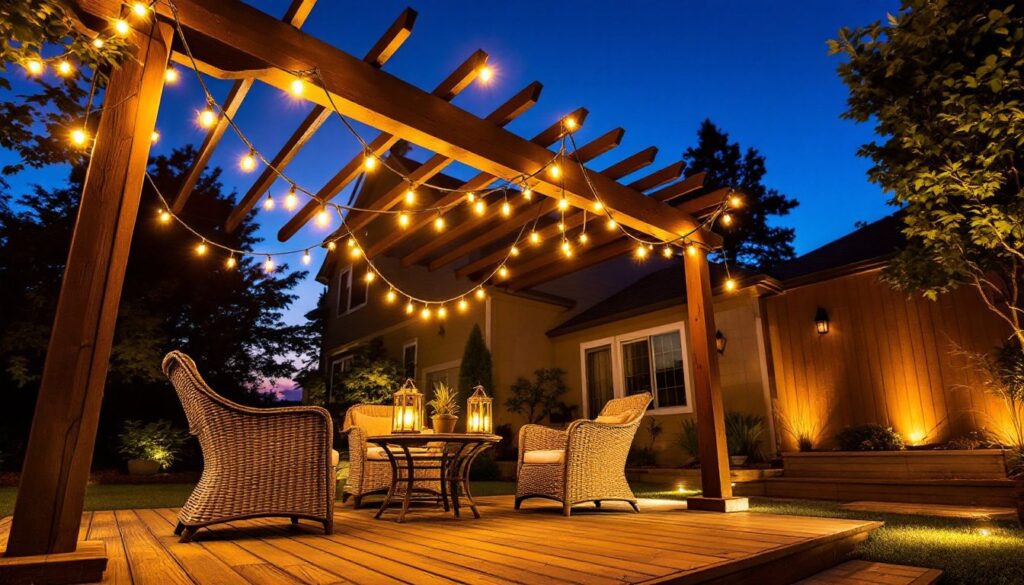
String lights remain the go-to choice for creating warm, inviting outdoor spaces. The two main types are incandescent Edison bulbs (vintage look, warm glow, shorter lifespan) and LED string lights (energy-efficient, longer-lasting, available in warm or cool tones).
Bistro string lights, also called café lights or café string lights, use larger bulbs spaced further apart than market string lights. A typical bistro run spans 25 to 48 feet, with bulbs spaced 8 to 12 inches apart. If you’re new to outdoor entertaining, consider how the lights will look draped or zigzagged across your patio. Measure twice: inadequate slack makes installation frustrating, and too much sag looks sloppy.
Installation is straightforward but requires solid anchor points. You’ll need eye hooks, lag bolts, or adhesive-mount hooks rated for outdoor use. If running lights between posts or trees, position hooks at roughly the same height (eye hooks work great for wooden posts). For metal structures, use stainless steel lag bolts to resist rust. String lights draw minimal power, a 48-foot run typically uses 20–30 watts, so a single outdoor outlet suffices. Use a GFCI outlet and keep the cord protected with a weatherproof cover.
Bid carefully on length before ordering. Most bistro sets come in 25-foot, 35-foot, or 48-foot configurations. A typical 12×12 patio usually needs a 25-foot run: larger spaces may need 35 feet or multiple strings. Budget $20–$60 for a quality LED string set, though premium Edison-style LEDs run higher.
Solar-Powered Patio Lights
Solar patio lights eliminate the need for electrical outlets and offer genuine convenience, no cords to hide, no electrician required. They come in several flavors: stake lights (ground-mounted), pathway lights, hanging solar lanterns, and solar string lights.
Stake lights are simple and reliable. They absorb sunlight during the day via a small panel, store energy in a rechargeable battery, and automatically switch on at dusk. Most provide 6–12 hours of light on a full charge. Install them in spots that receive at least 6 hours of direct sunlight: partial shade reduces output significantly. Stakes typically cost $5–$20 each and work best in clusters of 4–6 along pathways or garden beds.
Solar string lights mimic traditional bistro setups but with a solar panel and battery pack. They’re practical for areas without nearby outlets. But, read reviews carefully: cheap models underperform, especially in cloudy regions or when charging time is limited. Expect to pay $30–$70 for a dependable 20–30 foot solar string set. Placement matters, mount the solar panel where it gets morning or afternoon sun, not in tree shade.
One honest note: solar lights work well in sunny climates (Southwest, South, Southeast) but struggle in northern regions with shorter days and frequent clouds. If you live in a persistently gray climate, stick with grid-powered options. Also, clean the solar panel quarterly to maintain efficiency. Dust and pollen reduce charging speed.
Lantern and Pendant Options
Lanterns and pendant lights bring intentional design to a patio. Hanging lanterns add height variation and visual interest, while table lanterns create intimate zones for seating areas.
Hanging pendants mount to pergolas, beams, or Posts-with-brackets. Look for wet-rated or damp-rated fixtures marked for outdoor use (wet-rated handles spray and moisture: damp-rated suits covered areas). Fixtures should be spaced 4–6 feet apart along a pergola for even light. Install a dimmer switch indoors or use smart bulbs (more on that below) to control brightness without rewiring.
Table lanterns sit on side tables or patios, holding candles or LED candles. They’re flexible, portable, and require zero electrical work. Woven rattan or metal lanterns echo garden design trends: see inspiration at sources like Gardenista for style ideas. Pair lanterns with battery-operated LED candles for safety and consistency. Real candles flicker beautifully but demand attention and post a fire risk on breezy nights.
If you prefer permanent fixtures, mount a wet-rated hanging pendants from a beam or pergola. You’ll need to run 12 AWG outdoor-rated wire from an GFCI outlet (check local code for exact requirements, most jurisdictions require permits for permanent outdoor wiring). Hire a licensed electrician if you’re unsure: this isn’t a beginner task. Installation cost typically runs $200–$500 including labor, but the result is clean, professional, and safe.
Integrated Deck and Landscape Lighting
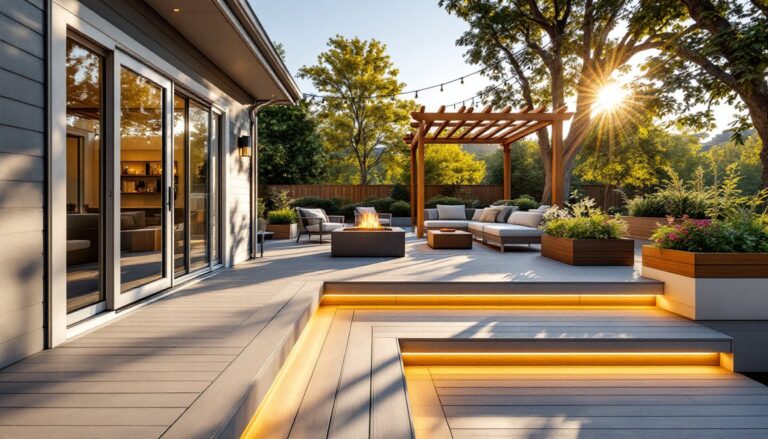
Landscape lighting shapes how people perceive your patio’s structure and plantings at night. Uplighting (aiming light upward) highlights trees or architectural features: downlighting (aimed downward) illuminates pathways and deck surfaces. Accent lighting picks out focal points like statues or specimen plants.
Deck rail lights mount into stair treads or rail posts, casting pools of light across walking surfaces. LED deck lights draw minimal power, install into pre-drilled holes, and require a low-voltage transformer (typically 12V). A 15–20 light deck system costs $150–$400, depending on quality and whether you DIY or hire labor. If your deck is already built, retrofitting is messy (you must drill from underneath): new builds are the ideal time to plan and run wiring.
Low-voltage landscape lighting (12V) is gentler on plants and safer than line-voltage (120V) systems. You’ll need a weatherproof transformer, low-voltage wire, and fixtures. Run wire around the patio perimeter or under mulch beds, connecting fixtures in series. This is DIY-friendly: dig shallow trenches (2–3 inches), lay wire, insert spike lights or in-ground fixtures, and plug the transformer into an outdoor outlet. Budget $200–$600 for a modest landscape system covering 50–100 square feet.
Proper spacing prevents dark spots. Place lights 4–6 feet apart along pathways and 8–10 feet apart for general area lighting. Dimmer switches or smart controls let you adjust mood without rewiring.
Smart Lighting and Color Control
Smart patio lights sync with your phone, voice assistant, or automation routine, letting you adjust brightness, color, and scheduling with no manual switching.
Smart bulbs fit into existing fixtures (string lights, pendants, lanterns) and connect via WiFi or Bluetooth. Brands like Philips Hue, LIFX, and Wyze offer color-changing bulbs rated for outdoor use. A single bulb costs $15–$25: a starter kit runs $50–$100. Color options range from warm white (2700K, ideal for evening gatherings) to cool white (5000K, good for task lighting) to full RGB (thousands of colors for parties or holiday themes).
Set color temperature schedules to shift from bright white at dusk (helping your eyes adjust) to warm amber later (easing you toward sleep). Voice control is convenient, say “Alexa, dim the patio lights” or “set patio to warm white.”, but it requires a smart hub (often bundled with the bulb kit).
Smart landscape systems (like Nanoleaf Essentials or Govee outdoor strips) clip onto pergolas, fences, or patios and deliver color-changing ambiance. They’re pricier ($100–$300 per 10 feet) but create dramatic effects. Budget consciously: smart features add 30–50% to your lighting cost. If you’re a tech enthusiast or host frequent outdoor gatherings, it’s worth the investment. For casual use, stick with traditional string lights or lanterns. Also note: smart systems rely on WiFi strength: position the hub or repeater strategically to avoid dead zones where your patio sits.
Practical Installation Tips and Budget Considerations
Before you buy a single light, measure your patio and sketch where lights will go. Note existing outlet locations and any obstacles (trees, structures, power lines). For overhead installations (pergola lights, pendants), verify that mounts are structurally sound. A roof joist or beam should be 2×8 minimum to safely anchor heavy fixtures: check your deck plans or hire an inspector if unsure.
Electrical safety is non-negotiable. All outdoor outlets must be GFCI-protected (a breaker or outlet-type GFCI detector). Extension cords for outdoor use must be rated for wet conditions (usually labeled W or WA). Never leave cords coiled on the ground long-term: uncoil and secure them to prevent tripping and water pooling. Replace cords with buried low-voltage wire or surface conduit if you’re running lights permanently.
For permits: String lights and solar lights rarely require permits. Permanent electrical work (deck lights, landscape wiring, hardwired fixtures) typically needs inspection. Call your local building department to confirm. Skipping a permit might seem convenient, but unpermitted work can void insurance claims and tank resale value.
Material acclimation matters. If you’re installing deck lights in spring or summer and expect winter temperatures, buy fixtures rated for your zone (most outdoor fixtures handle -40°F to 140°F). Test solar lights on cloudy days before your first party: a rainy forecast kills their charm.
Realistic budget math: A modest patio setup, string lights plus a few table lanterns and battery candles, runs $100–$200 and takes 1–2 hours. A mid-range setup (string lights, deck rail lights, and low-voltage landscape accents) costs $400–$800 and requires a weekend of installation. Premium smart setups with color control and integrated lighting design can exceed $1,500 but reward you with flexibility and professional aesthetics. The key is matching your budget to your use. Frequent entertainers justify higher investment: occasional users do fine with basics. Also Better Homes & Gardens for seasonal outdoor projects.
Conclusion
The right patio lighting hinges on how you use your space, your budget, and your patience for electrical work. String lights are the easiest and most popular starting point. Solar options suit sunny climates and avoid outlet constraints. Smart systems deliver flexibility but demand tech comfort. Whichever path you choose, measure carefully, respect electrical codes, and don’t skimp on weather-rated materials. A well-lit patio extends your living season and transforms evening gatherings, and the investment pays dividends every time you step outside.