Table of Contents
ToggleA 7-year-old’s bedroom is more than just a place to sleep, it’s his fort, his headquarters, and the backdrop for years of growth. The challenge is designing a space that feels exciting right now while staying relevant through his tweens and early teens. Good news: you don’t need a design degree or a huge budget. With smart color choices, solid storage, and a flexible layout, you can create a bedroom that adapts as your son grows. This guide walks through practical strategies to build a space that’s both fun and functional, without looking dated in three years.
Key Takeaways
- Use neutral or muted wall colors like soft gray, warm beige, or blue-gray as your foundation, then add personality through easy-to-swap accents like bedding and posters that won’t feel dated in a few years.
- Invest in built-in shelving, under-bed storage drawers, and labeled clear bins to manage the toys, books, and gear a 7-year-old accumulates, making cleanup easier and helping him find what he needs.
- Create a dedicated desk space with proper lighting in a corner facing a wall, separating the focus area from open floor space for play and creative activities.
- Choose durable furniture made from solid wood or quality metal frames that can handle wear and tear, and anchor tall dressers and bookcases to walls for safety.
- Keep themed décor subtle with just a few key pieces—gallery walls, removable wall decals, and canvas prints let you evolve his interests without a complete redesign as he grows into his tweens.
Set a Color Foundation That Works for Years
Color is the backbone of any kid’s room, and the wrong choice can feel babyish or tired fast. Avoid electric primary colors or trendy pastels that’ll look off in a year or two. Instead, anchor the room with a neutral or muted base, soft gray, warm beige, or even a soft blue-gray on the walls. These tones give you room to change accent colors and decor without a full repaint.
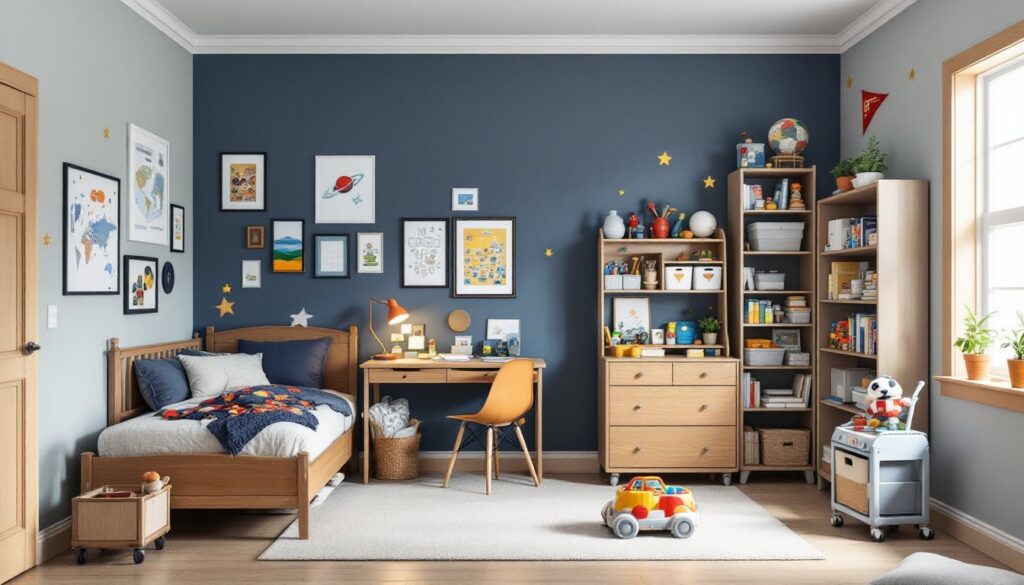
For accent walls or trim, consider deeper, more sophisticated colors: navy, forest green, or charcoal. A single accent wall in one of these shades adds personality without overwhelming the space. You can then bring in color through bedding, posters, and décor that’s easy to swap out as his tastes evolve.
If he’s adamant about a bold color, paint it on one wall only, or use peel-and-stick wallpaper so you’re not locked in for five years. Pro tip: use quality primer and two coats of paint to ensure coverage and durability on walls that’ll take some bumps and wear. Keep the ceiling white or a very light neutral to keep the space feeling open.
Incorporate Storage Solutions That Keep Toys Organized
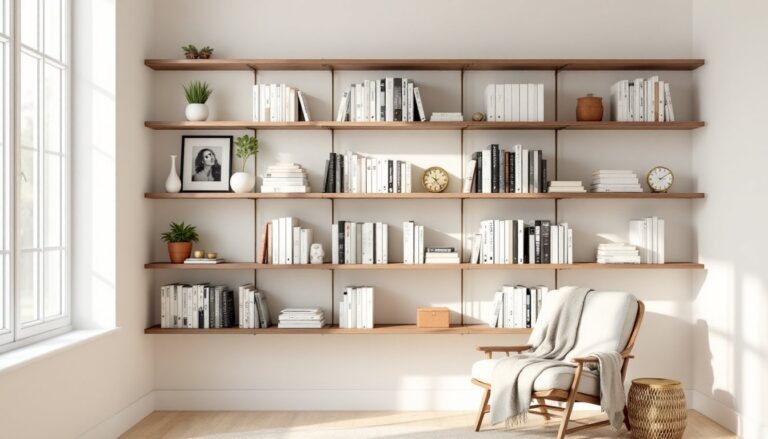
A 7-year-old accumulates toys, books, sports gear, and building blocks at lightning speed. Without proper storage, the room becomes a toy landmine. Built-in shelving or tall bookcases (anchored to wall studs for safety) offer the most storage per square foot. Arrange books spine-out on lower shelves where he can reach them, and use clear plastic bins on higher shelves for Lego, action figures, or craft supplies.
Under-bed storage drawers are a no-brainer if the bed is elevated high enough. Rolling bins slide out easily and keep seasonal toys or off-season sports equipment out of sight. Label everything with text and pictures, this helps him find what he wants and actually put things back.
Consider a closet system with a lower rod for his hanging clothes and a shelf divider to keep things tidy. Don’t overdo shelving to the point the room feels cluttered: the goal is access and visibility, not display. A toy rotation system (swapping out toys every month or so) keeps interest high without needing infinite storage space.
Create a Functional Study and Play Zone
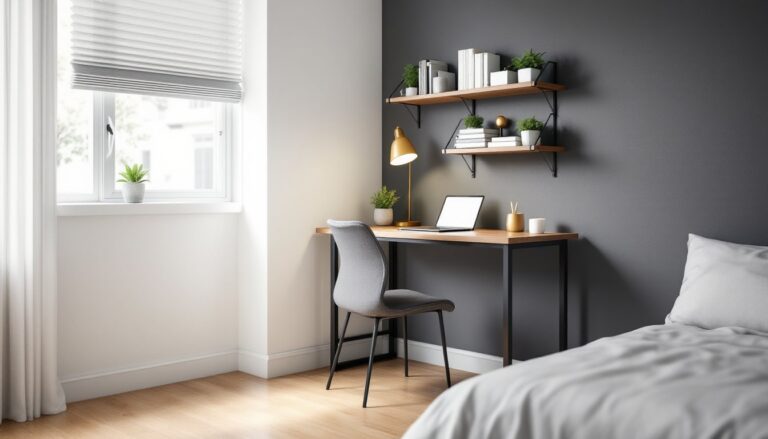
By age 7, assignments is part of the routine, so a dedicated desk space is essential. This doesn’t need to be fancy, a simple desk with a comfortable, height-appropriate chair tucked into a corner does the job. Make sure there’s good lighting overhead or via a desk lamp: poor lighting causes eye strain and makes work feel harder than it is.
Position the desk facing a wall or window (not directly at the bed) to minimize distractions. A small hutch or shelf above the desk keeps pens, paper, and school supplies within arm’s reach. Designate a small bin or folder holder for current schoolwork and permission slips to avoid chaos.
The remaining floor space should be open for play, Lego construction, floor puzzles, or just running around. If space is tight, a folding mat or rug defines the play area and makes cleanup easier. A small bookshelf or rolling cart near the play zone keeps activity supplies organized. This zoning helps him understand that the desk is for focus and the rest is for creative play.
Add Personality With Themed Decor and Wall Art
Wall art and small décor touches are where his personality shines through without a major design commitment. A gallery wall of posters, photos, or printed artwork lets you swap pieces as his interests change. Hang canvas prints or framed posters at eye level so the space feels designed for him, not adult guests.
Consider removable wall decals for clouds, stars, or geometric shapes, these add visual interest and peel off cleanly when tastes shift. A world map or constellation poster works across ages and feeds curiosity. His own artwork or photography is free décor: frame a few pieces or use clips on string to create a rotating display.
Bedding sets the mood, so choose patterns or colors he genuinely likes. A fun duvet cover is easy to swap, and you can keep sheets and a neutral comforter underneath for flexibility. Throw pillows add comfort and visual interest without permanent commitment.
Sports, Space, and Adventure Themes
If he’s into sports, a simple approach works best: frame a few action photos, hang a jersey or pennant, and add a team-colored throw. Avoid overdoing it with matching everything in team colors, that dates the room fast. Space themes hold up well and appeal across ages. Galaxy wall stickers, constellation artwork, or a simple mobile above the desk can feed that fascination. Adventure themes (maps, camping gear, explorer quotes) are timeless. Keep theming subtle: a few key pieces that he loves will outlast a room plastered with theme-specific everything.
Choose Durable Furniture Built to Last
Furniture takes the most wear and tear in a kid’s room, so durability matters. A solid wood bed frame or a quality metal frame (avoid hollow-core particle board if possible) handles jumping and leaning without wobbling. Look for beds with low VOC (volatile organic compound) finishes to keep air quality safe.
The mattress should be firm enough to support his growing body: a memory foam or hybrid won’t sag as quickly as a cheap spring mattress. Measure the room carefully before buying, even an inch of clearance matters for walking and changing sheets.
Dressers get opened, closed, and occasionally climbed on. Solid construction and smooth-running drawers make a difference. Anchor tall furniture (dressers over 36 inches, bookcases) to wall studs with L-brackets: a tipping hazard is never worth the risk. Simple, clean-lined pieces in natural wood or neutral paint age better than heavily decorated or character-themed furniture.
You can get great quality at mid-range prices. IKEA pieces like the KURA bed and KALLAX shelving are famously durable and upgradeable, you can modify them later. Thrift stores and hand-me-downs work too if they’re solid and safe. Avoid anything with sharp edges or recalled models: check CPSC safety recalls before buying secondhand furniture.
Conclusion
A well-designed 7-year-old’s bedroom balances fun with function and adapts as he grows. Start with neutral walls and sturdy furniture, add storage that he can access, and let his personality shine through with easy-to-change décor and art. The goal is a space where he feels at home, where assignments gets done, and where play happens freely, all without a complete redesign every few years. Build it right now, and you’ll be tweaking colors and posters, not rebuilding from scratch.