Table of Contents
ToggleAt 14, a boy’s bedroom becomes more than just a place to sleep, it’s his personal sanctuary, a reflection of his growing independence and evolving interests. Whether he’s into gaming, music, sports, or tinkering with projects, the right bedroom design can support his hobbies while keeping the space functional and organized. This guide walks through practical ideas for creating a room that feels genuinely his, from gaming zones and smart storage to lighting that works for both assignments and downtime. You’ll find straightforward tips on layout, color, furniture, and finishing touches that don’t require a major renovation budget or professional decorator.
Key Takeaways
- 14 year old boy bedroom ideas should include a dedicated gaming and entertainment zone with a proper gaming chair, second monitor, and smart cable management to support his hobbies and growing interests.
- Maximize storage with vertical wall-mounted shelves, under-bed containers, and multifunctional furniture like storage benches to keep the room organized as he accumulates gaming gear and hobbies.
- Use layered lighting with task lamps, RGB LED strips, and dimmers to create zones for focused work, gaming, and relaxation throughout the day.
- Choose neutral wall colors or a single accent wall, then let posters, decals, and removable wallpaper reflect his evolving personality and interests without permanent commitment.
- Invest in ergonomic furniture—especially a quality desk chair ($150–$250) and a comfortable gaming setup—to support proper posture during his developing teenage years.
- Keep your 14-year-old involved in design decisions so the room feels authentically his and reflects his identity and independence.
Create a Personal Gaming and Entertainment Zone
At 14, most boys spend significant time gaming, streaming, or watching content. Dedicating a focused entertainment area keeps the room organized and gives him a defined space to relax.
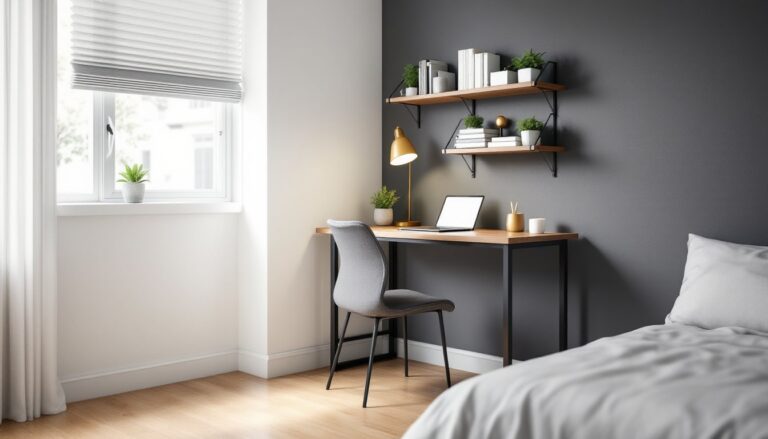
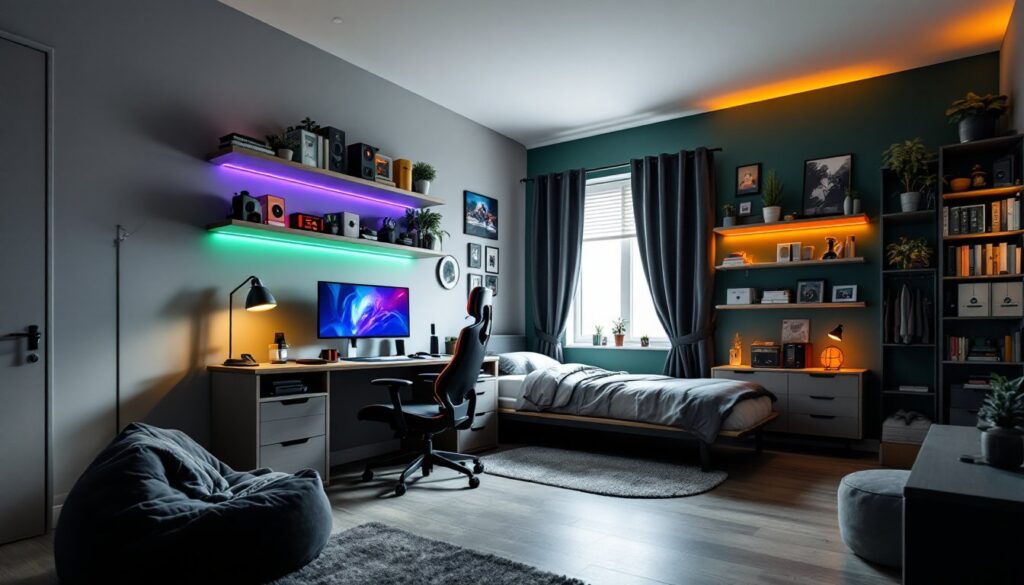
Positioning the desk or gaming setup is key. Place it on the wall with the best natural light during the day, but position the monitor so glare from windows doesn’t wash out the screen. If the room is small, a corner desk with an L-shaped surface gives more workspace without eating up floor area. A second monitor or a tablet mounted on an adjustable arm lets him multitask without clutter.
Consider a comfortable gaming chair with proper lumbar support, this isn’t just comfort, it’s ergonomic. At 14, his spine is still developing, and slouching in a cheap chair for hours invites poor posture habits. A mid-range gaming chair ($100–$250) with adjustable height and back support is worth the investment.
Add a small side table or shelf next to the gaming area for controllers, headsets, cables, and energy drinks. Use cable management clips or sleeves so wires don’t tangle into a bird’s nest. An under-desk organizer keeps cords out of sight and makes future unplugging easier.
For content creators, consider a simple ring light and a microphone arm. If he’s streaming or making videos, even a budget USB condenser mic with a boom arm ($40–$80) makes audio clearer and frees up desk space.
Maximize Storage and Organization Solutions
A 14-year-old accumulates gear fast: gaming peripherals, sports equipment, school projects, clothes, and random treasures. Without smart storage, the room becomes a chaotic pile.
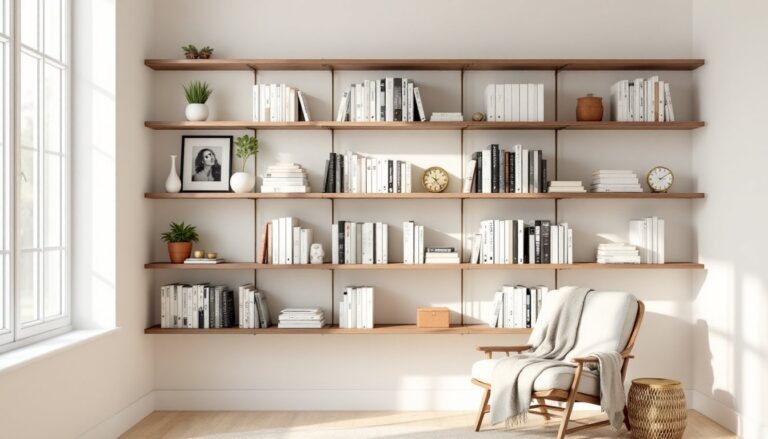
Start with vertical storage. Wall-mounted shelves above the desk or along one wall create display space without eating floor area. Floating shelves ($20–$50 each) are easy to install with a stud finder and wall anchors. Group shelves by height: smaller shelves for collectibles and trophies, deeper shelves for books and larger items.
A low dresser or storage bench at the foot of the bed serves double duty, storage underneath for off-season gear, and a seating spot. Look for units with drawers that glide smoothly: cheap hardware gets loud fast and annoyed teenagers avoid using it.
Under-bed storage containers hold items he doesn’t need daily: holiday decorations, old school projects, seasonal sports gear. Use clear plastic bins so he can see what’s inside without opening each one. Label them with a label maker, takes 30 seconds and saves hunting later.
Smart Shelving and Built-In Options
If you’re willing to invest in built-ins, a simple shelving unit with a mix of open shelves and closed cabinets (for the stuff he doesn’t want on display) transforms the room. Prefab wall systems from retailers like IKEA run $200–$600 depending on size, and many are simple enough for a handy parent and teenager to assemble together over a weekend.
A ceiling-mounted shelf or overhead storage rack ($50–$150) works great for items he rarely touches: old collectibles, spare bedding, or hobby supplies. Install it with proper heavy-duty fasteners if it’ll hold weight, read the weight rating and anchor to studs or joists, not just drywall.
For clothes, use a hanging organizer on the back of the door for hats, scarves, belts, or accessories. A simple shoe rack or clear shoe bins under the bed keeps footwear contained and visible. Consider that you’re organizing for a growing teen: buy bins he can actually open and close, not those flimsy boxes that fall apart.
Choose a Color Scheme and Wall Treatment
Color sets the tone and can make the room feel larger, cozier, or more energizing depending on his taste. Avoid choosing colors for him: ask what he actually likes. At 14, he has opinions, and a room he didn’t pick feels imposed, not personal.
Neutral walls are safest if he changes interests (which he will). Soft grays, warm whites, or light greens create a calm backdrop that lets posters, RGB lighting, or décor take center stage. Paint costs $20–$40 per gallon for quality paint: a typical bedroom needs 1–2 gallons depending on size and coverage.
If he wants bold color, paint one accent wall instead of all four. A deep blue, forest green, or charcoal gray on one wall while keeping others neutral gives impact without overwhelming the space. This also lets you save money, only two walls need the accent color.
Wall decals, posters, or wallpaper add personality without permanent commitment. Removable peel-and-stick wallpaper ($30–$80 per roll) is easy to apply and remove, perfect for a teenager whose taste evolves. Fabric posters or canvas prints of his interests (games, athletes, music, art) give the room character.
Don’t overlook the ceiling. A darker ceiling color or even a matte black paint makes a room feel more intimate and gaming-focused, especially combined with accent lighting. Just make sure the room gets adequate light: dark ceilings absorb light and can feel cave-like if the rest of the design doesn’t compensate.
Upgrade Lighting for Mood and Functionality
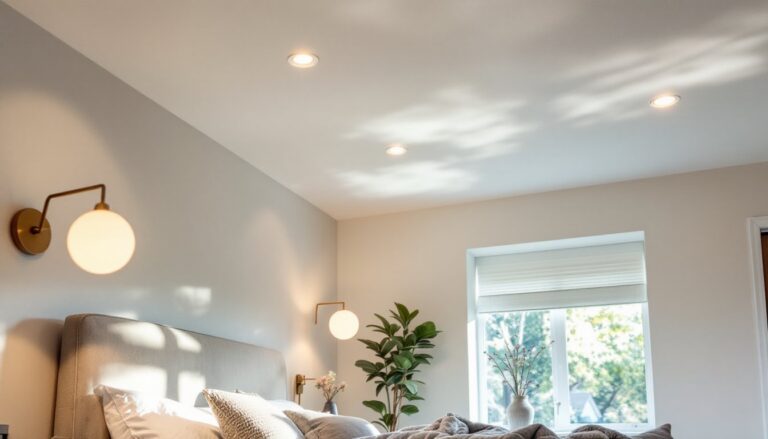
Teen bedrooms need layered lighting: bright task lighting for assignments, warm accent lighting for relaxation, and ambient light for daytime.
Start with the main fixture. A ceiling light isn’t enough. Add a desk lamp with adjustable brightness so he can see without eye strain when studying or gaming. Look for a lamp with a color temperature around 4000K (neutral white) for focused work, or a lamp with adjustable color temperature so he can shift to warmer light in the evening.
RGB LED strip lighting has become the calling card of teen rooms. Strips ($20–$80) go behind the desk, around shelves, or along the wall behind the bed. They’re easy to stick on and require only a power outlet nearby. Use them to set mood: blue for gaming, warm white for studying, off for sleep. Many come with remote controls or smartphone apps.
A clip-on or clip lamp ($15–$40) on the headboard provides reading light without wires running down the wall. This is especially useful if he reads before bed or likes to keep the rest of the room dim.
Don’t forget window treatments. Blackout curtains or shades ($40–$100 per window) help him sleep during the day if he’s a late-sleeper, and they reduce glare on screens. Pair them with sheer curtains or blinds for daytime control.
Consider installing a dimmer switch ($20–$40) on the main light. It gives him control over brightness and sets a calmer vibe without rewiring. A licensed electrician can install one in under an hour: DIY is possible if you’re comfortable with basic electrical work, but always turn off power at the breaker and test with a voltage tester before touching anything.
Add Comfortable and Versatile Furniture
Furniture should balance comfort, durability, and space efficiency. At 14, your son is still growing, so oversized furniture might dominate the room or become uncomfortable as he gets taller.
The bed is the anchor. A twin XL (38″ × 80″) or full (54″ × 75″) works best for most teen rooms. A platform bed with built-in storage drawers maximizes the footprint. Or, consider a loft bed with a work desk underneath, this stacks gaming setup and sleeping area vertically, freeing up valuable floor space. A loft bed costs $300–$800 depending on construction, but it essentially creates a second room in the same footprint.
Budget home renovation sites like Young House Love have walked through countless room makeovers where smart furniture choices define the space. Choose pieces in neutral finishes (black, gray, natural wood) so they adapt if his color preferences shift.
A comfortable reading chair or bean bag ($100–$300) gives him a spot to relax that’s not the bed or the gaming chair. Teens appreciate having multiple spots to occupy: it makes the room feel more versatile. If floor space is tight, a hanging chair or a cushioned window seat serves the same purpose.
A desk chair was mentioned earlier, but worth repeating: it’s the single most important furniture investment. He’ll spend hours there, and a cheap chair causes back pain and bad posture. Spend $150–$250 on a proper one with adjustable height and lumbar support.
For wall-mounted inspiration and layouts, design blogs like Homedit showcase furniture arrangements and room concepts that work in real teen spaces. Look for rooms similar in size to yours to see what actually fits.
If the room is cramped, multifunctional furniture is your friend. An ottoman with storage, a desk that folds down from the wall, or a storage bench doubles as seating. These pieces typically cost more upfront but reclaim floor space, which is priceless in a small room.
Conclusion
A 14-year-old’s bedroom reflects his independence and identity. By building in dedicated spaces for gaming or hobbies, organizing storage so the room stays functional, choosing colors and lighting that work for both focus and relaxation, and investing in versatile furniture, you create a room he’ll actually want to spend time in. Start with the high-impact changes, lighting and a gaming setup, then layer in storage and décor as budget allows. Keep him involved in decisions: a room he helped design feels genuinely his, not like something done to him.