Table of Contents
ToggleYour bathroom vanity isn’t just a place to brush your teeth, it’s the focal point of your daily routine and a chance to inject personality into one of your home’s most functional spaces. Whether you’re dealing with a cramped powder room or a sprawling master bath, the right decor choices can elevate the vanity area from purely utilitarian to genuinely inviting. The good news is you don’t need a full gut renovation to make a dramatic difference. With thoughtful lighting, smart storage, an eye-catching mirror, and carefully selected accessories, you can transform your vanity into a space that feels both beautiful and practical. This guide walks you through nine concrete ideas, from fixture upgrades to styling tricks, that homeowners and DIY enthusiasts can tackle without breaking the budget or requiring a licensed contractor.
Key Takeaways
- Bathroom vanity decor transforms your daily routine into a beautiful ritual by combining thoughtful lighting, smart storage, a statement mirror, and carefully curated accessories.
- Install cool-white LED fixtures (4000K–5000K) with 70–100 lumens per square foot and position side-mounted sconces 36–40 inches above the floor to eliminate shadows and enhance your appearance.
- Apply the 70/30 principle by keeping 70 percent of your vanity surface clear and storing only essential daily-use items visibly, making cleaning quick and the space feel intentional.
- Choose a mirror that spans 80–90 percent of your vanity width and consider a backlit LED mirror for a dual-purpose upgrade that combines task lighting, defog features, and style.
- Add personality through humidity-loving plants like pothos or snake plants, natural materials like wood trays and woven baskets, and grouped accessories in odd numbers with a cohesive color palette.
- Style with intentionality by incorporating quality textiles like linen hand towels and Turkish cotton mats, then anchor your design by gathering inspiration from sources like Remodelista and HGTV before making purchases.
Lighting That Enhances Your Vanity
Good lighting at the vanity is non-negotiable. Poor lighting leads to uneven makeup application, missed spots while shaving, and a dingy overall appearance. The key is combining ambient light with task lighting, typically achieved with a combination of overhead fixtures and wall-mounted sconces flanking the mirror.
Choosing the Right Bulbs and Fixtures
When upgrading vanity lighting, focus on color temperature and brightness. Aim for bulbs in the 4000K to 5000K range (cool white, daylight-balanced light) rather than warm yellow tones. This mimics natural light and prevents the unflattering cast of overly warm fixtures. Lumens matter too: a typical bathroom vanity needs 70 to 100 lumens per square foot of mirror, so a 30-inch wide mirror usually requires 2,100 to 3,000 total lumens spread between fixtures.
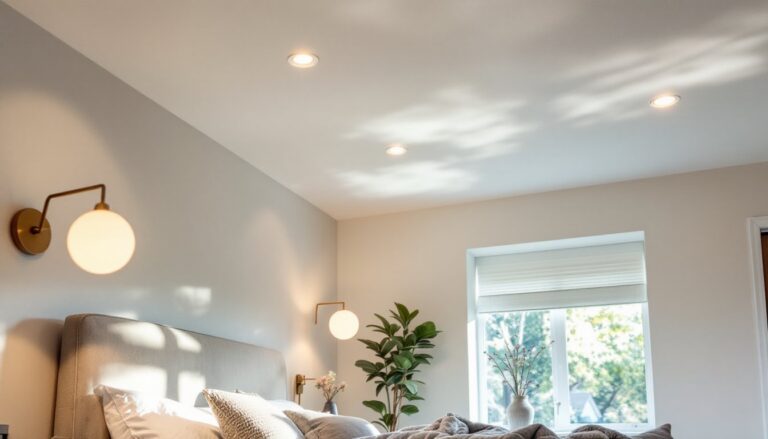
For fixture style, side-mounted sconces positioned 36 to 40 inches above the floor and roughly 24 to 28 inches apart (measured from fixture center to center) provide the most flattering angle and eliminate shadows under the chin and eyes. If you’re adding sconces, verify that your wall studs can support the mounting brackets, use toggle bolts if you must mount between studs. Consider dimmable LED bulbs ($8–$25 per bulb): they last 25,000+ hours and reduce energy costs while letting you adjust ambiance for different times of day.
If your vanity currently relies only on a single overhead fixture, adding a second sconce or replacing a dated fixture with an updated model is a high-impact, relatively low-skill project. Most sconces require basic wiring knowledge: if you’re not confident working inside the wall, hiring a licensed electrician is the safe choice.
Storage Solutions With Style
Clutter kills vanity aesthetics. A practical storage strategy keeps daily-use items accessible while hiding the chaos beneath the sink or inside a medicine cabinet. The trick is choosing containers and organizers that look intentional rather than haphazard.
Baskets, Trays, and Organizers
Start with drawer dividers or small wooden boxes to corral items like hair clips, cotton swabs, and travel-size products. Woven wicker baskets (approximately 6 to 12 inches wide) sit neatly on open shelving or beside the sink and feel organic without looking cluttered. Metal or ceramic trays ($10–$40) group similar items, think a tray for nail care supplies or one for skincare bottles, and can be easily lifted for cleaning.
For under-sink storage, sliding drawer organizers and stackable containers maximize deep, awkward spaces that typically trap dust and forgotten bottles. Clear containers ($5–$20) let you see contents at a glance, reducing the chance of buying duplicates. If your vanity has open shelving above, curate items deliberately: three matching jars for cotton balls, Q-tips, and bath salts look far more intentional than six mismatched bottles.
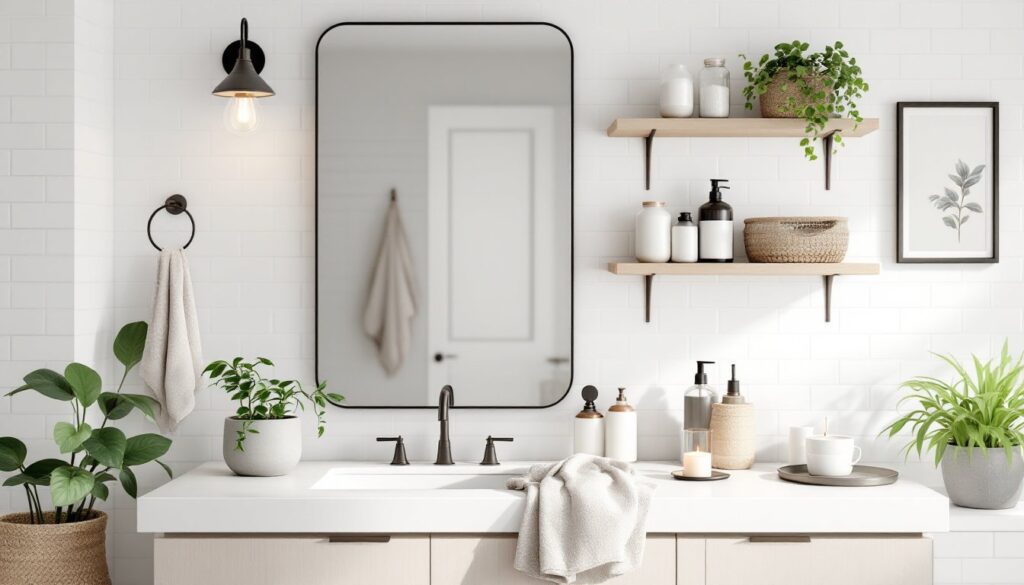
The rule of thumb is the 70/30 principle, about 70 percent of your vanity surface should remain clear, with only essential daily-use items (soap dispenser, hand towel, perhaps a small plant) visible. Everything else lives in closed storage. This approach isn’t just prettier: it makes cleaning the countertop a 30-second task instead of moving a dozen items around.
Mirrors That Make a Statement
The mirror is the dominant vertical element above most vanities, so choosing one that complements your space is crucial. Beyond pure function, a well-chosen mirror can anchor the room’s design and dramatically affect how the space feels.
If you’re replacing an existing mirror, you have options. A frameless beveled mirror ($50–$150) provides a clean, modern look and works with nearly any decor. Framed mirrors in wood, metal, or composite materials range from $100 to $500+, depending on quality and finish. Wood frames (oak, walnut, or painted finishes) add warmth and work well in farmhouse or traditional bathrooms. Brushed nickel or matte black metal frames suit contemporary and industrial styles.
For renters or those avoiding permanent installation, a high-quality leaning mirror propped against the wall above the vanity can be surprisingly effective, just ensure it’s stable and won’t tip during use. Size matters: your mirror should be at least as wide as the vanity (ideally 80 to 90 percent of the vanity width) and tall enough that everyone using the bathroom can see their face comfortably. A mirror spanning 24 to 36 inches horizontally and 30 to 40 inches vertically suits most residential bathrooms.
Consider adding a backlit LED mirror ($200–$600) if your budget allows. These fixtures combine mirror, task lighting, and often a defog feature in one unit. They’re harder to install than a simple mirror (you’ll need an outlet and possibly a licensed electrician), but they’re a showstopper. Inspiration for styles and configurations is readily available on Houzz’s bathroom vanities section, which features countless real examples from designers and homeowners.
Greenery and Natural Accents
Plants and natural materials soften bathrooms and introduce texture beyond ceramic and glass. Bathrooms are humid, a feature many plants actually love, so you’re not limited to struggling ferns in a corner.
Low-light, humidity-loving options include pothos, snake plants, and ZZ plants. A small pot (4 to 6 inches) of pothos or a trailing string of pearls cascading from a shelf adds life without taking up precious vanity real estate. If your vanity has open shelving, a single well-placed plant in a ceramic or concrete planter ($15–$50) draws the eye and breaks up the visual weight of bottles and jars.
Beyond living plants, natural materials create warmth. A small wooden tray holding a few smooth river stones, a thin layer of sand, or even a piece of driftwood ($5–$25 depending on size) brings organic texture without requiring care. Woven wall hangings or a small jute rope mirror frame ($20–$60) introduce natural fiber in a way that feels intentional rather than bohemian cliché.
Bathroomhumidity can fluctuate widely, so avoid delicate plants that wilt easily. Test any new plant in a small area first and be prepared to move it if your bathroom’s moisture levels prove too extreme or too dry. Rotate plants seasonally if they look sad: no decor choice is worth a plant struggling to survive.
Accessory Styling Tips
Once the bones of your vanity are in place, lighting, storage, mirror, accessories are where personality emerges. The key is restraint: too many small items create visual chaos, while too few make the space feel cold.
Group items in odd numbers (three soap dispensers or five candles look intentional: four often feel accidental). Choose a cohesive color palette: if your vanity is white ceramic, anchor it with brushed nickel or matte black accessories, then add warmth with one accent color, perhaps soft sage green or warm taupe.
Textiles matter more than people realize. A linen hand towel ($15–$35) folded neatly beside the sink or draped over a towel ring softens the hard lines of plumbing. A small bathroom rug or mat (36×24 inches, roughly $30–$80) in a coordinating color anchors the floor and adds comfort. Avoid plastic or overly textured mats that trap moisture: linen, cotton, or Turkish cotton dry quickly and feel nicer underfoot.
Candles, small sculptures, or a vintage mirror leaning against the wall add visual interest without functional burden. Unscented or lightly scented candles prevent overwhelming the small space. A single framed print or a small gallery wall arrangement above the toilet or beside the mirror can introduce color or personality without cluttering the vanity itself.
Incorporating curated design inspiration from sources like Remodelista and HGTV can help you develop a cohesive style before buying. Clip images of bathrooms that resonate with you, note common elements (color, materials, fixture finishes), and build your accessories around those themes. This approach prevents impulse purchases that look great in isolation but clash with the bigger picture.