Table of Contents
ToggleA well-placed bedroom mirror isn’t just functional, it’s a design game-changer. Whether you’re amplifying natural light, creating the illusion of a larger space, or anchoring your room’s aesthetic, the right mirror can completely shift how a bedroom feels. Bedroom mirror ideas range from statement pieces that demand attention to subtle installations that quietly enhance your space. This guide walks you through seven practical approaches to selecting, positioning, and installing mirrors that work with your layout and style, plus honest advice on DIY projects and when to call a pro.
Key Takeaways
- A statement bedroom mirror (36+ inches) should take up 30-40% of wall width and be mounted at eye level or slightly above to create a focal point and enhance room aesthetics.
- Position bedroom mirrors opposite windows to bounce natural light and make spaces feel larger—a mirror sized 30-50% of the window width works best for optimal light distribution.
- Proper installation for mirrors over 20 pounds requires locating wall studs and using heavy-duty brackets or French cleats rather than standard drywall anchors.
- Vanity mirrors above dressers should be mounted 48-60 inches from the floor with side-mounted sconces rated for 60-100 watts to eliminate shadows and improve functionality.
- DIY bedroom mirror projects—such as building custom frames from lumber or refinishing thrifted pieces—offer budget-friendly ways to personalize your space without expensive custom options.
- Frame material selection is critical: natural wood suits farmhouse styles, matte black or metal frames fit modern spaces, while brass or gold conveys luxury and sophistication.
Statement Mirrors: Make a Bold Design Statement
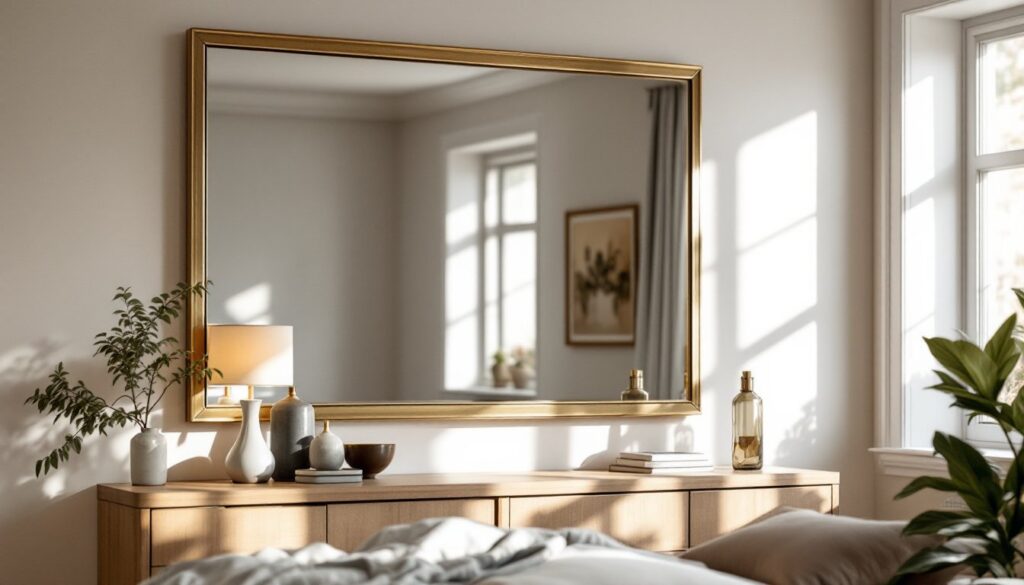
A statement mirror anchors a bedroom the way art does. Unlike a small vanity mirror tucked in a corner, a statement piece, typically 36 inches or larger in diameter or width, becomes the focal point of a wall. Think ornate gilded frames, modern geometric designs, arched mirrors, or oversized sunburst styles that command visual presence.
These mirrors work best on walls opposite the bed or above a dresser, where they catch the eye immediately. The frame material matters: a brass or gold frame conveys luxury, while matte black or dark wood reads contemporary. Natural wood frames suit farmhouse or coastal themes. Before committing, measure your wall space carefully, a statement mirror should take up roughly 30-40% of wall width above the furniture it’s paired with, not overwhelm it.
Installing a large, heavy mirror requires proper wall anchoring. If your mirror weighs more than 20 pounds, you’ll likely need to locate wall studs (typically 16 inches on center) and use heavy-duty brackets or French cleat mounting systems rather than standard drywall anchors. A stud finder is essential here. Mount at eye level or slightly above, keeping the bottom edge 16-20 inches above the surface it sits on to avoid head bumps.
If you don’t want permanent installation, leaning mirrors work too, prop a large mirror against the wall using a mirror stand or secure it with a mounting strip rated for the weight. This keeps your security deposit intact and lets you swap styles seasonally.
Functional Mirror Placement for Better Lighting and Space
Positioning Mirrors Opposite Windows
One of the smartest mirror placements is directly opposite or at an angle to a window. This bounces natural light around the room, making it feel brighter and larger, especially valuable in small bedrooms or rooms with limited natural light. Place the mirror so morning or afternoon sun reflects off it without creating harsh glare on the bed.
Measure your window dimensions and room depth. A mirror 30-50% the size of the window typically provides optimal light bounce without overwhelming the space. If your window is 48 inches wide, a mirror 24-36 inches wide positioned 2-3 feet away will catch and redistribute light effectively. Test the reflection before permanently mounting, move a portable mirror around first to see where the light lands.
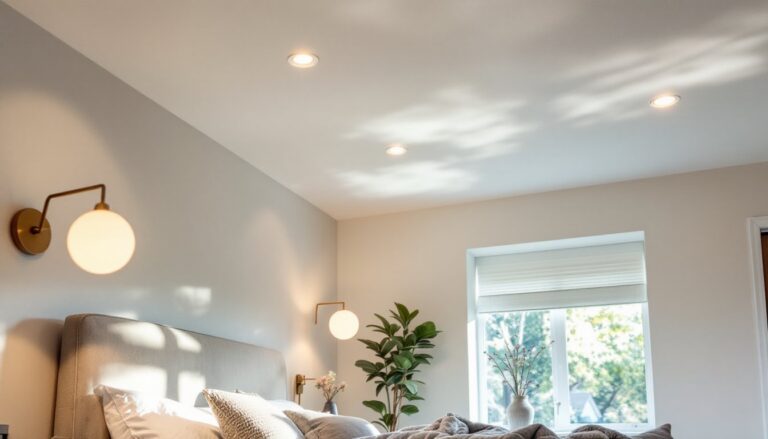
This placement also works with artificial lighting. Position a mirror behind or beside a bedside lamp to amplify its glow, reducing the need for overhead fixtures that can feel harsh at night.
Mirrors Near Vanities and Dressers
A vanity mirror is purely functional, but placement affects both usability and light. The best spot is above the dresser with good lighting, ideally natural light from a nearby window, or supplemented with wall-mounted sconces on either side rated for 60-100 watts equivalent (LED). Side lighting eliminates shadows on the face, which is crucial if you use this mirror for makeup or grooming.
Mount vanity mirrors so the center is at eye level when seated or standing, roughly 48-60 inches from the floor. A mirror 24-36 inches wide works for most dressers: narrower mirrors feel cramped, while overly wide ones waste wall space. Leave 12-18 inches of clearance on each side for wall-mounted lights or decorative items.
If space is tight, a tilting mirror on a stand offers flexibility, you adjust the angle to catch light or avoid reflections. These don’t require wall mounting and work in rentals.
Stylish Frame Options for Every Bedroom Aesthetic
Frame choice defines mirror personality. A solid wood frame in natural finish or light stain suits farmhouse, rustic, or coastal bedrooms, think reclaimed barn wood or light oak. Matte black, bronze, or gunmetal frames fit modern, industrial, or contemporary spaces. For glam or transitional rooms, brass, gold, or rose gold adds warmth and sophistication.
Material also affects durability and maintenance. Solid wood can dent or scratch: veneer over MDF is budget-friendly but may chip at edges. Metal frames resist damage but can show fingerprints. Ornate plaster or resin frames (often seen on arched or sunburst mirrors) collect dust in the details and are harder to clean.
Less common but striking options include upholstered frames (fabric-wrapped edges), tile or stone accents, or mirrored frames (mirror-on-mirror with a beveled or tinted inner frame). These cost more and suit bold, high-style rooms. Before buying online, check return policies, frame finishes look different under home lighting than in product photos.
If you want a custom frame without the custom price, interior design resources like Homedit showcase frame styles paired with bedroom aesthetics, helping you visualize options in context. You can also source unfinished wooden frames from craft suppliers and paint or stain them to match your décor.
Budget-Friendly DIY Mirror Projects
If you’re handy, a DIY mirror project saves money and adds personal flair. The simplest is the frame-building approach: buy a frameless mirror (large sheets from home centers are much cheaper than pre-framed mirrors) and build a wood frame around it using 1×4 or 1×6 boards depending on desired frame depth.
Basic framed mirror build:
- Measure and cut your lumber to size using a miter saw (45-degree angles at corners look more polished than butt joints). A circular saw works if you don’t have a miter saw, but the cuts won’t be as clean.
- Sand the frame with 120-grit sandpaper to smooth edges and prepare for finish.
- Apply primer and paint or wood stain. Two coats of quality paint adhere better than one. Let dry fully between coats, 24 hours for latex, per manufacturer specs.
- Secure the mirror to the frame using mirror adhesive rated for the mirror size, or mirror tabs (spring-loaded brackets that grip the mirror’s edges). Adhesive is cleaner: tabs allow mirror replacement if it breaks.
- Install backing boards using 1/2-inch plywood to reinforce the frame and provide mounting surface.
- Mount using French cleats or heavy-duty brackets, ensuring studs are involved for mirrors over 30 pounds.
Wear safety glasses when cutting glass or mirrors. Use work gloves when handling mirror edges, they’re sharp. If your mirror is already framed but needs updating, you can paint over the existing frame. Use primer designed for glossy surfaces first (otherwise paint peels), then 2-3 coats of quality paint. Avoid high-moisture products like glossy enamels in steamy bathrooms: if this is an ensuite, use semi-gloss or satin finishes rated for humidity.
Another low-cost idea: buy a large vintage or thrifted mirror and refinish its frame. Strip old paint with chemical stripper or sanding (wear a respirator mask for dust or fumes), then stain or paint fresh. This approach transforms dated pieces into custom-looking statement mirrors for a fraction of new prices.
For renters or anyone avoiding permanent walls, leaning mirrors against walls or inside open shelving require no mounting, just ensure the floor is level and the mirror can’t tip. Homify offers global project galleries showing creative renter-friendly mirror placements, from standing floor mirrors to freestanding frames propped in corners.
Conclusion
Choosing bedroom mirror ideas comes down to balancing function and style. A statement mirror elevates the room’s presence: strategic placement amplifies light and space: frame selection anchors your design aesthetic. Whether you buy a ready-made piece, refinish a vintage find, or build a frame from scratch, the effort pays off instantly. Start with honest measurements, anchor heavy mirrors properly, and don’t rush the finishing details, those make the difference between a nice mirror and one that feels intentional.